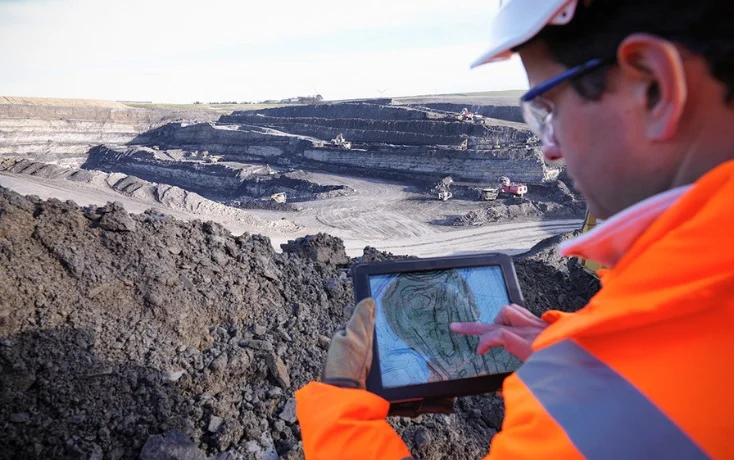
The global mining industry is bracing for a landmark event in the field of geomechanical engineering. Slope Stability 2026 (SS2026), the world’s premier congress dedicated to the stability of open-pit mining slopes, is set to become the definitive global nexus for industry experts, engineers, and researchers. As mining operations reach unprecedented depths and encounter increasingly complex geological challenges, the SS2026 event promises to deliver the state-of-the-art methodologies required to ensure safety, operational continuity, and environmental stewardship.
Luis Tejada Cervantes, President of the Organizing Committee, has underscored the strategic importance of this congress. "Slope Stability 2026 is positioned to be more than just a conference; it is a collaborative platform where the most pressing challenges of open-pit mining are met with rigorous scientific debate and the sharing of global best practices," Cervantes stated.
The Evolution of Slope Stability: A Chronology of Challenges
The history of open-pit mining is inextricably linked to the science of slope stability. Over the past three decades, the transition from shallow, artisanal pits to massive, kilometer-deep operations has necessitated a radical shift in how geotechnical risks are managed.
- 1990s – The Era of Empirical Observation: Early slope design relied heavily on limit equilibrium methods and observational data. Stability was often reactive, managed through monitoring and manual inspections.
- 2000s – The Digital Revolution: The introduction of sophisticated numerical modeling software, such as FLAC and Phase2, allowed engineers to simulate stress distribution with higher precision.
- 2010s – Real-Time Monitoring: The advent of radar and satellite-based InSAR technology transformed safety protocols, allowing for the detection of millimeter-scale wall movements in real-time.
- 2020s – The Age of AI and Automation: As we approach SS2026, the industry is transitioning into the integration of Artificial Intelligence (AI) and Machine Learning (ML) to predict slope failures before they occur, optimizing the balance between extraction efficiency and safety.
SS2026 is designed to be the culmination of this evolution, focusing on the integration of these legacy technologies with the cutting-edge predictive capabilities of the future.
Strategic Program: Bridging Theory and Field Application
A cornerstone of the SS2026 agenda is its comprehensive training program. Recognizing the widening skill gap in advanced geotechnical engineering, the organizers have curated a series of specialized courses and workshops scheduled for October 24, 2026. These sessions are specifically designed to move beyond theoretical frameworks, offering actionable intelligence for immediate field application.
Key Technical Pillars for 2026
The curriculum will address the entire life cycle of mining operations, focusing on four primary domains:
- Waste Dump Lifecycle Management: As the volume of overburden and waste rock increases, the design, maintenance, and eventual closure of waste deposits have become critical environmental and structural liabilities. The congress will present new standards for dump stability in high-seismicity regions.
- Geomechanics in Controlled Blasting: To minimize wall damage and ensure the structural integrity of pit walls, experts will discuss advanced blast sequencing and the application of electronic detonators to reduce peak particle velocity (PPV).
- Advanced Geotechnical Modeling: The shift from 2D to 3D modeling, coupled with the use of neural networks for predictive slope behavior, will be a central theme. The session aims to demonstrate how AI can process vast datasets from seismic and radar sensors to provide early warning systems with higher confidence intervals.
- Hydrogeological Management: Water remains the single most significant factor in slope failure. The technical sessions will explore innovative dewatering techniques, including deep-well pumping, horizontal drainage galleries, and the use of tracer testing to map complex fractured rock aquifers.
Official Perspectives: The Value of Specialized Training
The Organizing Committee, led by President Luis Tejada Cervantes and Vice President Luis Claudio Tejada Álvarez, emphasizes that the educational component of SS2026 is not merely supplementary but essential to the industry’s future.
"The workshops are structured to bridge the divide between academic research and practical site management," noted Luis Claudio Tejada Álvarez. "We are bringing together experts from the world’s leading mining companies to share their failures and successes. These spaces provide a unique opportunity for professionals to gain access to cutting-edge knowledge, strengthen their technical skills, and forge connections with the international geomechanical community."
The committee believes that by fostering this environment of knowledge exchange, SS2026 will directly influence future safety standards across the global mining landscape. The involvement of industry leaders ensures that the discussions remain grounded in the reality of high-pressure operational environments where every degree of slope angle affects the bottom line and, more importantly, human safety.
Implications for the Global Mining Industry
The implications of the advancements to be showcased at SS2026 extend far beyond the technical sphere. They represent a fundamental shift in how the mining industry approaches risk management and sustainability.
Operational Efficiency and Economic Impact
By optimizing slope angles through more accurate modeling and better water management, mining companies can significantly reduce the stripping ratio—the amount of waste removed for every ton of ore. This directly translates to improved project NPV (Net Present Value) and a smaller carbon footprint per unit of production.
Safety and Regulatory Compliance
Slope failures remain one of the most significant risks to personnel and infrastructure in the extractive industries. The adoption of the "best practices" discussed at SS2026 will provide companies with a framework to meet increasingly stringent international regulatory requirements. For stakeholders, this represents a reduction in the "social license to operate" risk, as superior safety records are essential for community and government relations.
Environmental Stewardship and Closure
As the industry moves toward "Mine Closure by Design," the knowledge shared at SS2026 regarding waste dump stabilization and tailings management will play a vital role in preventing long-term environmental degradation. The focus on long-term stability ensures that mines are not just profitable today, but leave behind landscapes that are geotechnically stable and safe for post-mining land use.
Networking: Building a Global Community
SS2026 is designed as a hub for professional development. Beyond the technical sessions, the congress will host exclusive workshops led by industry pioneers. These sessions are intended to be interactive, encouraging participants to bring their own real-world case studies to the table for peer review and expert analysis.
This networking component is critical for the cross-pollination of ideas. An engineer facing stability issues in a deep porphyry copper mine in the Andes can learn from a colleague who has successfully implemented slope reinforcement strategies in the harsh, permafrost conditions of the Arctic. By facilitating these connections, SS2026 acts as a global accelerator for mining innovation.
Looking Ahead: The Legacy of SS2026
As the global demand for minerals continues to rise—driven by the energy transition and the need for electrification materials—the pressure on open-pit mines to go deeper and produce more efficiently will only intensify. Slope Stability 2026 stands as a timely response to these pressures.
By integrating advanced geomechanical data, artificial intelligence, and rigorous, practical training, the congress is set to define the technical benchmark for the next decade of mining engineering. Participants will leave not only with the knowledge to improve their current operations but with a strategic roadmap for the future of geotechnical stability.
The event is more than a gathering of professionals; it is a commitment to the advancement of a safer, more efficient, and more sustainable mining industry. Whether you are a lead geotechnical engineer, a project manager, or a researcher, SS2026 provides the tools and the network necessary to navigate the complex challenges of the 21st-century mining environment.
About the Congress:
Slope Stability 2026 (SS2026) is the premier international forum dedicated to the challenges of stability in open-pit mining. The congress will take place in 2026, featuring a rigorous program of technical sessions, workshops, and expert-led discussions, supported by an international committee of leaders in geotechnical engineering.