TALARA, PIURA – In a decisive move to safeguard national assets, the Superintendence of National Assets (SBN), an entity operating under the umbrella of the Ministry of Housing, Construction, and Sanitation, successfully executed a peaceful extrajudicial recovery operation in the province of Talara. The intervention targeted a significant tract of land spanning 4,847.69 square meters, which had been illegally occupied in the sector known as "La Draga," located in the Ciudad Negritos populated center.
This operation highlights the ongoing efforts by the Peruvian government to curb land trafficking and ensure that state-owned properties are preserved for public interest, infrastructure development, or regulated urban expansion rather than falling into the hands of unauthorized squatters.
1. The Core Facts of the Intervention
The operation, carried out in the district of La Brea, focused on a strategic plot of land situated to the north of the Ciudad Negritos populated center and west of the "La Capilla" human settlement. The recovery was conducted under the framework of the state’s authority to reclaim properties that have been encroached upon without legal title.
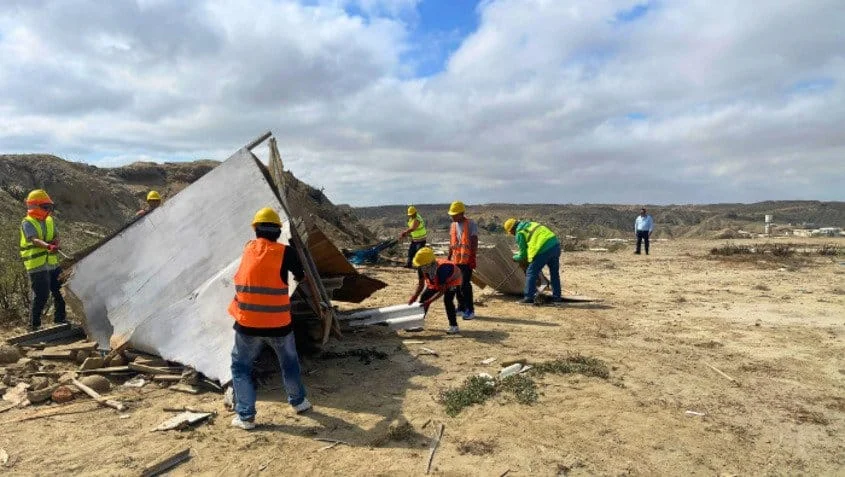
Upon arriving at the site, SBN officials and logistical teams encountered a collection of precarious structures. These modules, constructed primarily from wood, corrugated iron (calamina), and woven reed mats (esteras), were evidence of an attempt to consolidate a permanent, albeit illegal, presence on the land. While some of these structures appeared abandoned, others were actively inhabited at the time of the operation.
In strict compliance with current regulations, the SBN utilized specialized machinery and professional labor to dismantle and remove the illegal enclosures and structures. The operation was conducted peacefully, ensuring that human rights were respected while asserting the state’s legal right to regain possession of the territory.

2. Chronology of the Recovery Operation
The recovery of the property in La Draga was not an isolated event but rather the culmination of a rigorous administrative process.
- Surveillance and Identification: Before the physical intervention, the SBN conducted a comprehensive survey of the area. Through geospatial monitoring and field reports, the agency identified that the 4,847.69 m² plot was under illegal occupation.
- Administrative Notification: Following standard procedures, the SBN verified the legal status of the land, confirming it as state property. Once confirmed, the necessary legal groundwork was established to invoke the powers granted by the Law No. 30230.
- Coordination with Law Enforcement: Recognizing the potential for resistance, the SBN coordinated extensively with the Talara Sectorial Police Station (PNP). This collaboration ensured that the operation remained orderly, safe, and lawful.
- The Day of Intervention: On the scheduled date, SBN personnel, supported by PNP officers, entered the site. The presence of law enforcement served to deter any potential conflict and guaranteed the safety of the workers involved in the demolition of the illegal structures.
- Post-Recovery Securement: Following the clearance of the land, the SBN immediately installed signage identifying the tract as state property. This measure is intended to serve as a legal warning to any future trespassers that the land is under the active protection of the Peruvian state.
3. Supporting Data and Legal Framework
The intervention was anchored in a robust legal foundation designed to streamline the recovery of state assets. The primary legal instruments utilized were:
The Legal Basis
- Law No. 30230 (Articles 65 and 66): This legislation grants the SBN the authority to perform extrajudicial recovery of real estate assets owned by the state. It allows for the removal of occupants without the need for lengthy, multi-year litigation in civil courts, provided that the state can demonstrate ownership and the illegal nature of the occupation.
- Legislative Decree No. 1726: This decree reinforces the state’s mandate to defend its properties. It provides the administrative tools necessary for the SBN to act swiftly against land traffickers and organized groups that target public land for illicit profit.
Statistical Context
The province of Talara has been a focal point for the SBN due to its economic importance and urban growth pressure. The recovery of nearly 5,000 square meters in La Draga is a significant win for the state’s regional land inventory. Recovered land of this scale is often earmarked for public facilities, such as schools, health centers, or recreational areas, which serve the local population in a formal and safe manner.
4. Official Responses and Institutional Stance
The SBN maintains a zero-tolerance policy regarding the illegal occupation of state lands. Through its regional offices, the agency has intensified its monitoring of "hot spots"—areas where land trafficking is prevalent.
"Our mission is to ensure that the heritage of all Peruvians is not depleted by illegal actions," an SBN spokesperson noted during the post-operation briefing. "Every square meter recovered is a victory for the rule of law. We are not just clearing land; we are ensuring that the development of our cities is orderly and safe for all citizens."

The collaboration with the National Police (PNP) has been cited as a model for future interventions. The seamless communication between the SBN’s legal team and the local police sector in Talara ensured that the operation in La Draga concluded without any injuries or major disruptions, demonstrating that state authority can be exercised effectively and humanely.
5. Implications for the Future
The successful recovery of the La Draga site sends a clear message to individuals and organizations involved in the illegal subdivision and sale of state property: the state has the capacity and the legal tools to reclaim its land.
Impact on Urban Development
Unauthorized settlements often lack basic infrastructure, such as water, sanitation, and electricity. By reclaiming these lands, the state prevents the formation of "invisible cities" that are prone to natural disasters or lack the necessary social services. This allows for planned, safe, and legal urban expansion.
Protection of State Assets
The placement of permanent signage after the intervention is a critical step in "defensive stewardship." It acts as a permanent witness to the state’s claim, making it legally more difficult for future encroachers to claim "good faith" possession or ignorance of the land’s status.
Deterrence
Land trafficking is a complex problem in Peru, often fueled by the promise of quick profits. The swift action taken in Talara serves as a deterrent. When illegal structures are removed shortly after their appearance, the economic incentive for land traffickers decreases, as their "investment" in building materials and labor is lost immediately.

Continued Vigilance
The SBN has confirmed that it will continue its surveillance in the Piura region. The agency encourages citizens to report potential land invasions, emphasizing that the protection of state property is a collective effort. By fostering transparency and public awareness, the SBN aims to reduce the prevalence of land disputes and ensure that the growth of regions like Talara is sustainable and equitable.
In conclusion, the recovery of the La Draga sector is a testament to the efficacy of the current legislative framework and the dedication of the SBN to upholding the law. As the country continues to develop, such interventions remain essential in preserving the integrity of the state’s territorial holdings and ensuring that public land is used for the benefit of the community at large.