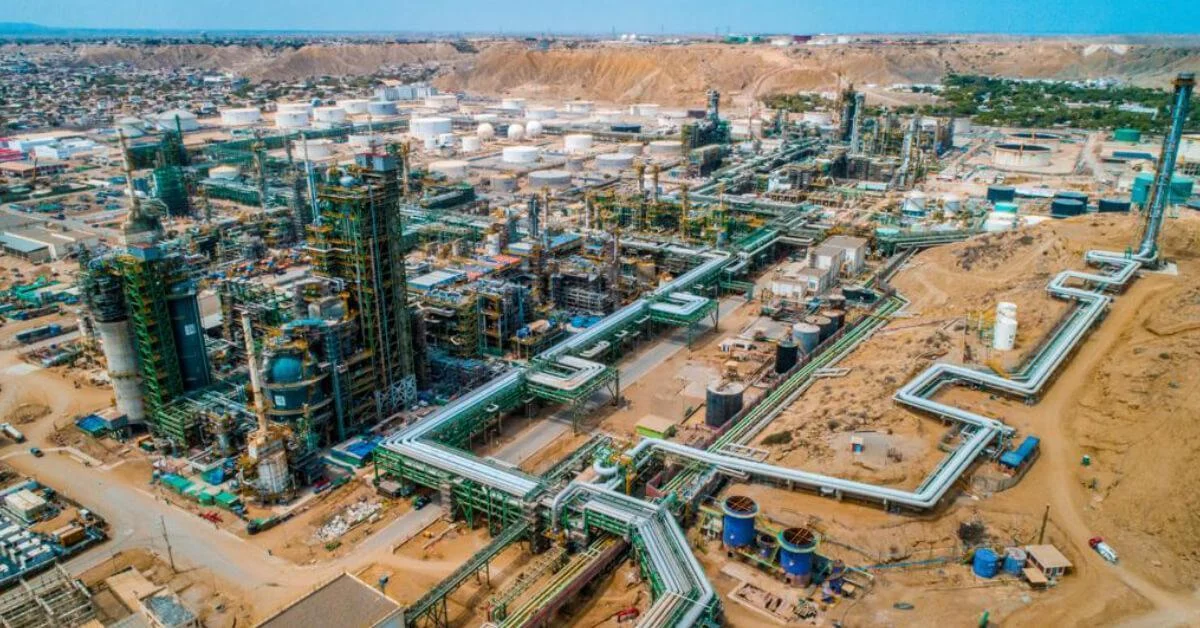
Lima, Peru – A stark reality has emerged regarding Peru’s flagship Talara Refinery, with the nation’s most modern refining facility operating at a mere 63% of its intended capacity. This revelation, disclosed by the Minister of Energy and Mines, Guillermo Shinno, casts a long shadow over a monumental investment exceeding US$6 billion and has triggered a significant overhaul of the state-owned oil company, Petroperú. The operational shortfall at Talara, processing approximately 60,000 barrels per day against a nominal capacity of 95,000 barrels, is prompting urgent investigations into design flaws or operational inefficiencies, while a newly appointed board seeks to steer Petroperú away from financial collapse.
The implications of this underperformance are profound, not only for the economic viability of Petroperú but also for Peru’s energy security and its ongoing reliance on imported fuels. The government’s swift response, including the restructuring of Petroperú’s leadership and operational framework, underscores the gravity of the situation. The path ahead for Talara and Petroperú is fraught with challenges, demanding decisive action and a thorough understanding of the root causes of the current predicament.
The Stark Reality: Underperformance at Talara
The admission by Minister Shinno, made during an interview on Latina’s "Sin Medias Tintas" program, has sent ripples of concern throughout the Peruvian energy sector. The Talara Refinery, a project lauded for its technological advancements and its potential to significantly enhance Peru’s refining capabilities, is currently falling far short of its promised output. Processing only around 60,000 barrels per day, the refinery is operating at a significant deficit compared to its design capacity of 95,000 barrels per day.
This underperformance is particularly jarring given the colossal investment of over US$6 billion poured into the project. The expectation was that Talara would not only meet domestic demand for refined products but also contribute significantly to Peru’s energy independence. Instead, the current operational figures suggest a substantial gap between aspiration and achievement.
"There is an issue that we must investigate, and it is part of what has been tasked to the board," stated Minister Shinno. "Apparently, there has been either a design flaw or an intermediate mechanism that has occurred, preventing it from reaching these 95,000 barrels." This statement directly points to potential systemic issues that have plagued the refinery since its inception, raising questions about the project’s planning, execution, and oversight.
Furthermore, achieving the nominal capacity will not be a simple matter of flipping a switch. Minister Shinno indicated that reaching the 95,000-barrel-per-day mark will necessitate further substantial investments. "To reach 95,000 barrels requires making a significant investment to get the refinery up to par," he explained. "We still have work to do to conclude Talara." This admission suggests that the US$6 billion investment, while substantial, may not have been sufficient to fully realize the refinery’s potential, or that unforeseen issues have emerged requiring additional capital injection.
Petroperú’s Financial Straits and Strategic Overhaul
The operational challenges at Talara are occurring against the backdrop of a severe financial crisis gripping Petroperú. The state-owned oil company is reportedly burdened by a debt exceeding US$7.9 billion, a figure that places its financial stability in serious jeopardy. This precarious financial situation not only threatens Petroperú’s ability to meet its operational obligations but also raises concerns about the consistent supply of fuels across Peru.

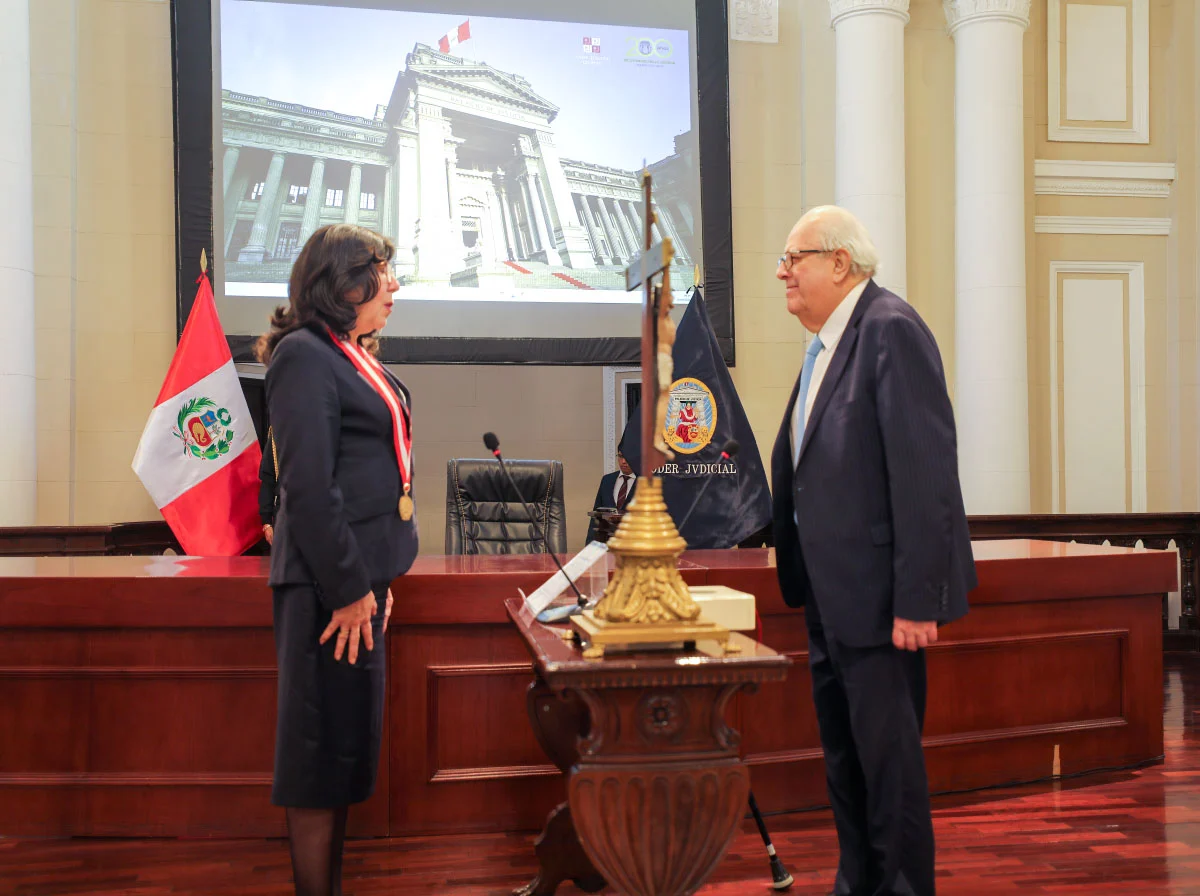
In response to this escalating crisis, the Peruvian government has acted with notable urgency. On August 7th, the General Shareholders’ Meeting appointed a new board of directors for Petroperú. The new leadership is headed by Oliver Thomas Alexander Stark Preuss, an economist with a Master’s degree in Finance from the Universidad del Pacífico. Stark is no stranger to Petroperú, having previously led the company in 2024, during which time he had already flagged the critical financial situation and the company’s potential unsustainability.
Accompanying Stark on the new board are César Burga Rivera, Daniel Cabrera Ortega, and Víctor Andrés Belaunde Gutiérrez. Carlos Linares Peñaloza remains on the board, providing continuity. The restructuring of the board was carried out under the provisions of Law No. 32103 and Emergency Decree No. 004-2024, which empower the government to implement a temporary and immediate reorganization of the oil company.
The mandate for this new leadership is clear: to revive Petroperú, not to liquidate it. Minister Shinno articulated this objective without ambiguity: "It is to revive it; it has to be more efficient; it has to be restructured." This directive underscores the government’s commitment to the strategic importance of Petroperú and its role in the national energy landscape.
A New Operational Paradigm: Decentralization and Specialization
To achieve its revitalization goals, Petroperú is undergoing a significant operational restructuring, with the support of ProInversión, Peru’s foreign investment promotion agency. The company has been divided into ten distinct lines of business. The overarching objective is for each of these business units to become self-sustaining and profitable.
"If they are not, we will see what decisions need to be made further down the line," Minister Shinno stated, indicating a pragmatic approach to performance management. This decentralization strategy aims to enhance accountability and identify areas of inefficiency more effectively. By segmenting operations, the government hopes to pinpoint specific challenges within each business line and implement targeted solutions.
In addition to operational segmentation, the board of directors has approved the creation of a Special Purpose Entity (SPE) linked to Petroperú. This financial mechanism is designed to bring order to the company’s resources and ensure the availability of funds for essential operational needs, including the procurement of necessary inputs. The SPE is expected to streamline financial management and provide a more agile funding source for critical expenditures.
The Broader Context: Refining Capacity and Import Dependency
Minister Shinno also provided crucial context regarding the impact of the Talara Refinery’s operational capacity on Peru’s overall energy supply. He emphasized that even operating at full capacity, Talara would not entirely eliminate Peru’s dependence on imported fuels. "We are importers. We import 70% of diesel," he reminded the public.

This statement highlights a fundamental reality of Peru’s energy market. While an optimally functioning Talara refinery would significantly improve domestic refining capabilities and potentially reduce the reliance on certain imported products, the nation will continue to require imported crude oil. However, Shinno suggested that a fully operational Talara would provide greater protection against supply disruptions. "We would be much more protected against supply problems," he noted.
This perspective is vital for setting realistic expectations about the Talara Refinery’s role. It is not a panacea for all of Peru’s energy challenges, but rather a critical component within a larger, complex energy ecosystem. The focus must remain on maximizing its contribution while acknowledging the persistent need for international energy markets.
The Lingering Questions and the Path Forward
The central question that remains unanswered is how an investment of such magnitude could result in a facility operating so far below its designed potential. Minister Shinno has placed the onus on the new board, led by Oliver Stark, to conduct a thorough investigation to pinpoint the precise causes of this underperformance. The investigation will scrutinize whether the issues stem from a fundamental design flaw, a faulty intermediate mechanism, or other operational deficiencies.
The restructuring of Petroperú into ten distinct business lines and the establishment of the SPE are undoubtedly steps in the right direction. However, the road to restoring efficiency and ensuring the long-term sustainability of the company is expected to be arduous and marked by significant hurdles. The new leadership team, under Stark’s guidance, faces the daunting task of delving into the operational heart of the Talara Refinery and uncovering why a facility costing over US$6 billion is not meeting its production targets.
The resolution of this predicament is not merely about the future of the Talara Refinery; it is intrinsically linked to the future of Petroperú itself. The findings of the investigation and the effectiveness of the implemented restructuring measures will ultimately determine the fate of Peru’s national oil company and its capacity to reliably serve the nation’s energy needs. The coming months will be critical in observing how the new board navigates these complex challenges and whether they can unlock the full potential of the Talara Refinery, transforming it from a symbol of underperformance into a cornerstone of Peru’s energy security.