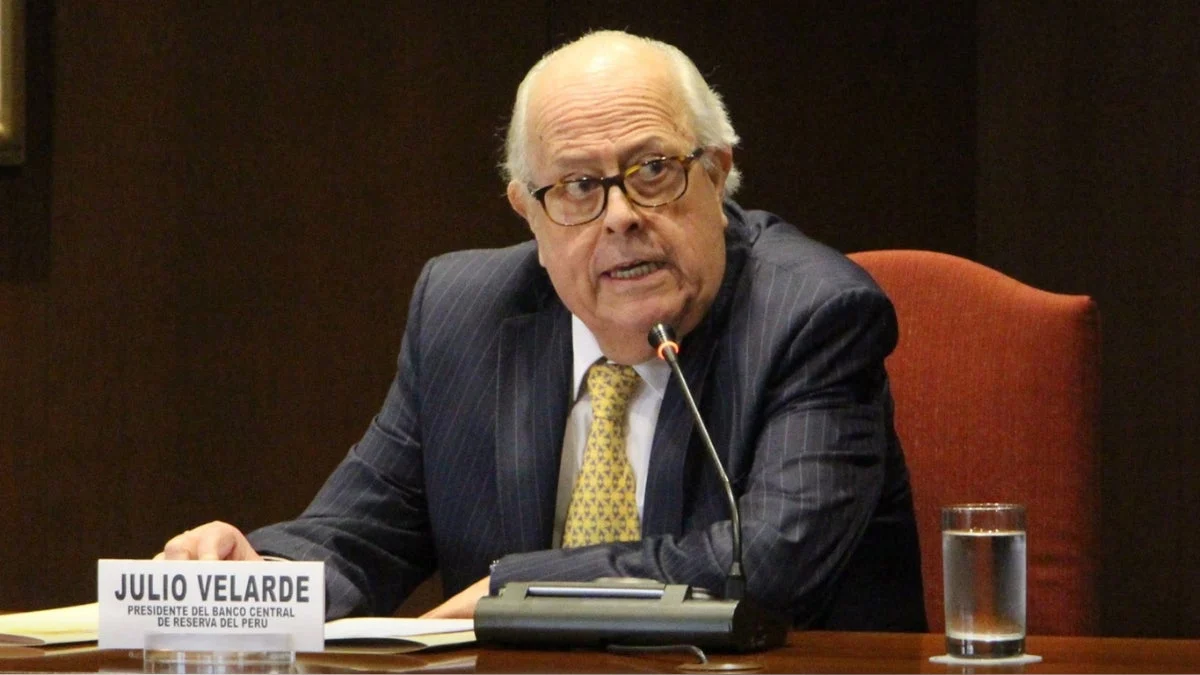
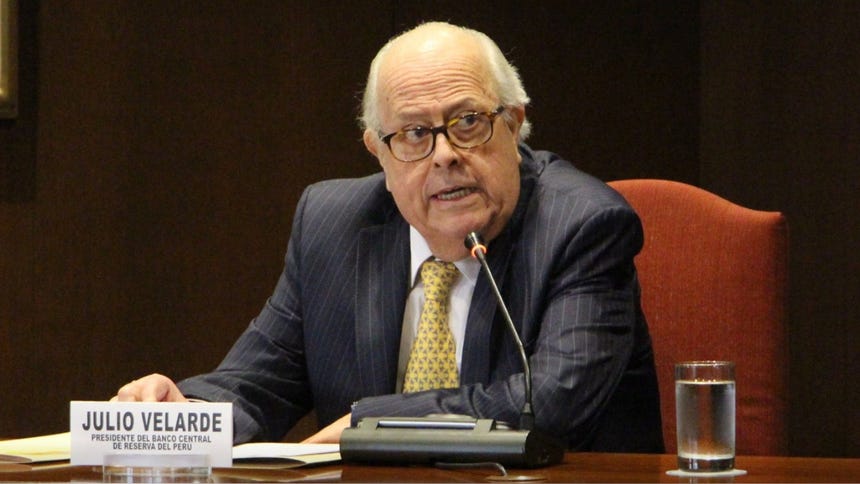
In a move widely interpreted by financial markets as a cornerstone of institutional continuity, the administration of President Keiko Fujimori has officially ratified the appointment of Julio Velarde as President of the Board of Directors of the Central Reserve Bank of Peru (BCRP). The decision, formalized through Supreme Resolution No. 258-2026-PCM, secures Velarde’s leadership of the country’s monetary authority for another five-year term, extending his tenure until 2031.
The ratification comes as the culmination of a process that began shortly after the 2026 presidential runoff. President Fujimori, recognizing the necessity of maintaining investor confidence and macroeconomic stability, personally requested that the veteran economist remain at the helm of the BCRP. Velarde’s acceptance of this request has been met with broad support from economic analysts, international financial institutions, and the business sector, all of whom view his presence as the "gold standard" for managing Peru’s inflation and currency policy.
The Formalization of a Strategic Continuity
The official announcement, signed by President Keiko Fujimori, Prime Minister Luis Galarreta, and Minister of Economy and Finance Elmer Cuba, solidifies a transition period that had been marked by speculation regarding the economic direction of the new administration.
Under Article 86 of the Political Constitution of Peru, the Executive Branch holds the authority to appoint four members of the BCRP Board, including the President. While the appointment has now been formally executed by the Executive, it remains subject to final ratification by the Congress of the Republic—a step that political analysts consider a formality given the widespread consensus on Velarde’s track record.
During a public statement delivered in July, following his meeting with President Fujimori, Velarde expressed his gratitude and his commitment to the nation’s economic health. "I want to thank her for coming to the BCRP personally; I am honored by the request she has made," Velarde stated. "If, under other circumstances, I might not have accepted, I wish to do so now with great pleasure. I intend to dedicate myself as quickly as possible to fulfilling the task she has entrusted to me."
A Chronology of Unprecedented Institutional Tenure
To understand the significance of this appointment, one must look at the historical context of Velarde’s tenure. Appointed initially in September 2006 by the late President Alan García, Velarde has navigated Peru through nearly two decades of shifting political landscapes. His survival and continued appointment by successive administrations—each with vastly different ideological leanings—demonstrates a rare consensus in Peruvian politics regarding the importance of the BCRP’s autonomy.
- 2006: Appointed by President Alan García (APRA), tasked with stabilizing the economy during a period of global expansion.
- 2011: Ratified by President Ollanta Humala (Nationalist Party), signaling a commitment to maintaining market-friendly policies despite concerns from the political left.
- 2016: Ratified by President Pedro Pablo Kuczynski, underscoring the technocratic alignment between the BCRP and the executive.
- 2021: Ratified by President Pedro Castillo, a decision that proved critical in mitigating market volatility and capital flight during a period of extreme political turbulence.
- 2026: Ratified by President Keiko Fujimori, marking his fifth consecutive term and cementing his legacy as the most enduring central bank governor in the history of the region.
The BCRP Under Velarde: A Pillar of Stability
Julio Velarde’s leadership has been defined by a strict adherence to inflation targeting and the preservation of the BCRP’s technical autonomy. During a recent address at the Santa María Catholic University of Arequipa, where he was awarded an honorary doctorate, Velarde reflected on the stark contrast between Peru’s current monetary stability and the hyperinflationary crises of the 1970s and 1980s.
He emphasized that the BCRP’s independence is not merely an abstract concept but the bedrock of the country’s economic survival. "The autonomy of the Central Bank is what allows us to look at the long term," Velarde noted. "We have successfully avoided the traps of short-term populism that plagued our past. However, monetary policy alone cannot generate growth; it provides the environment, but the state must provide the structure."
Addressing the Growth Gap
Velarde has recently become a vocal advocate for structural reforms that go beyond the mandate of the BCRP. In recent forums, he has expressed concern over the stagnation of private investment and the decline in productivity. He has explicitly called for a more professional, meritocratic public administration. "We need a state that is less clientelistic and more meritocratic," Velarde argued. "To recover the growth rates we saw in the early 2000s, we need to improve the quality of public investment and reduce the administrative barriers that hold back private enterprise."
Official Responses and Political Implications
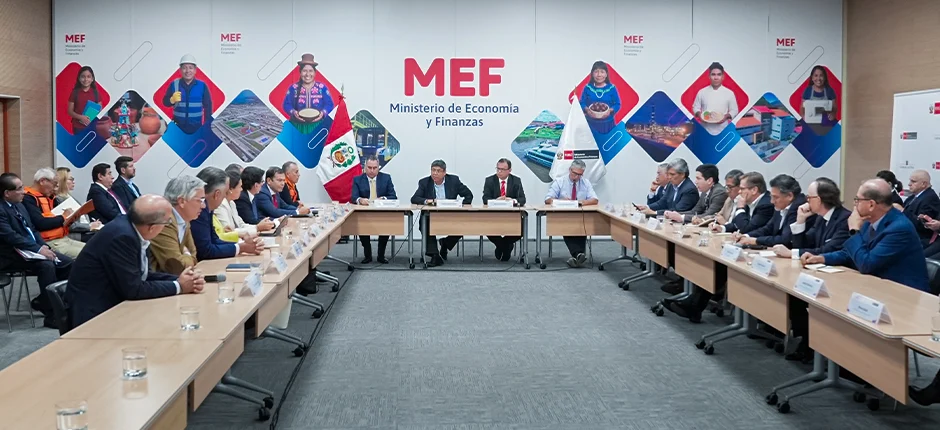
The ratification has been received with a sense of relief in the corridors of power and the financial district of Lima. The involvement of key figures such as Minister of Economy Elmer Cuba suggests a collaborative approach between the BCRP and the Ministry of Economy and Finance (MEF), which is essential for cohesive fiscal and monetary policy.
Opposition lawmakers and economic observers alike have noted that the decision to keep Velarde is a strategic masterstroke by President Fujimori. By securing the BCRP, she has effectively neutralized fears of economic mismanagement, providing a buffer against the potential volatility that often follows a change in government.
However, the appointment also places significant pressure on Velarde. As Peru faces a global economic slowdown and domestic challenges related to infrastructure and social unrest, the BCRP is expected to play a stabilizing role in maintaining low inflation while navigating the complexities of high interest rates and fluctuating global commodity prices.
Macroeconomic Implications for the Coming Five Years
The next five years under Velarde will likely focus on three main pillars:
- Inflation Control: Ensuring that the inflation rate remains within the target range, even as the global economy faces supply chain disruptions and energy price volatility.
- Financial System Resilience: Maintaining the strength of the banking system and ensuring that the BCRP continues to manage international reserves effectively to act as a shield against external shocks.
- Institutional Strengthening: Velarde has consistently signaled that the BCRP must remain a technical island. His leadership style, which prioritizes the hiring of highly trained economists over political appointees, will continue to define the internal culture of the institution.
The Challenge of Growth
While the BCRP has mastered the art of price stability, Velarde himself has acknowledged that the "easy" phase of economic growth is over. The challenge for the 2026-2031 period will be how to maintain monetary stability in a country that is struggling to increase its potential growth rate. Velarde’s influence will likely be felt in his continued public exhortations for the government to improve the rule of law, reduce bureaucracy, and foster an environment where the private sector can flourish.
Conclusion: A Legacy Defined by Consistency
As Julio Velarde embarks on this new five-year term, he stands as a unique figure in modern Peruvian history. His ability to build consensus across the political divide—from the center-left to the center-right—is a testament to the fact that in Peru, the Central Reserve Bank remains the most trusted institution in the country.
With the formalization of his appointment, the Fujimori administration has signaled that it values the predictability and technical excellence that Velarde represents. As the country looks toward the challenges of the next half-decade, the presence of an experienced hand at the BCRP offers a degree of certainty that is, in the current global economic climate, an invaluable asset for Peru. Whether through managing the sol’s stability or providing the necessary caution in monetary policy, Velarde’s continued leadership ensures that the BCRP remains a pillar of stability in an otherwise evolving political landscape.