Executive Summary: A Strategic Leap for Peru’s Maritime Infrastructure
In a landmark move to cement its position as the premier maritime hub of the South American Pacific, APM Terminals Callao has announced a massive capital injection of US$231 million. This investment is directed toward the construction of the "Muelle 5C" (Pier 5C) at the Terminal Norte Multipropósito, a sophisticated infrastructure project designed to accommodate the world’s largest container vessels.
As global shipping trends shift toward massive "mega-ships," Peru is positioning itself to capture increased trade volumes, particularly in the agro-export and mining sectors. By the time the project reaches completion in early 2028, the terminal will be transformed into a high-capacity, electrified, and digitized facility capable of handling up to 2.2 million TEUs (Twenty-foot Equivalent Units) annually. This development is not merely an infrastructure upgrade; it is a vital evolution for the Peruvian economy, ensuring that the country’s main gateway remains competitive on the global stage.
The Core Project: Engineering the Future of Pier 5C
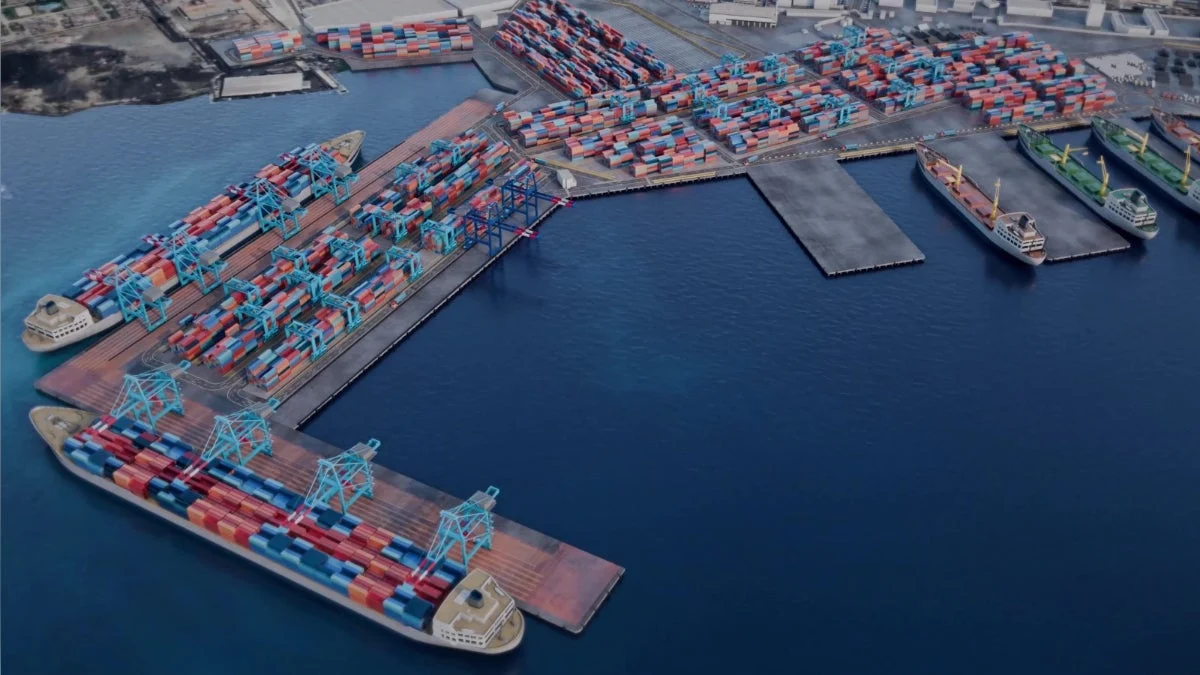
The centerpiece of the investment is the construction of Pier 5C, a state-of-the-art facility that will redefine the operational parameters of the Port of Callao.
Specifications of the New Infrastructure
- Physical Dimensions: The new pier will extend 440 meters in length and feature a draft depth of 16 meters. These dimensions are critical for allowing "Ultra Large Container Vessels" (ULCVs)—ships capable of carrying more than 20,000 TEUs—to berth safely.
- Operational Capacity: With the addition of this pier, the Terminal Norte will see its annual throughput capacity jump to 1.7 million TEUs immediately upon completion, with a modular design that allows for an eventual scale-up to 2.2 million TEUs.
- Technological Integration: The project goes beyond concrete and steel. It includes the installation of high-capacity MalaccaMax cranes, specifically engineered for the width and height requirements of the world’s largest container ships. Furthermore, the terminal will feature a specialized electrical station dedicated to charging heavy-duty electric port machinery, signaling a significant move toward the decarbonization of port operations.
Chronology of Development: From Planning to Global Connectivity
The expansion of Terminal Norte is the result of a long-term modernization roadmap (Stage 3B) aimed at phased growth.
- Initial Planning Phase: Following the initial concessions, APM Terminals identified that current capacity would soon face bottlenecks due to the rising tide of Peruvian exports.
- Strategic Approval (Current): With the announcement of the $231 million investment, the project has moved into the engineering and procurement phase.
- Construction Timeline (2025-2027): Over the next three years, the site will undergo extensive dredging and structural reinforcement to prepare for the massive weight and size of the incoming vessels.
- Operational Target (January 2028): The terminal is scheduled to be fully operational by the start of 2028, providing a seamless transition for shipping lines that are currently planning their long-term, trans-Pacific fleet deployments.
Supporting Data: Why Peru Needs This Expansion
The economic urgency behind this investment is grounded in hard data. Peru’s trade profile has shifted dramatically over the last decade, transitioning from traditional raw material exports to a sophisticated, high-value agro-industrial powerhouse.
The Agro-Export Boom
In 2025, Peru’s agro-export sector reached a historic milestone, generating over US$15 billion in revenue. Products such as blueberries, avocados, grapes, and asparagus now form the backbone of the country’s export basket. However, these goods are highly perishable and require stringent "cold chain" logistics.
To address this, the expansion includes a 25% increase in electrical reefer connections, bringing the total capacity to 2,000 points. This allows thousands of refrigerated containers to remain powered while waiting for loading, effectively eliminating the risk of cargo degradation and ensuring that Peruvian produce maintains its premium quality upon arrival in European and Asian markets.
Global Connectivity
The Port of Callao currently serves as a vital node in international trade, connecting to over 70 countries and 220 distinct destinations. Notably, the existing direct route between Callao and Asia—a journey of approximately 23 days—is one of the most efficient maritime corridors for South American exporters. The expansion of Pier 5C is intended to leverage this connection, attracting more frequent vessel calls and reducing the "wait time" for importers and exporters alike.
Official Perspectives: Aligning Public Interests with Private Investment
The project is viewed by both the operator and national stakeholders as a necessary evolution of the "Callao Brand."
Francesca de los Ríos, Gerenta of Public Affairs and Communications at APM Terminals Callao, emphasized the symbiotic relationship between national economic health and port infrastructure:
"The growth of Peruvian foreign trade requires that the infrastructure of the country’s main port evolves at the same rhythm. Our investment is not just about moving boxes; it is about providing the logistical efficiency that allows Peruvian producers to compete with anyone in the world."
This sentiment reflects the broader national goal of the Ministry of Transport and Communications, which views the modernization of the Callao hub as a prerequisite for Peru to become a regional logistics "hub" rather than just a transit point.
Broader Implications: Economic and Environmental Impact
Economic Multiplier Effect
The expansion is expected to have a significant ripple effect on the Peruvian economy. Beyond the direct employment generated during the construction phase, the terminal will support the thousands of jobs linked to the logistics, trucking, customs, and manufacturing sectors. By reducing ship turnaround times and providing more reliable berthing slots, the port will lower the "logistics tax" that often hinders emerging economies, making Peruvian exports more price-competitive.
The Push Toward "Green Ports"
A critical aspect of this development is the commitment to electrification. As the global shipping industry faces increasing pressure to reach Net Zero emissions, the integration of an electrified grid at Terminal Norte is a strategic asset. By facilitating the transition from diesel-powered cranes and yard equipment to electric, APM Terminals is aligning Callao with the environmental standards of major international ports like Rotterdam or Singapore. This makes the port an attractive partner for global shipping alliances that prioritize sustainability in their supply chains.
Mitigating Future Bottlenecks
Without this expansion, the Port of Callao would have risked hitting a "capacity ceiling" by 2028, which could have led to increased operational costs and vessel congestion. By planning ahead, APM Terminals is effectively creating a buffer that allows for future fluctuations in global trade. The ability to scale up to 2.2 million TEUs provides the flexibility to absorb sudden spikes in export demand, ensuring that Peru’s trade growth is never stunted by physical capacity limits.
Conclusion: Securing a Competitive Future
The US$231 million investment in Pier 5C represents a vote of confidence in the Peruvian economy. As the world moves toward larger, more efficient vessels, the nations that provide the necessary infrastructure will be the ones that dominate trade routes.
With the combined strength of improved cold chain technology, the capacity to handle MalaccaMax-sized ships, and a clear roadmap for electrification, the Terminal Norte Multipropósito is set to remain the undisputed heart of Peru’s maritime trade. As the January 2028 deadline approaches, all eyes will be on Callao, as it transitions from a traditional port facility into a modern, high-capacity, and sustainable maritime powerhouse.
For the Peruvian exporter, this means faster access to global markets. For the importer, it means a more reliable flow of essential goods. For the country, it is a definitive step toward cementing its status as a vital link in the global supply chain.