By Political Correspondent
The political landscape of Lima, Peru, has witnessed a significant development as the Jurado Electoral Especial (JEE) of Lima Centro delivered a definitive ruling regarding the candidacy of Rafael López Aliaga. In a decision that has effectively cleared the path for the leader of Renovación Popular, the electoral body declared the request for his exclusion from the upcoming October 4, 2026, municipal elections as procedurally improper.
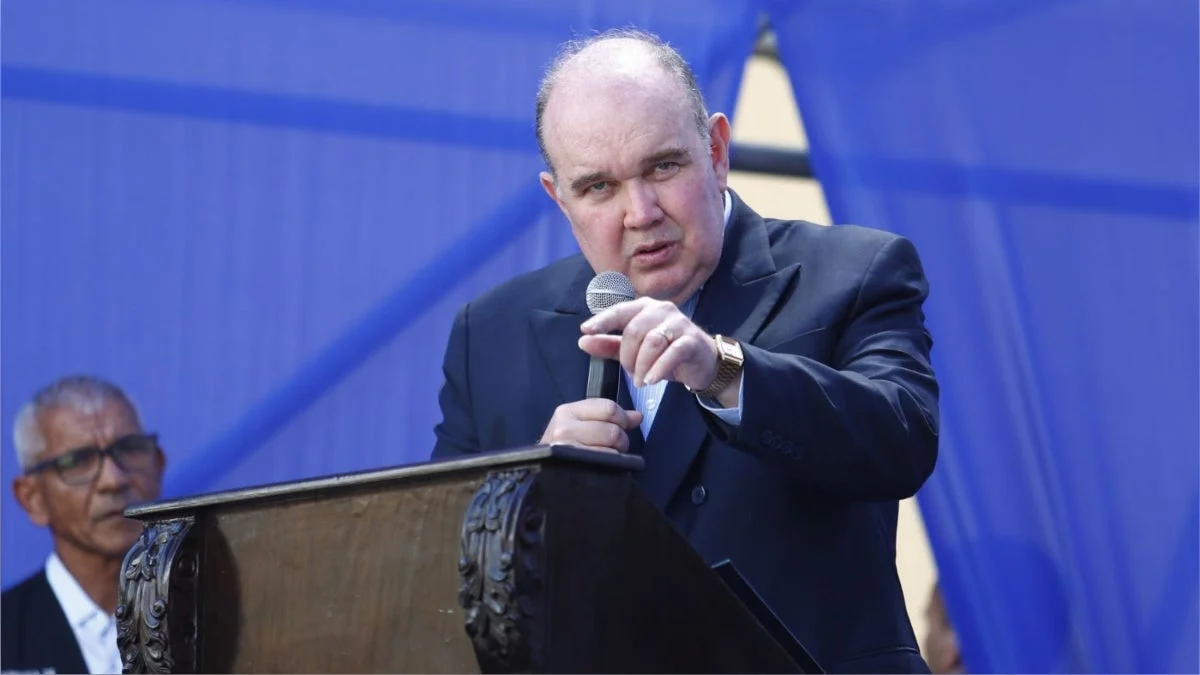
For López Aliaga, a former mayor of Lima seeking to return to the municipal executive, the ruling represents more than just a bureaucratic victory; it is a vital momentum builder in the final stretch of a fiercely contested campaign. Speaking to supporters during a campaign rally in the district of Comas, the candidate signaled a defiant tone, declaring that "nobody will stop me" from pursuing his goal of reclaiming the metropolitan mayoralty.
The Backdrop: A Battle Over Eligibility
The controversy that nearly derailed López Aliaga’s campaign originated from a challenge filed by citizen Ronald Castillo Rojas. The core of the complaint rested on the political fallout following the resignation of Luis Rubio, who had previously served as the mayoral candidate for Renovación Popular.
With Rubio out of the race, the spotlight turned to López Aliaga, who was running as the first candidate for provincial councilor. The complainant argued that if López Aliaga were to ascend to the mayoralty following a victory by the party, it would essentially constitute an "immediate reelection" in disguise. This, the complainant alleged, violated Article 194 of the Political Constitution of Peru, which prohibits consecutive terms for municipal authorities. Furthermore, the petition suggested that allowing his candidacy to proceed would constitute an abuse of the electoral process.
However, the legal team for Renovación Popular swiftly moved to dismiss these claims, labeling the petition as an "extemporaneous tacha" (a time-barred challenge) and a desperate attempt by political rivals to manipulate the electoral field through legal maneuvering.
Chronology of the Electoral Conflict
To understand the gravity of this situation, one must look at the timeline of events that led to the JEE’s intervention:
- July 26, 2026: The JEE of Lima Centro officially admits the list of candidates presented by Renovación Popular, setting the formal start of their participation in the municipal race.
- August 21, 2026: Citizen Ronald Castillo Rojas files a formal request for the exclusion of Rafael López Aliaga, arguing that his candidacy violates constitutional prohibitions regarding reelection.
- August 23, 2026: The JEE of Lima Centro issues Resolution N° 05790-2026-JEE-LICN/JNE. The tribunal rules the request "improcedente" (improper), citing that the legal window for filing such objections had already closed.
- August 23, 2026 (Evening): During a rally in Comas, López Aliaga celebrates the ruling, confirming to his base that the legal hurdles have been cleared and the electoral timeline for challenges has officially expired.
The Legal Framework: Why the JEE Ruled Against Exclusion
The decision by the JEE of Lima Centro was not merely a political judgment but a strictly technical one based on the electoral code. The tribunal’s reasoning was twofold: the nature of the challenge and the expiration of legal deadlines.
The Distinction Between Tacha and Exclusion
The JEE clarified that the complaint filed by Castillo Rojas was legally misclassified. Under the Regulations for the Registration of Candidates for Municipal Elections, the arguments presented by the petitioner were categorized as a "tacha" (an objection to a candidate’s eligibility) rather than a petition for "exclusion."
By the time the complaint was submitted on August 21, the period allowed for filing tachas had long expired, as the candidate list had been finalized and admitted on July 26. Because the complaint was submitted nearly a month after the registration of the list, the JEE found itself unable to entertain the substance of the claim on procedural grounds.
The Narrow Scope of Exclusion
Furthermore, the JEE emphasized that "exclusion" is a severe administrative measure reserved only for specific, high-threshold legal violations. According to the current electoral statutes, a candidate can only be excluded if they are subject to:
- A final, enforceable criminal conviction involving a custodial sentence.
- A judicial declaration of interdiction or civil incapacity.
- A formal, active disqualification from holding public office.
In its resolution, the tribunal noted: "In the present case, from the facts presented by Ronald Wilder Castillo Rojas, it is not observed that any of these specific, restrictive causes are attributable to the candidate Rafael Bernardo López Aliaga Cazorla." Consequently, the tribunal determined that there was no legal basis to initiate an exclusion process, as the candidate had not violated the specific criteria that would trigger such a radical intervention in his democratic right to run for office.
Implications for the Lima Mayoral Race
The resolution of this legal dispute has profound implications for the final weeks of the campaign. By silencing the threat of disqualification, López Aliaga has gained a clear field to focus on his core campaign platform, which emphasizes infrastructure, public safety, and fiscal management.
Consolidating the Base
The rhetoric used by López Aliaga during the Comas rally suggests he intends to use this legal victory as a narrative tool. By framing the opposition’s legal challenges as "null and void" and asserting that "they cannot stop us," he is effectively positioning himself as a candidate who thrives under pressure and faces persecution from the political establishment. For his supporters, this narrative strengthens his image as a resilient leader.
The Political Landscape
The resignation of Luis Rubio and the subsequent internal shifts within Renovación Popular had created a period of uncertainty that rivals sought to exploit. With this final decision, the party has successfully consolidated its position. The ruling effectively ends the "legal war" against the party’s leadership, allowing them to shift from defensive legal maneuvers to an aggressive, outward-facing campaign strategy.
Analysis: The Future of Electoral Challenges
The case of López Aliaga highlights a growing trend in Peruvian politics where the electoral courts are increasingly becoming the primary arena for political competition. When candidates cannot defeat their opponents at the ballot box, there is an increasing reliance on "lawfare"—the use of legal challenges to disqualify rivals before voting day.
However, the decision by the JEE of Lima Centro serves as a reminder of the strict procedural constraints imposed on these challenges. The court’s insistence on adherence to deadlines and the narrow definition of exclusion demonstrates a commitment to the stability of the electoral process. By upholding these procedural barriers, the JEE prevents the late-stage disqualification of major candidates, which could otherwise lead to voter disenfranchisement and widespread public distrust in the legitimacy of the results.
Looking Ahead to October 4
As the clock ticks toward October 4, 2026, the focus now shifts entirely to the electorate. With his candidacy firmly secured, Rafael López Aliaga must now address the concerns of the citizens of Lima. His ability to move past the legal controversies and engage with the structural problems facing the capital—ranging from traffic congestion and water access to security—will determine whether this legal victory translates into electoral success.
The campaign period, now free of the shadow of disqualification, is expected to intensify. With the legal pathway cleared, voters can expect a more focused, policy-driven debate, though the echoes of this challenge will likely remain a significant talking point in the candidate’s rhetoric.
In the final analysis, the JEE’s decision is a reinforcement of the principle that in a democratic society, the ultimate judge of a candidate’s fitness for office should be the voter, provided that the candidate meets the basic legal requirements. For Lima, the race for the mayoral seat is now officially in its final, high-stakes sprint.