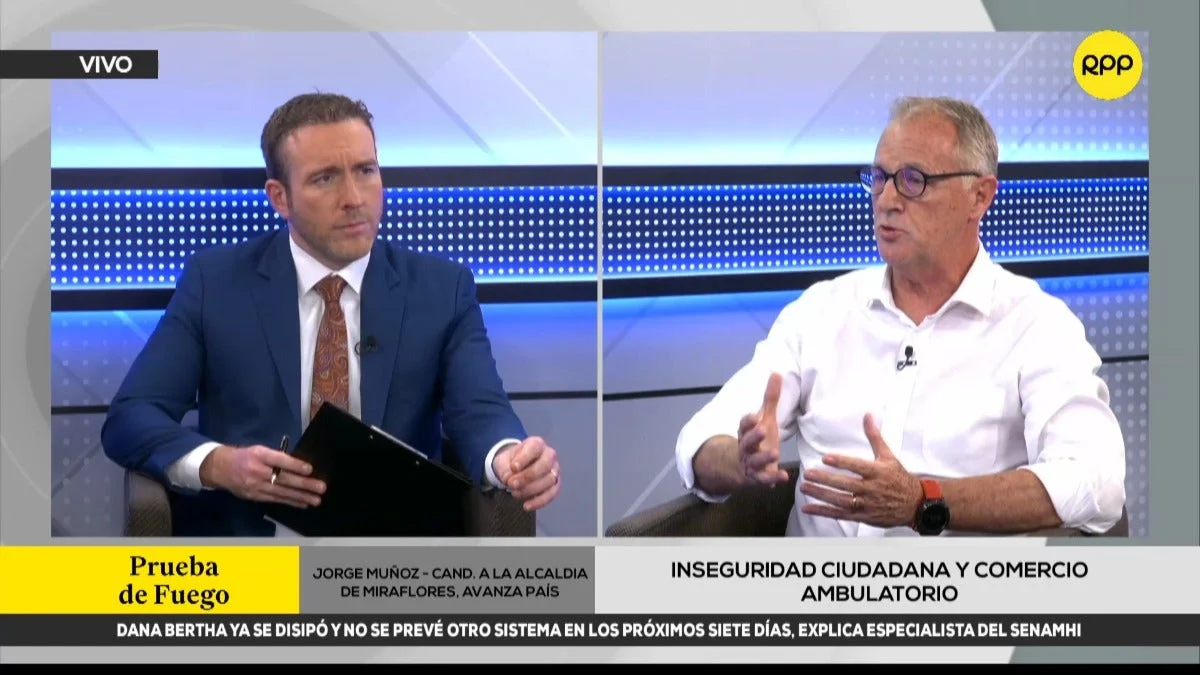
The political landscape in the district of Miraflores has intensified as former Lima Mayor and current mayoral candidate for the Avanza País party, Jorge Muñoz, placed a spotlight on the decaying state of the Estadio Niño Héroe Manuel Bonilla. During a recent appearance on the RPP program Prueba de Fuego, Muñoz did not mince words, describing the once-vibrant sports complex as a "cemetery" of neglect and mismanagement. His pledge to reclaim the facility for the residents of Miraflores has become a cornerstone of his campaign, framing the issue as a symbolic battle between bureaucratic inertia and the restoration of public service.
The Current State of Affairs: A Landscape of Neglect
The Manuel Bonilla Stadium, once a proud landmark for community sports and cultural gatherings, now stands as a stark monument to urban decay. According to Muñoz, the site has been transformed into a hazardous expanse of construction debris, accumulated trash, and derelict vehicles.
"If you visit the site today, the snapshot you get of the entire stadium and the complex is that of a hollow shell filled with rubble, garbage, and abandoned vehicles," Muñoz stated during his interview. He pointedly noted that the lot currently serves as an unauthorized parking graveyard for private cars, a misuse of public property that he argues reflects a complete abandonment of administrative duty.
The deterioration of the coliseum and its surrounding fields is not merely a visual blight; it represents a loss of critical infrastructure for the district. Historically, the Manuel Bonilla was the beating heart of local athletics, hosting high-stakes volleyball championships, traditional marinera dance tournaments, and badminton competitions that drew crowds from across Lima. Today, those activities have been sidelined by eight years of inactivity.
Chronology of a Failed Project
The decay of the Manuel Bonilla is not a sudden accident but the result of nearly a decade of shifting political priorities and legal entanglements. The history of the stadium’s decline can be categorized into three distinct phases:
Phase I: The Original Concession
Under a previous municipal administration, the stadium was placed under a concession agreement with a private entity. The stated objective was to renovate the aging facility, modernizing the infrastructure to meet contemporary standards. This was intended to be a public-private partnership aimed at breathing new life into the complex without burdening the municipal budget.
Phase II: Administrative Dissonance
The trajectory of the renovation changed abruptly when the subsequent administration took office. Rather than continuing or auditing the existing agreement, the new leadership opted to pivot away from the original renovation plan. The administration proposed an entirely different vision for the site: the construction of a large-scale convention center. This shift in policy created a "legal tug-of-war" that stalled progress indefinitely.
Phase III: Eight Years of Paralysis
The collision of these two visions—a renovated sports stadium versus a new convention center—resulted in a legal stalemate. As the municipal government and the private stakeholders remained locked in disputes, the site fell into disrepair. For eight years, the lack of a decisive strategy or legal resolution has left the property in a state of suspended animation, serving neither the interests of athletes nor the business community.
Supporting Data and The "Legal Knot"
The core of Muñoz’s campaign promise rests on his ability to "untangle" the legal mess that currently surrounds the property. Critics and supporters alike acknowledge that the Manuel Bonilla is trapped in a complex web of contracts, municipal decrees, and potential litigation.
Muñoz argues that the failure of the current administration to navigate this "legal knot" is indicative of a lack of leadership. By prioritizing personal political legacies—such as the desire to impose a new vision rather than respecting the contractual obligations of predecessors—the municipality has inadvertently sacrificed a vital public asset.
"The current mayor essentially said, ‘I don’t care what my predecessor did, I will do something else,’" Muñoz explained. This attitude, he contends, is the primary driver of the eight-year hiatus that has stripped Miraflores of one of its most important social hubs. His proposal involves a systematic legal audit to identify the path of least resistance to void the current restrictive agreements or renegotiate them in favor of the public interest.
Official Responses and Political Implications
While the incumbent administration has yet to issue a formal rebuttal to Muñoz’s specific claims, the issue has become a flashpoint for municipal debate. Candidates vying for the mayoralty are increasingly asked to clarify their stance on public-private partnerships, especially in the context of the Manuel Bonilla.
The broader implication of this debate is the question of how Miraflores manages its public spaces. The stadium is not the only site in question; the general management of parks and plazas remains a high-priority issue for the electorate. Muñoz has attempted to differentiate himself by citing his past record.
"In our time [as municipal leaders], you never heard of a conflict of that nature because we sought rationality," he asserted. His argument is that the management of public space requires a delicate balance between accessibility for citizens and the maintenance of order to preserve the peace of the surrounding neighborhoods. He advocates for a governance style that is proactive rather than reactive, focusing on fiscal oversight and consistent, clear regulation.
Implications for the Future of Miraflores
The potential recovery of the Manuel Bonilla Stadium is a microcosm of the challenges facing modern urban districts in Lima. The restoration of such a facility would require more than just clearing the rubble; it would necessitate a massive infusion of capital and a robust plan for sustainable management.
The Social Impact
If the stadium is successfully recovered, the impact on the local community would be significant. Beyond providing a venue for sports, the complex acts as a social integrator. By providing youth with access to organized athletics, the district could reduce incidents of social delinquency and promote healthier lifestyles. Furthermore, the revival of cultural events like marinera tournaments would help reinforce the identity of Miraflores as a hub for both tradition and modernity.
The Fiscal Challenge
Critics of Muñoz’s plan argue that "untangling" the legal situation may be more costly and time-consuming than he suggests. Legal battles involving concessions can drag on for years, potentially draining municipal coffers that could be used for other services. However, Muñoz remains adamant that the current cost of inaction—the loss of the facility and the resulting decline in property value and social cohesion—is far higher.
A Template for Public Space Management
Muñoz’s broader policy platform regarding public spaces suggests that if he were elected, Miraflores would see a shift toward more stringent, yet accessible, regulation. His emphasis on "fiscalization"—monitoring and auditing the use of parks to ensure that they are not exploited for private gain or abused to the point of disturbing residents—is a direct appeal to the district’s middle-class voters who value both community infrastructure and peace of mind.
Conclusion: A Test of Political Will
The Manuel Bonilla Stadium stands as a silent witness to the consequences of political discontinuity. Whether Jorge Muñoz can transform his rhetoric into reality depends on his ability to navigate the labyrinthine legal structures that have paralyzed the site for nearly a decade.
For the residents of Miraflores, the stadium represents more than just a piece of real estate; it is a promise of community, health, and civic pride that was left to rust. As the election approaches, the discourse surrounding this facility serves as a vital reminder that urban governance is not just about new projects, but about the stewardship of existing ones. Whether the stadium will once again host the sounds of whistles, cheering, and music depends entirely on the outcome of the upcoming municipal vote and the tenacity of the next administration to restore what has been neglected for too long.