Executive Summary: A Party in Turmoil
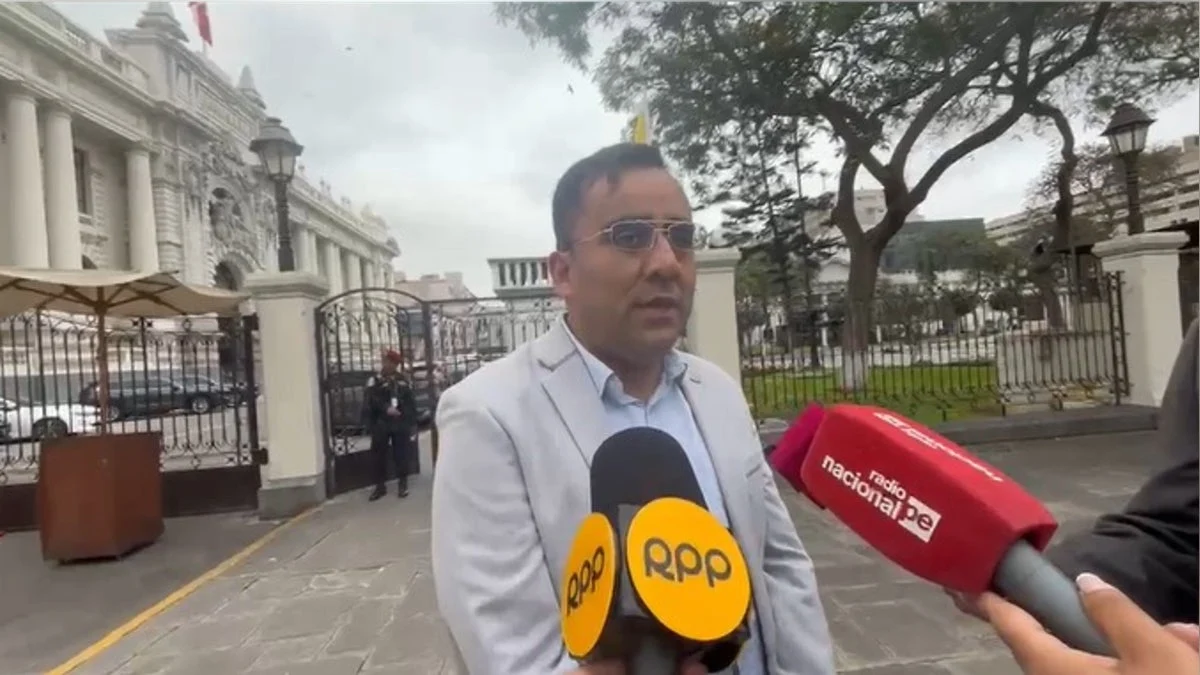
The stability of the Juntos por el Perú (JPP) parliamentary group is facing a significant threat as Congressman Marlon Aguirre, representing the Junín region, has openly acknowledged that he is evaluating his future within the party. This potential departure comes amidst a flurry of internal friction, public disagreements over political strategy, and the initiation of disciplinary proceedings against him.
Aguirre’s frustration stems from what he characterizes as a lack of democratic internal processes and an overly rigid adherence to party lines that, in his view, conflict with his duty to his constituents in Junín. The situation has escalated to the point where other political forces, including opposition parties, have reportedly extended invitations for him to join their ranks. As the standoff between Aguirre and the party leadership intensifies, the incident serves as a microcosm of the broader challenges facing political parties in the Peruvian Congress: the ongoing struggle between regional representation and centralized party discipline.
Chronology of a Political Fracture
To understand how the relationship between Marlon Aguirre and Juntos por el Perú reached this breaking point, it is essential to look at the timeline of recent events:
- Initial Tensions: Discrepancies began to surface regarding the internal management of the party. Aguirre grew increasingly vocal about his dissatisfaction with how critical political decisions—specifically the selection of leadership for congressional committees—were being handled.
- Public Outcry: The conflict moved from the hallways of Congress to the public sphere when Aguirre made statements questioning the "lack of democracy" within the party, claiming that decisions were being dictated rather than debated.
- The Disciplinary Threat: In response to these critiques, JPP colleague Ernesto Zunini publicly warned that the party would evaluate Aguirre’s permanency. This was followed by a formal request from the Regional Committee of Juntos por el Perú in Junín, which urged the parliamentary bench to initiate disciplinary actions against him.
- The Ultimatum: As of this week, Aguirre has confirmed that he is holding meetings to discuss his future, acknowledging that he is weighing "various proposals" from other political groups while simultaneously defending his record as a representative of the people of Junín.
Supporting Data: The Conflict of Representation
At the heart of this controversy lies a fundamental question of political philosophy: Who does a legislator serve?
Aguirre’s position is clear: he views his mandate as being owed primarily to the voters of Junín, not to the party hierarchy. In his public statements, he has emphasized that his political actions are driven by the specific needs and demands of his constituents. When those needs clash with the "strict guidelines" of the party leadership, Aguirre has opted to prioritize the former.
Regional vs. National Dynamics
The Regional Committee of Junín’s decision to call for disciplinary measures against one of their own representatives is particularly telling. It highlights a disconnect between the national party’s agenda—which often focuses on maintaining bloc unity to maximize bargaining power in Congress—and the local party’s perception of how their representative should behave. By publicly calling for his sanction, the Regional Committee effectively burned bridges with Aguirre, forcing the legislator to seek support outside of his current political home.
Official Responses and Political Maneuvering
The Perspective of the Leadership
Congressman Ernesto Zunini has acted as the primary spokesperson for the party’s dissatisfaction with Aguirre. Zunini’s stance is that political parties function on the basis of shared ideology and collective decision-making. From this perspective, Aguirre’s public criticism of committee appointments and internal processes is not merely an opinion, but an act of insubordination that undermines the party’s cohesion. Zunini even went as far as to suggest that Aguirre’s political values are more closely aligned with Fuerza Popular, effectively labeling him an ideological outsider.
Aguirre’s Defense
In his defense, Aguirre has maintained a posture of defiance. He stated, "I have to account to Junín, not to a party." He views the threat of disciplinary action as a tool of intimidation rather than a legitimate democratic process. Regarding the suggestion that he might join Fuerza Popular or another opposition group, Aguirre has not denied the existence of these offers. Instead, he has framed his decision-making process as a necessary reflection on the state of his current party, implying that if the organization does not reform its internal management, his departure is all but inevitable.
Broader Implications for the Peruvian Congress
The Erosion of Party Discipline
The situation involving Marlon Aguirre is not an isolated incident in the Peruvian legislative landscape. Throughout the current term, several parliamentary groups have suffered from defections, fragmentations, and the migration of legislators to other benches. This trend points to a systemic weakness in party loyalty and the prevalence of "transfuguismo" (the act of switching parties).
When a legislator of Aguirre’s profile threatens to leave, it weakens the bloc’s voting power and complicates the formation of alliances for key legislation. For Juntos por el Perú, the loss of a member from a strategic region like Junín would be a significant blow to their regional influence.
The Crisis of Internal Democracy
Aguirre’s claim that "there is no longer democracy" within his party strikes a chord with broader public sentiment. Many voters perceive political parties in Peru as closed, elitist organizations where decisions are made by a handful of leaders, often ignoring the voices of their grassroots members or their elected representatives. By challenging this dynamic, Aguirre is tapping into a popular narrative that demands greater transparency and inclusivity within political structures.
The Role of Opposition Alliances
The fact that opposition parties have approached Aguirre is a testament to the fluid nature of the current Congress. Political groups are constantly looking to weaken their rivals by poaching members, thereby altering the balance of power in plenary sessions and committee assignments. This competitive environment turns every internal party conflict into a high-stakes chess match where the potential reward for an aggrieved legislator is a fresh start in a new, perhaps more welcoming, political environment.
Concluding Analysis: What Comes Next?
The resolution of this conflict rests on two potential paths. The first is a reconciliation, which would require the leadership of Juntos por el Perú to offer concessions regarding internal governance and perhaps walk back the calls for disciplinary action. Given the public nature of the insults exchanged, this path appears narrow and difficult to navigate.
The second, and more likely, path is the formalization of the divorce between Aguirre and his party. Should he choose to leave, it will undoubtedly trigger a new round of accusations and counter-accusations. The party will likely paint him as a traitor who put personal ambition above collective goals, while Aguirre will present himself as a defender of democratic principles and the interests of the people of Junín.
Regardless of the outcome, this incident highlights the precarious state of political representation in Peru. When the internal machinery of a party becomes so rigid that it alienates its own members, it risks not only losing those individuals but also losing the trust of the electorate. As the clock ticks toward a final decision from the legislator, the eyes of the political establishment remain fixed on the internal dynamics of Juntos por el Perú, waiting to see if this is the start of a broader exodus or a temporary skirmish in an ongoing battle for the soul of the party.
The challenge for Aguirre will be to prove that his potential defection is based on genuine ideological or procedural principles, and not merely a tactical maneuver to gain a more advantageous position elsewhere. Conversely, the challenge for Juntos por el Perú is to demonstrate that they can govern their internal affairs with the same level of integrity they demand from the nation’s political institutions. As it stands, the party is in a defensive crouch, and the political future of both the legislator and the group remains shrouded in uncertainty.