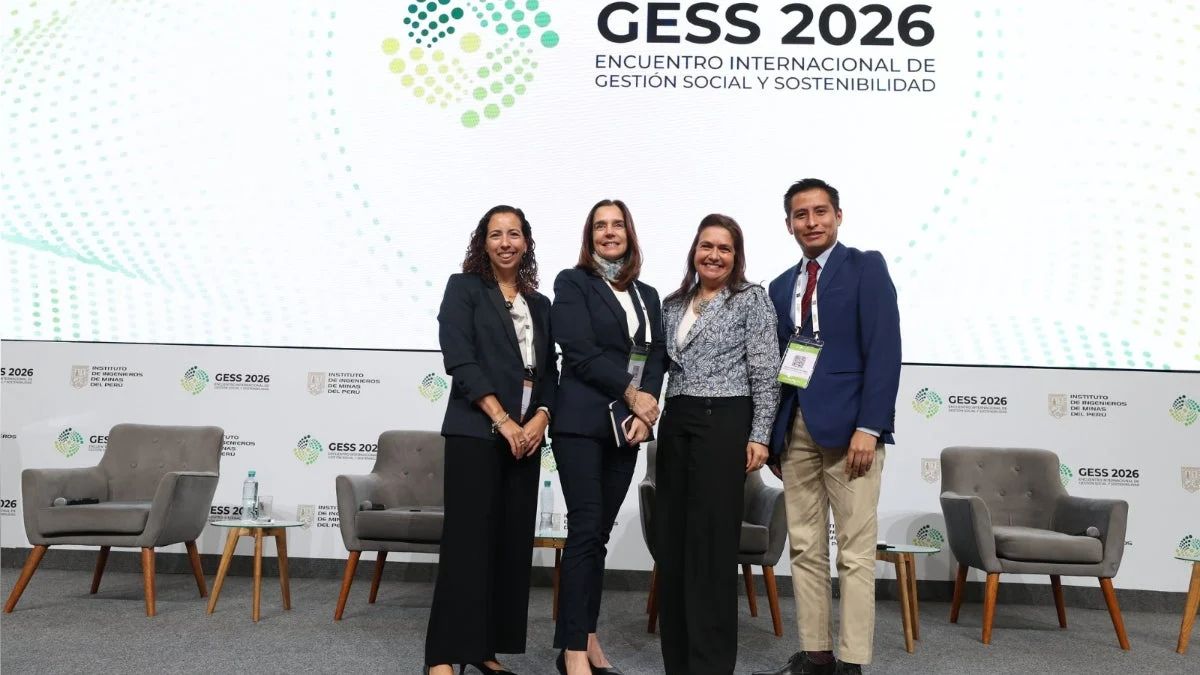
In an era defined by political volatility and social fragmentation, the concept of "trust" has emerged not merely as a social virtue, but as the essential currency for national development. During the recent International Meeting on Social Management and Sustainability (GESS 2026), leaders from the private sector, media, and civil society converged on a sobering reality: the Peru that its citizens envision—one characterized by safety, quality public services, and meritocratic opportunity—cannot be built on rhetoric alone. It requires a fundamental recalibration of how institutions interact with the public.
The consensus reached at GESS 2026 suggests that the path forward is paved with three pillars: radical coherence, active listening, and the creation of tangible pathways for the next generation. As the nation navigates complex demographic and economic challenges, the dialogue highlighted that restoring faith in public and private institutions is the primary prerequisite for any meaningful progress.
The Anatomy of Trust: Bridging the Gap Between Intent and Action
The discourse at GESS 2026 underscored that trust is a fragile commodity, easily eroded by the disconnect between public promises and private actions. María Cecilia Villegas, manager of Capitalismo Consciente (Conscious Capitalism), provided a window into the sentiments of citizens across 12 diverse regions of Peru. According to her findings, there is a unified national desire for a stable, secure, and prosperous environment.
Coherence as a Competitive Advantage
Villegas emphasized that the current crisis of trust is, at its core, a crisis of character. "We all prioritize trust as an indispensable requirement to build the country we want to live in," she noted. However, she argued that the responsibility lies with the individual and the institution alike to act with integrity even when no one is watching. This "coherence" involves recognizing the rights of those with opposing viewpoints—a critical step in de-escalating the polarization that has characterized Peruvian political life for years.
To facilitate this, Villegas proposed a framework centered on the trifecta of innovation, technology, and trust. These tools must not be viewed as mere operational upgrades, but as social enablers designed to repair the frayed relationship between citizens, corporations, and the state.
The Role of Media: Rigor in an Age of Disinformation
In the panel titled "Trust that Unites: How do we build the Peru we want?", Frida Delgado, Vice President of the RPP Group, offered a critical perspective on the media’s role. In a climate where information is often weaponized, Delgado argued that the media serves as a vital pillar for social cohesion.
The RPP Experience: Data-Driven Credibility
Following the 2021 general elections, a period marked by intense ideological divide, the RPP Group was recognized by the Reuters Institute and the University of Oxford as the most trusted private media outlet in Peru. For Delgado, this accolade was a double-edged sword: "For us, it was great news, but also a great responsibility."
The RPP model for rebuilding trust relies on three distinct actions:
- Principled Journalism: Maintaining an uncompromising standard of rigor.
- Citizen-Centric Listening: Actively acknowledging the "pains" of the population, whether they stem from economic hardship or institutional failure.
- Agenda-Setting: Moving beyond the "news of the day" to elevate structural challenges—such as early childhood education and long-term economic growth—to the forefront of public debate.
Delgado stressed that trust creates a virtuous cycle. By demonstrating a genuine commitment to the country’s well-being, the media builds an audience that, in turn, provides the financial sustainability necessary to maintain institutional independence.
The Demographic Imperative: Investing in the Future
A significant portion of the GESS 2026 forum was dedicated to the concerns of the youth. Mauricio Pahuara, Director of Youth, Politics, and Development, warned that Peru’s demographic landscape is shifting. With birth rates falling, the nation must act now to ensure that its current youth population feels a sense of belonging and agency.
Beyond Scholarships: A Holistic Vision
Pahuara challenged the traditional view that youth policy should be limited to education grants. While access to schooling is essential, it is insufficient if the market cannot absorb these individuals into productive roles. "If we do not start looking at how we can consolidate the dreams that youth have in the country, we will not see a clear horizon," he warned.
The panel identified a "participation deficit." The isolation forced by the COVID-19 pandemic severely damaged the social fabric and the physical spaces where young people historically interacted and organized. Rebuilding these hubs—both physical and virtual—is essential for fostering the next generation of civic leaders who are willing to invest their talents in Peru rather than seeking opportunities abroad.
The Shift in Civic Expectations
The dialogue at GESS 2026 highlighted a profound transformation in how the public views corporate and governmental projects. The era of "passive consultation"—where citizens were merely informed of developments—is over. Today, the public demands active participation and, above all, results.
The New Social Contract
The consensus is that modern social management must prioritize:
- Transparency: Providing clarity on the decision-making process.
- Effectiveness: Demonstrating that projects deliver tangible benefits to the local territory.
- Inclusivity: Ensuring that those affected by policy or industry are co-authors of the solutions.
Innovation, in this context, is not just about adopting new software; it is about changing the institutional mindset. It involves listening to stakeholders, understanding their unique regional constraints, and planning with a long-term horizon rather than chasing short-term public relations victories.
Conclusion: Trust as a Consequence of Action
As the GESS 2026 forum drew to a close, the message from the organizers was unequivocal. Jimena Sologuren, co-president of GESS 2026, synthesized the day’s discussions into a single, powerful mandate: "Trust is not a speech; trust is action, it is coherence, it is listening, and it is responsibility."
The path to a more cohesive Peru is long and fraught with challenges, ranging from economic inequality to political instability. However, the alignment of perspectives from the private sector, the media, and civil society suggests a growing maturity in the national discourse. By moving away from abstract promises and toward a model of rigorous, transparent, and inclusive action, Peru’s leaders hope to restore the trust that is, ultimately, the bedrock of any functioning society.
The participants left with a clear directive for the coming years: the "Peru we want" will not be gifted by political decree; it will be earned through the consistent, daily labor of building trust one interaction, one policy, and one community at a time.