Executive Summary: The Fiscal Challenge
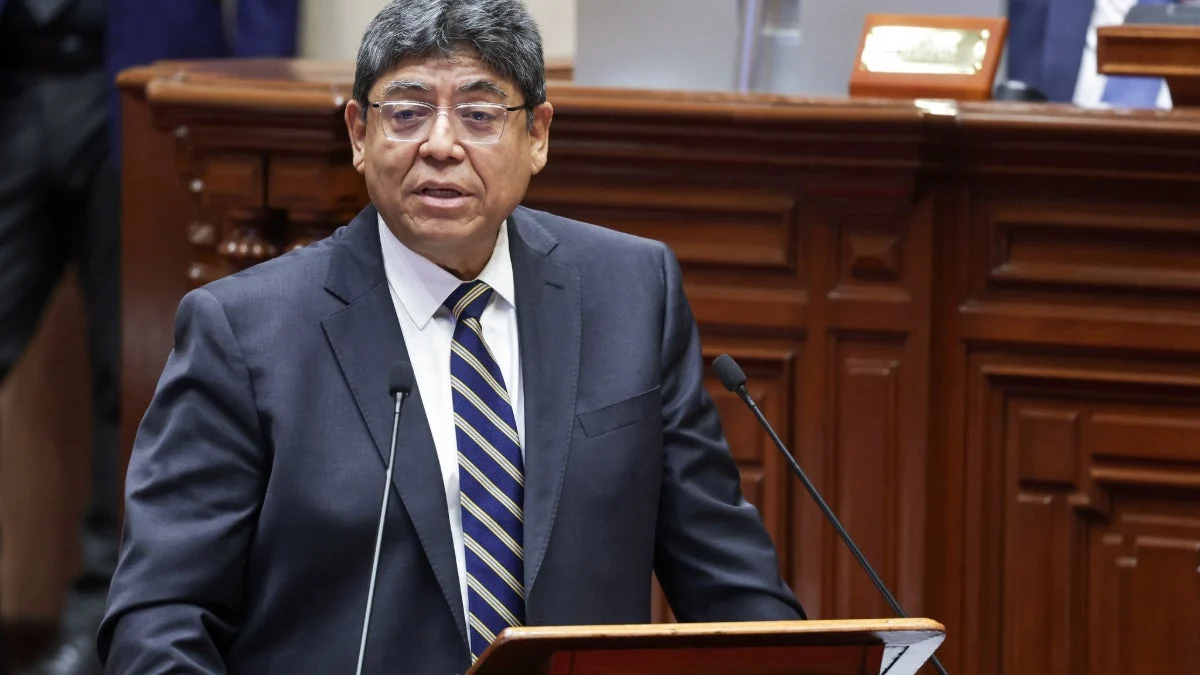
In a landmark presentation before the Peruvian Congress regarding the 2027 Public Budget and financial equilibrium, Minister of Economy and Finance Elmer Cuba unveiled a stark diagnostic of the national economy. Despite Peru’s reputation for robust macroeconomic indicators and a growth rate that consistently outpaces its regional peers, the nation suffers from a chronic fiscal ailment: a pervasive culture of tax non-compliance.
Minister Cuba revealed that tax evasion in Peru currently accounts for 9% of the national Gross Domestic Product (GDP). This figure significantly eclipses the Latin American average of 6.7%, placing Peru in a precarious position where its economic potential is being undermined by a lack of fiscal discipline. Crucially, the Minister has set a definitive course: the government will focus on aggressive enforcement and formalization rather than burdening the public with hikes to the General Sales Tax (IGV) or the Income Tax.
The Anatomy of Evasion: Beyond the Informal Sector
For decades, the narrative surrounding tax evasion in developing economies often pointed toward the informal street vendor or the small, unregistered micro-entrepreneur. However, Minister Cuba’s analysis shifts this perspective significantly. He argued that the core of the problem lies not with the survival-mode entrepreneur, but with established, medium-to-large-sized companies that possess the technical and financial capacity to pay but choose to circumvent their obligations.
The Rise of Digital Fraud
Perhaps the most striking element of the Minister’s address was his blunt assessment of modern evasion tactics. "The typical tax evader in Peru today is a medium-sized company that purchases fraudulent invoices," Cuba noted. He highlighted the chilling reality of the digital age, where the sale of "phantom" invoices—designed to artificially inflate business costs and reduce taxable income—has become so normalized that it is openly marketed on social media platforms like TikTok.
This systemic corruption of the tax base creates an uneven playing field. Honest businesses, which comply with their tax obligations, find themselves at a competitive disadvantage against rivals who artificially lower their costs through illicit accounting practices.
Chronology of the Fiscal Stance
To understand the current policy trajectory, one must look at the evolution of the Peruvian Ministry of Economy and Finance’s (MEF) strategy over the past few years:
- 2023-2024: The MEF focused on stabilizing post-pandemic economic recovery, prioritizing liquidity and investment incentives. During this time, discussions on tax reform were largely centered on broadening the base.
- Late 2025: Internal audits and international assessments (by entities like the OECD and IMF) began to highlight the widening gap between Peru’s growth rate and its tax collection efficiency.
- The 2026 Milestone: A significant policy shift occurred as the government reached the expiration of various tax exemptions. The MEF moved to reassure the public that savings accounts would remain exempt from income tax, signaling that the administration favored incentivizing domestic savings over direct taxation of the middle class.
- 2027 Budget Proposal: The current phase. Minister Cuba has explicitly rejected the "easy path" of raising tax rates. Instead, the strategy is a multi-year plan to recover 2% of the GDP by tightening loopholes and increasing audit efficacy.
Supporting Data: The Cost of Non-Compliance
The economic implications of the 9% evasion rate are profound. When contextualized, the figures underscore the magnitude of the resources currently lost to the state:
The "2% Recovery" Objective
Minister Cuba proposed an ambitious but calculated target: reducing tax evasion by 2 percentage points of the GDP over the next two years. The financial math behind this goal is staggering. Two percentage points of Peru’s current GDP is equivalent to approximately US$6 billion (or roughly S/20 billion).
To put this sum into perspective, this capital infusion would be transformative for the nation:
- Infrastructure: It could fund the construction of thousands of kilometers of roads, bridges, and regional airports that remain stalled due to budget constraints.
- Social Safety Nets: The funds could drastically increase the reach of social programs, including nutrition for children, rural healthcare, and expanded pension coverage.
- Debt Servicing: A portion could be redirected toward reducing the national debt, thereby improving Peru’s credit rating and lowering interest rates for future public and private borrowing.
Regional Comparison
Peru’s 9% evasion rate compared to the 6.7% regional average creates a "paradox of growth." While Peru is a regional leader in macroeconomic stability, it remains an underperformer in fiscal sovereignty. The government’s thesis is that if Peru could merely reach the regional average, it would instantly unlock billions in developmental capital without the political instability caused by raising tax rates.
Official Responses and Strategic Pillars
The MEF’s approach is built on two primary pillars: Efficient Enforcement and Quality of Expenditure.
Pillar 1: Digital Auditing and Formalization
The Ministry intends to leverage modern data analytics to identify discrepancies in tax filings. By cross-referencing digital payment trails and third-party verified transactions, the tax authority (SUNAT) is expected to become more surgical in its audits. The goal is to make the cost of evasion higher than the cost of compliance, targeting the "invoice factories" specifically.
Pillar 2: The Quality of Public Spending
Minister Cuba acknowledged that simply collecting more money is not a panacea. He emphasized that the state must address the "efficiency gap." Historically, Peru has struggled with the execution of public projects, where funds are allocated but either trapped in bureaucratic red tape or lost to corruption during implementation.
"It is useless to spend more than last year if the quality of the service does not improve," the Minister remarked. This statement serves as a warning to regional and municipal governments that the MEF will be monitoring the impact of spending, not just the volume of the budget.
The Implications for the Peruvian Economy
The government’s decision to avoid tax hikes is a strategic move to maintain investor confidence and consumer spending power. By signaling that the "rules of the game" (tax rates) will remain stable, the MEF hopes to encourage long-term private investment.
For the Private Sector
Businesses that have relied on aggressive tax planning or illicit invoice schemes will likely face a period of heightened scrutiny. However, for the formal, tax-compliant sector, this policy provides a much-needed level of predictability. It removes the threat of "tax shocks" that often cause companies to delay hiring or capital expenditures.
For the General Public
The average citizen is the primary beneficiary of this strategy. By avoiding an increase in the IGV—a regressive tax that impacts the cost of all goods and services—the government is effectively shielding the purchasing power of the poorest households. If the state succeeds in its goal, the resulting increase in public services and infrastructure will provide a tangible improvement in the quality of life without the immediate pain of a higher tax bill.
Conclusion: A Turning Point for Fiscal Integrity
The path forward for Peru is clear but challenging. By identifying tax evasion as the primary obstacle to development, Minister Elmer Cuba has framed the issue not just as an economic problem, but as a moral and structural one.
The promise to recover S/20 billion without raising taxes is an ambitious pledge that will test the administrative capabilities of the Peruvian government. If successful, it will set a new precedent for fiscal management in Latin America—proving that a nation can close its development gaps not by squeezing its citizens for more, but by ensuring that everyone contributes their fair share. As the 2027 budget debates proceed, the eyes of both the international markets and the Peruvian citizenry will be on the MEF to see if they can turn this ambitious blueprint into a reality.