In a decisive move to bolster national resilience against the looming climate threat, the Peruvian Ministry of Economy and Finance (MEF) and the country’s foremost business associations have established a formal coordination framework. As the specter of the El Niño phenomenon threatens to disrupt infrastructure, supply chains, and economic stability, the private sector has pledged its extensive logistical and operational assets to support the Executive branch’s disaster response strategy.
This collaboration marks a significant shift in emergency management, moving from reactive governance to a proactive, public-private synergy designed to protect the most vulnerable regions and critical infrastructure from impending climatic volatility.
The Core Facts: A Unified Front Against Climate Risk
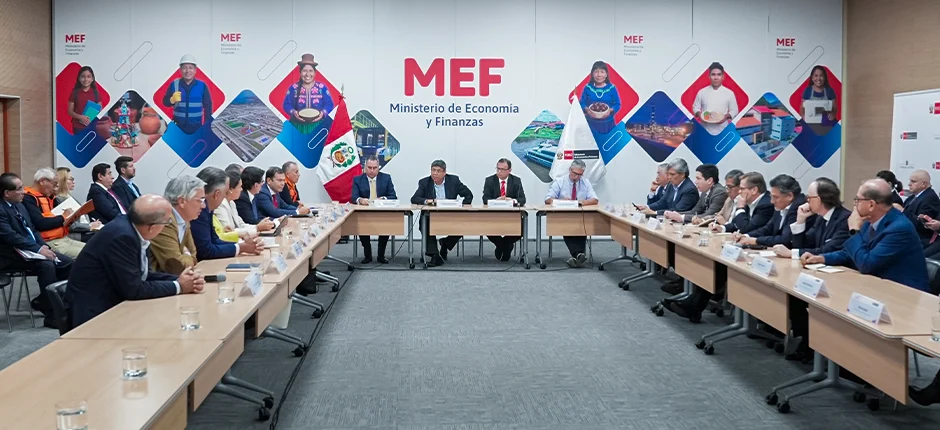
The agreement, reached during a session of the National Commission for the Management of El Niño Risk (FEN), serves as a blueprint for how the Peruvian state and private industry will interact during the anticipated emergencies. The primary objective is to synchronize the government’s regulatory reach with the agility and resources of the private sector.
Key components of this alliance include:
- Asset Mobilization: Businesses have committed to making machinery, heavy equipment, motobombs, storage facilities, and technical personnel available for immediate deployment.
- Regulatory Streamlining: The private sector has formally proposed the simplification of permits and authorization processes, arguing that bureaucratic bottlenecks are the primary obstacle to rapid emergency intervention in high-risk zones.
- Centralized Coordination: The operational integration of these private assets will be spearheaded by Carlos Neuhaus, President of the Association of Shopping Centers and Entertainment of Peru (ACCEP), with the strategic backing of "Hombro a Hombro" (Shoulder to Shoulder), an organization with a proven track record in disaster relief.
Chronology of Collaborative Efforts
The current cooperation is not an isolated event but the culmination of months of heightened awareness regarding the Pacific warming cycle.
- Early 2023 (Warning Phase): Meteorological agencies begin signaling a high probability of a strong El Niño event. The private sector begins internal risk assessments, identifying critical supply chain vulnerabilities.
- Mid-2023 (Policy Formulation): The MEF begins drafting emergency budget allocations to address the infrastructure deficit. Preliminary discussions occur between the CONFIEP (National Confederation of Private Enterprise Institutions) and the Executive branch to discuss how companies can support the state.
- Current Session (Operational Integration): The meeting of the National Commission for the Management of FEN formalizes the roles. The government issues a call for concrete, data-backed proposals regarding the deployment of assets, shifting the conversation from general intentions to specific operational requirements.
Supporting Data and Stakeholder Involvement
The scale of this mobilization is unprecedented, involving a cross-section of the most influential economic sectors in Peru. The diversity of the participating gremios ensures that the response is not limited to one industry but covers the entire economic fabric of the country.
Participating Stakeholders
The coalition represents a comprehensive cross-section of the Peruvian economy:
- Agriculture & Food Security: The Association of Agrarian Producer Guilds of Peru (AGAP).
- Financial Stability: The Association of Banks of Peru (ASBANC).
- Infrastructure & Construction: The Association for the Promotion of National Infrastructure (AFIN), the Peruvian Chamber of Construction (CAPECO), and the Confederation of Real Estate Developers of Peru (CODIP).
- Resource Extraction & Energy: The National Society of Mining, Petroleum, and Energy (SNMPE) and the National Fisheries Society (SNP).
- Trade & Logistics: ComexPerú, alongside the strategic support of "Hombro a Hombro."
These organizations control the vast majority of the country’s logistical backbone, including heavy earth-moving equipment, sophisticated telecommunications networks, and the warehouses necessary for the distribution of humanitarian aid.
Official Responses and Strategic Negotiations
During the summit, Jorge Zapata Ríos, president of the CONFIEP, emphasized that the private sector’s contribution is not merely charitable but a strategic necessity for the continuity of the national economy. "The private sector offers not just resources, but the technical expertise to maintain operational continuity even under extreme conditions," Zapata stated.
The MEF’s Stance on Regulatory Reform
The Ministry of Economy and Finance has adopted a pragmatic approach. While the Executive is keen to accept private sector support, it has mandated that all proposals for the "simplification of permits" must be accompanied by detailed documentation. The MEF has requested:
- Resource Mapping: Precise lists of equipment and personnel available by region.
- Time-bound Action Plans: Clear timelines for the implementation of proposed interventions.
- Need Assessment: Justification for the suspension of specific regulatory hurdles, ensuring that environmental and safety standards are not compromised in the rush to prevent flood or landslide damage.
This "data-first" requirement from the MEF is designed to ensure that the government retains oversight and legal accountability, even as it empowers the private sector to act with greater speed.
Implications for the Peruvian Economy and Future Resilience
The implications of this public-private pact are far-reaching. If successful, this model could serve as the standard for future climate-related crisis management in Latin America.
1. Strengthening the Supply Chain
One of the most critical risks of El Niño is the "isolation" of cities due to bridge collapses or road degradation. By positioning private sector heavy machinery in strategic hubs identified by the government, the response time for clearing road obstructions could be reduced by as much as 40%.
2. Economic Continuity
The involvement of ASBANC (Banking) and SNMPE (Mining) indicates a focus on maintaining the flow of capital and the operation of the country’s primary export engines. Keeping these sectors functional is vital to ensure the state has the fiscal revenue necessary to fund its own reconstruction efforts once the emergency phase concludes.
3. A Shift in Disaster Governance
Historically, emergency management in Peru has been highly centralized and often slow, leading to a disconnect between state-level planning and local-level reality. By decentralizing the "logistical response" to the private sector—while maintaining state oversight—the government is effectively leveraging the agility of the market to solve public sector inefficiencies.
4. The Role of "Hombro a Hombro"
The inclusion of "Hombro a Hombro" is a masterstroke in organizational design. As a specialized entity for humanitarian intervention, they bridge the gap between corporate culture and the chaotic reality of disaster zones. Their role is to ensure that when a construction company offers a bulldozer, it arrives with an operator, fuel, and a mission that aligns with the needs of the Civil Defense authorities.
Conclusion: A New Era of Preparedness
As the El Niño phenomenon draws closer, the agreement between the Peruvian government and its private sector leaders represents a maturation of the country’s disaster risk management. The transition from a reliance on government-only response to a collaborative, resource-sharing model provides a much-needed layer of safety for the population.
However, the real test lies in the execution. As the MEF begins to review the technical dossiers submitted by the guilds, the urgency of the situation will require a level of administrative efficiency that has often been absent in the past. If the government can successfully navigate the legal complexities of "fast-tracking" these interventions without sacrificing transparency, the outcome will likely result in significantly mitigated losses and a more resilient national infrastructure.
For the Peruvian citizen, this partnership offers a message of stability. While the climate may be unpredictable, the institutional response—anchored by the shared resources of the state and the private sector—is now far better positioned to weather the storm. As Carlos Neuhaus and his team begin the coordination process, the nation looks toward the coming months with a firmer sense of readiness, knowing that the engine of the economy is working in lockstep with the protection of the public good.