The political landscape in Peru has entered a period of heightened friction as the administration of President Keiko Fujimori faces growing scrutiny from opposition benches. Norma Yarrow, a prominent congresswoman representing the Renovación Popular party, has launched a blistering critique against the executive branch, demanding greater urgency in addressing the nation’s most pressing systemic failures: the deteriorating state of public health and an escalating security crisis.
As the administration approaches the end of its first quarter, the gap between campaign rhetoric—which promised rapid, transformative results—and the current reality of slow institutional progress has become the primary battleground for legislative oversight.
The Core Conflict: Security and the "100-Day" Promise
The focal point of the current political standoff is the discrepancy between President Fujimori’s electoral commitments and her recent communication strategy. During her campaign, Fujimori emphasized a platform of rapid stabilization, explicitly pledging that her administration would produce tangible results within the first 100 days of office.
However, as those days have passed, the administration has shifted its tone toward cautious expectation management. Congresswoman Yarrow has been vocal in her rejection of this pivot, arguing that the government lacks a comprehensive, actionable emergency plan to combat the surge in organized crime and public insecurity.
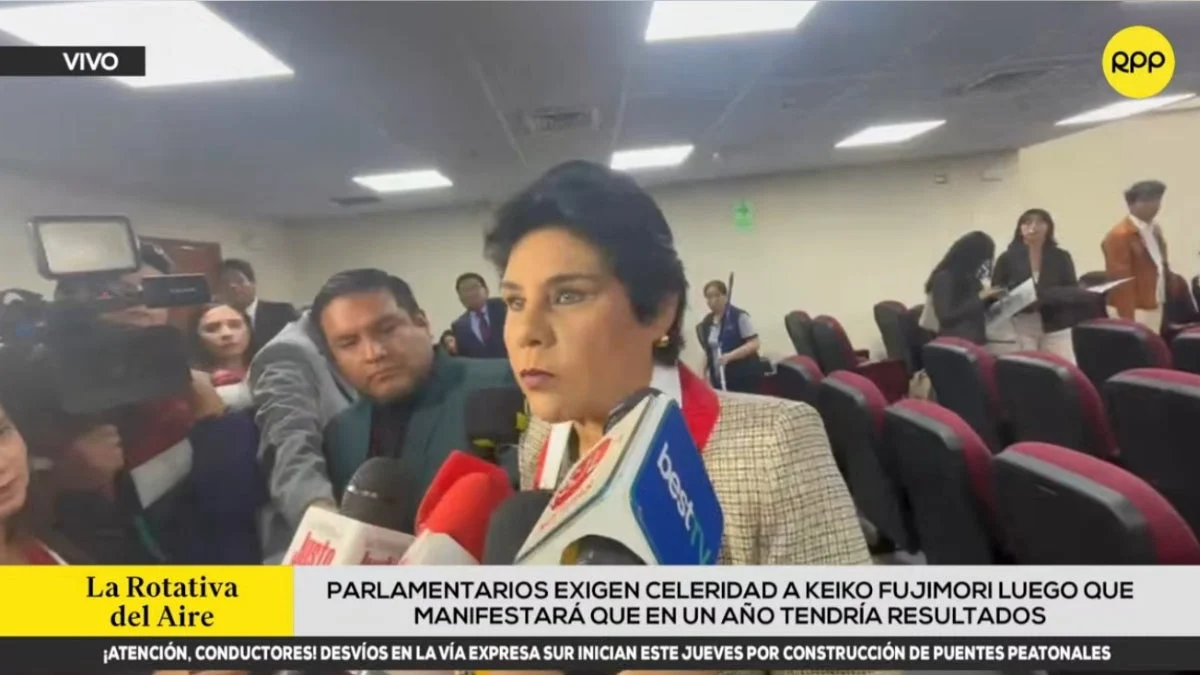
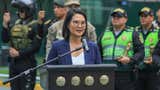
"When one assumes the presidency, she stated that in the first 100 days, we were going to see results. I believe that there is a distinct lack of celerity," Yarrow stated during a press conference this Wednesday. The legislator contends that the administration’s focus on long-term systemic reform ignores the immediate, day-to-day threats facing the citizenry, who are demanding immediate intervention in the face of rising crime rates.
A Chronology of Expectation Management
To understand the current friction, one must look at the recent timeline of the Fujimori administration’s messaging:
- Mid-August 2026: Amidst mounting pressure regarding the lack of immediate policy shifts, President Fujimori publicly addressed the nation, urging citizens to exercise "patience and trust." She emphasized that deep-seated structural problems, particularly in the economy and security sectors, cannot be resolved within a 15-day window.
- Late August 2026: During a formal engagement at the Presidential Palace, the President reiterated that her government inherited "terrible figures and statistics" from previous administrations. She signaled that while foundational work is underway, the public should not expect significant improvement until at least 2027.
- Early September 2026: Congresswoman Yarrow formalizes her criticism, labeling the government’s timeline as an attempt to "buy time" at the expense of the public’s safety and health.
This chronology highlights a clear disconnect: the executive branch views the current period as one of necessary stabilization and diagnosis, while the legislative opposition views it as a period of executive paralysis.
The Health Sector: A System in "ICU"
Beyond security, the public health crisis has become a secondary flashpoint for the opposition. Congresswoman Yarrow has characterized the government’s approach to the health system as performative. She specifically questioned the administration’s ongoing efforts to perform "diagnostics" on the health sector, arguing that the state of the system is already common knowledge.
"Everyone knows that in health, we are essentially ‘unredeemable,’ we are in the Intensive Care Unit (ICU), as the saying goes," Yarrow remarked. She further criticized the administration’s personnel choices, expressing strong disapproval over the continued presence of officials linked to the Alianza para el Progreso (APP) party within the health ministry.
Yarrow’s argument rests on the premise that holding onto personnel from previous administrations hampers the ability to implement a "clean break" policy. For the opposition, the retention of these officials is not merely a bureaucratic decision but a signal that the government is unwilling to pursue the radical structural changes necessary to address the crisis in hospitals and primary care facilities.
Supporting Data and Socio-Political Context
The frustration expressed by the opposition is mirrored in broader public sentiment. According to recent political analysis, the administration’s struggle to reconcile campaign promises with the realities of the public budget and administrative hurdles has led to a dip in public approval.
The security situation, in particular, remains a critical metric. Indicators show that while the administration is working on long-term legislative reforms for the national police and intelligence services, the immediate impact on street-level crime remains minimal. The government maintains that it is re-establishing the "order and tranquility" promised during the campaign, but insists that the destruction of the existing state apparatus by previous regimes necessitates a longer timeline for recovery.
Official Responses from the Executive Branch
The Fujimori administration has maintained a disciplined, if somewhat defensive, stance. Government spokespeople emphasize that the "terrible figures" mentioned by the President are not mere excuses, but a factual reality that complicates rapid intervention.
According to sources within the Palace, the administration’s strategy involves:
- Fiscal Consolidation: Prioritizing economic stability to prevent inflation and further currency devaluation.
- Institutional Auditing: A systematic review of all public sector contracts and personnel, which the administration claims is the only way to ensure future projects are not compromised by past corruption.
- Strategic Patience: The President has explicitly called for the public to differentiate between "immediate fixes" and "sustainable solutions," arguing that the latter requires time to manifest.
The government maintains that it is operating with transparency, providing regular updates on the progress of its audits, and remains confident that by 2027, the results of these efforts will be undeniable.
Political Implications and Future Outlook
The critique leveled by Norma Yarrow and the Renovación Popular party is indicative of a broader trend: the fragmentation of political support in Congress. As the administration’s "honeymoon period" comes to an end, the executive branch finds itself in a precarious position where it must balance its long-term strategic vision with the urgent, high-volume demands of a restless public and an increasingly assertive legislature.
The implications for the remainder of 2026 are significant. If the government fails to show early, visible "wins" in the security sector, the political capital of the President could diminish, making it increasingly difficult to pass critical legislation in the coming years. Conversely, if the administration successfully navigates these criticisms and demonstrates that its "diagnostic" phase has yielded actionable plans, it could silence the opposition and solidify its mandate.
The Legislative Path Forward
Moving forward, observers expect more rigorous interpellation sessions in Congress. The opposition is expected to push for specific, time-bound milestones for the Ministry of Health and the Ministry of the Interior. The pressure is on the executive to move from the "planning phase" to the "execution phase."
In conclusion, the current tension is a litmus test for the Fujimori presidency. While the administration points to the heavy burden of the past as a reason for its slow pace, the opposition—led by figures like Yarrow—is signaling that the public’s patience is a finite resource. Whether the government can bridge this gap between its long-term roadmap and the immediate needs of the people will determine the trajectory of its entire term.
As the country looks toward 2027, the political climate remains volatile, with both the government and the legislature locked in a high-stakes debate over the definition of progress and the definition of a crisis. The coming months will likely see either a renewed sense of confidence in the administration’s plan or a deepening of the legislative gridlock that has characterized the initial months of this term.