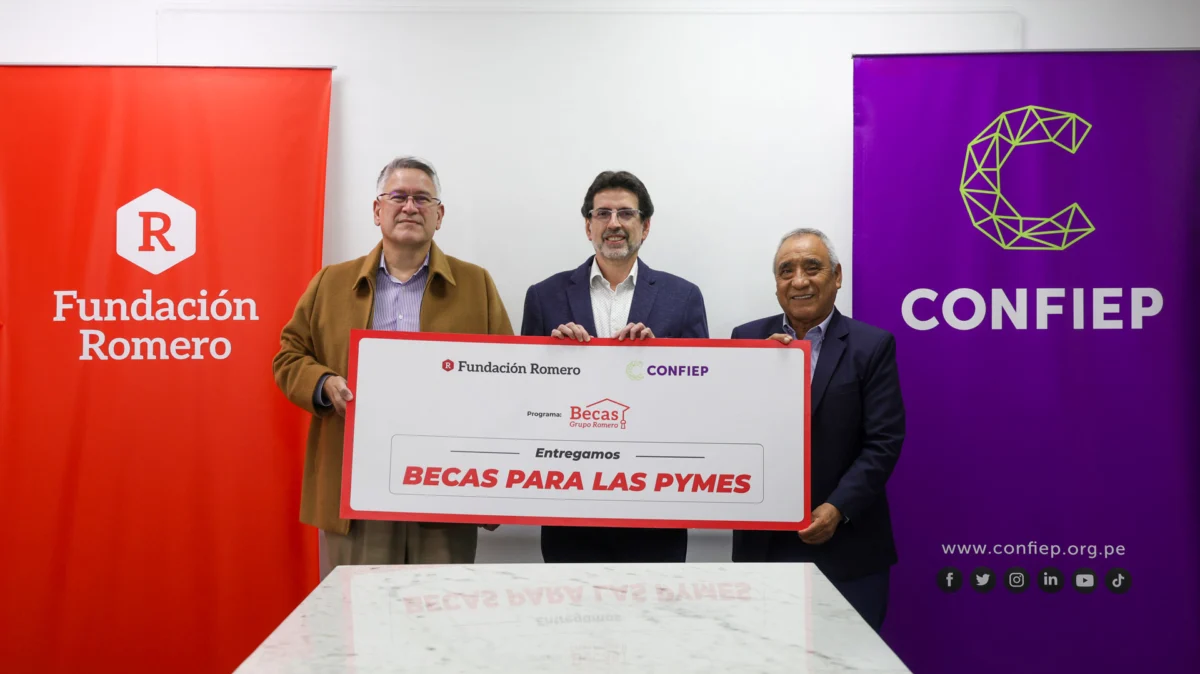
In a significant move aimed at fortifying the backbone of the Peruvian economy, the Fundación Romero and the Confederation of National Business Institutions (CONFIEP) have announced a strategic partnership to democratize access to high-quality education for micro and small entrepreneurs. Through the "Becas Grupo Romero" program, this initiative seeks to dismantle barriers to growth by providing free, specialized training designed to enhance technical competencies and foster sustainable business expansion.
The partnership, formalized during the inaugural Annual Forum of Micro and Small Enterprises, signals a concerted effort by the private sector to address the systemic challenges that have long hindered the productivity of Peru’s massive MYPE (Micro and Small Enterprise) sector.
The Core Objective: Democratizing Business Education
At its heart, the collaboration between Fundación Romero and CONFIEP is driven by a singular mission: to empower the Peruvian entrepreneur. By offering curated learning paths, the Becas Grupo Romero program provides participants with the tools necessary to navigate an increasingly complex economic landscape.
These educational tracks are not merely theoretical; they are designed to be actionable, focusing on operational efficiency, digital transformation, and leadership skills. By providing this training at no cost, the initiative aims to bridge the knowledge gap that often leaves small business owners struggling to scale their operations or transition from informal to formal status.

Chronology of the Strategic Alliance
The formalization of this alliance did not occur in a vacuum; it was the culmination of months of dialogue between business leaders and stakeholders concerned with the stagnation of small-scale productivity.
- Early 2026: Preliminary discussions between CONFIEP and Fundación Romero regarding the persistent "productivity trap" facing small businesses.
- Mid-2026: Development of the "Becas Grupo Romero" framework, focusing on remote-accessible learning to ensure inclusivity across Peru’s diverse regions.
- The Announcement: The official signing ceremony took place at the First Annual Forum of the Micro and Small Enterprise of Peru, hosted by the Association PYME Perú and supported by CONFIEP.
- Implementation Phase: Following the signing by CONFIEP President Jorge Zapata and Fundación Romero Executive Director Martín Pérez, the rollout of the scholarship platform began immediately, targeting entrepreneurs nationwide.
The Landscape: Why MYPEs Need Support
To understand the gravity of this initiative, one must examine the composition of the Peruvian economy. Micro and small enterprises constitute an staggering 99.1% of the country’s business fabric. Despite their overwhelming presence, they remain the most vulnerable segment of the economy.
Key Structural Barriers
During the Annual Forum, experts and industry leaders mapped out the "Five Pillars of Difficulty" that currently hinder MYPE growth:
- Informality: A significant portion of the MYPE sector operates outside the tax and legal framework, limiting their ability to secure credit or bid for government contracts.
- Low Productivity: Lacking access to modern management techniques and technology, many MYPEs operate at low output levels, struggling to compete with larger or international players.
- Financial Exclusion: Traditional banking remains largely inaccessible to those without formal credit histories or collateral, forcing many into high-interest, informal lending cycles.
- The Digital Divide: While the world shifts toward e-commerce and digital logistics, a large percentage of Peruvian small businesses lack the foundational digital literacy to participate in the global marketplace.
- Market Access: Small producers often find themselves isolated from supply chains and retail networks, unable to scale their reach beyond local boundaries.
Official Perspectives: Bridging the Gap
The signing ceremony featured statements from the architects of the program, highlighting a shared vision for national development.

Jorge Zapata, President of CONFIEP:
"Our commitment is to transform the competitive landscape of our country. We recognize that the true engine of Peru’s progress is found in the daily work of millions of micro-entrepreneurs. By partnering with Fundación Romero, we are not just providing courses; we are providing the architecture for success. Formalization and productivity are not just buzzwords—they are the requirements for our nation’s future stability."
Martín Pérez, Executive Director of Fundación Romero:
"Education is the most powerful tool for social mobility. The Becas Grupo Romero program is our answer to the inequality of opportunity. We believe that if you give a Peruvian entrepreneur the right knowledge, they will not only sustain their family but also contribute to the prosperity of their community and the entire country. We are honored to walk this path alongside CONFIEP."
Implications for the Peruvian Economy
The potential impact of this initiative extends far beyond the individual entrepreneur. If successful, the ripple effects could fundamentally shift the national economic trajectory.
1. Accelerating Formalization
By providing training that emphasizes the benefits of formalization—such as access to government procurement and financial services—the program acts as a "soft bridge." Instead of focusing on punitive measures, it uses education to demonstrate that formal status is a gateway to growth, not just a tax burden.
2. Boosting National Productivity
If a significant percentage of the 99.1% of businesses undergo training in lean management and modern production techniques, the cumulative effect on national GDP could be substantial. Productivity gains in the small business sector are directly correlated with lower unemployment and higher household income levels.
3. Enhancing Resilience
The "digitalization" aspect of the curriculum is crucial. In a post-pandemic world, the ability to pivot to digital sales channels is a survival skill. By fostering digital literacy, the program ensures that Peruvian MYPEs are resilient against future market shocks.
Looking Ahead: A Sustained Commitment
The collaboration between Fundación Romero and CONFIEP is not intended to be a one-time event. Organizers have indicated that the program will be subject to periodic review, allowing for the curriculum to evolve based on the feedback of the entrepreneurs themselves.
As the program gains momentum, the focus will likely shift toward measuring tangible outcomes: How many businesses have moved from informal to formal? What is the average increase in revenue for participants after completing the training? These metrics will be vital in determining the scalability of the program.
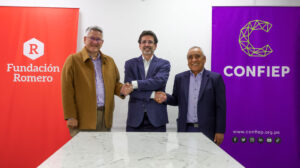
The partnership stands as a model for private-sector cooperation. By leveraging the expertise of the business community to solve public policy challenges, CONFIEP and Fundación Romero are signaling a shift in how Peru approaches economic development—moving away from reliance on top-down regulation and toward bottom-up empowerment.
Conclusion
The launch of the Becas Grupo Romero program is a beacon of progress for the Peruvian micro-enterprise sector. By addressing the critical need for training, knowledge, and modern business competencies, this initiative recognizes that the growth of the country is inseparable from the growth of its smallest businesses. As these entrepreneurs gain the skills to navigate the complexities of the modern market, they aren’t just building their own companies—they are building the future of Peru.
In the coming months, the success of this program will be watched closely by policymakers, international observers, and the millions of small business owners who stand to benefit. It is a bold, necessary step toward a more competitive, inclusive, and productive Peruvian economy.