Executive Summary: Bridging the Gap in Southern Mexico
The development of critical infrastructure in Mexico has reached a pivotal juncture with the ongoing construction of the "El Tornillo" viaduct. Strategically located along the Mitla–Entronque Tehuantepec II highway in the state of Oaxaca, this massive engineering project serves as a cornerstone for regional development. Designed to bridge the topographical challenges between the Valles Centrales and the Istmo de Tehuantepec, the viaduct represents a sophisticated solution to one of Mexico’s most historically difficult transit routes.
According to the latest reports from the Secretariat of Infrastructure, Communications, and Transport (SICT), the project has officially hit the 50% completion mark regarding its deep foundation works. As the structural skeleton of the bridge begins to rise, the project’s completion date remains firmly set for May 2027. Once operational, the viaduct will significantly reduce travel times, lower logistical costs, and bolster the socioeconomic integration of Southern Mexico.
Technical Specifications: Engineering at Scale
The "El Tornillo" project is a testament to modern civil engineering, requiring precision to navigate the rugged terrain of Oaxaca. The structure will boast a total length of 1.2 kilometers, a figure achieved through the combination of a 670-meter main bridge structure and 600 meters of sophisticated access ramps.
Rising to a height of 40 meters, the viaduct is engineered to withstand the regional seismic and geological demands. The technical design includes:

- Support Infrastructure: 17 distinct axes of support to ensure structural integrity across the uneven topography.
- Span Configuration: A sequence comprising 13 clear spans of 40 meters each, supplemented by three extended clear spans of 50 meters, allowing for optimal load distribution.
- Foundation Depth: The project involves the construction of 78 deep-seated piles, of which 30 have been successfully finalized.
To accelerate the timeline, the SICT has increased the deployment of heavy machinery specifically tailored for high-intensity foundation drilling, ensuring that the critical substructure is completed before the next phase of surface paving and deck installation commences.
Chronology of Construction: A Timeline of Progress
The realization of the Mitla–Entronque Tehuantepec II corridor, and specifically the El Tornillo bridge, follows a disciplined execution strategy.
- Phase I: Planning and Site Preparation: Initial surveying and geological analysis of the Tehuantepec river valley.
- Phase II: Foundation Mobilization: The commencement of deep-pile drilling. This phase required massive logistical coordination to bring specialized equipment into the remote mountainous region of Oaxaca.
- Phase III: Current Milestone (Q3 2026): Reaching the 50% mark in foundation development. This phase has seen the successful integration of 136 specialized workers operating across seven active work fronts.
- Phase IV: Prefabrication and Assembly: Concurrently, the prefabrication of 80 structural trabes (girders) has begun. These components are essential for the bridge deck, and their installation is now occurring in tandem with ongoing foundation work.
- Future Phase: Completion (May 2027): The final integration of access roads, structural verification, and the formal opening to public transit.
Official Oversight and Operational Deployment
During a high-level site inspection, the Secretary of Infrastructure, Communications, and Transport, Jesús Esteva Medina, conducted a comprehensive review of the ongoing works. The inspection focused on the alignment of the seven active work fronts, ensuring that the procurement of materials—specifically the high-tensile steel required for the piles and headers—remains on schedule.
The SICT has confirmed that labor force management is a priority, with 136 personnel currently stationed on-site. The complexity of the project, which includes the delicate task of building a provisional bypass over the Tehuantepec River, requires a meticulous approach to prevent environmental disruption while maintaining construction velocity.

"The progress we are seeing is not just about the volume of concrete poured, but about the coordination of multiple engineering disciplines," stated representatives during the site tour. The increase in specialized machinery has been credited with the recent surge in productivity, particularly regarding the excavation and placement of the foundational pillars.
Supporting Data: Why "El Tornillo" Matters
The necessity for the El Tornillo viaduct stems from the geographical isolation that has long hampered the transit between the Valles Centrales—a hub of cultural and agricultural activity—and the Istmo de Tehuantepec, a vital commercial and industrial gateway.
Impact on Regional Connectivity
Currently, transit between these regions involves navigating winding, high-risk mountainous roads. The completion of the Mitla–Entronque Tehuantepec II highway will transform this commute into a high-speed, secure corridor.
- Logistical Efficiency: By bypassing the current bottlenecks, commercial transport will see a reduction in fuel consumption and vehicle wear-and-tear.
- Economic Synergy: The Istmo de Tehuantepec is a key focus area for Mexico’s federal development plans. Improved access to this region is expected to stimulate private investment in the local logistics and manufacturing sectors.
- Safety: The height and stability of the 40-meter bridge will replace outdated road sections that are prone to erosion and landslides during the rainy season.
Implications for Mexico’s Infrastructure Strategy
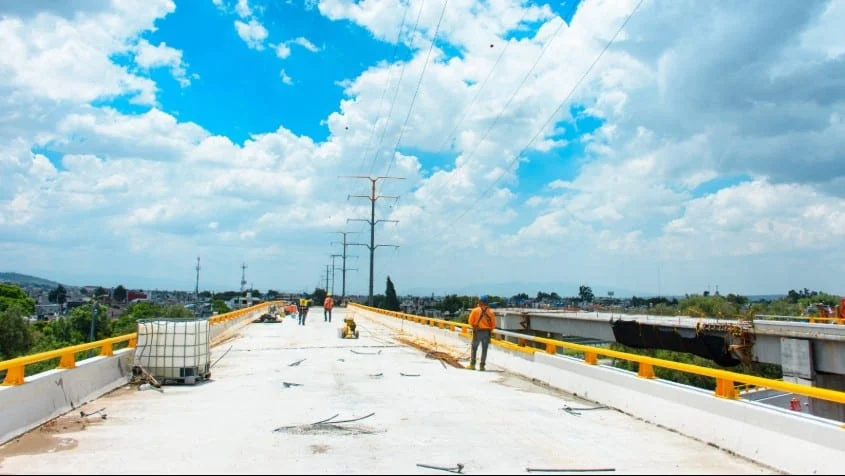
The El Tornillo project is not an isolated development; it is part of a larger, systemic upgrade to Mexico’s highway infrastructure. As seen in other recent successes, such as the completion of the Vialidad Mexiquense bridge (which recently surpassed 92% completion), the current administration is prioritizing projects that solve long-standing bottlenecks.

The implications are threefold:
- Supply Chain Resiliency: By connecting inland production centers to the coastal infrastructure of the Isthmus, Mexico is reinforcing its position as a global trade partner.
- Regional Equity: Investment in Oaxaca addresses the historical infrastructure gap between Northern and Southern states, promoting more balanced economic development.
- Engineering Capability: The successful deployment of 17 support axes and the management of deep-foundation drilling in volatile terrain serves as a showcase for the capabilities of Mexican civil engineering firms.
Addressing Challenges and Future Outlook
While the project is currently on track for its May 2027 deadline, the road ahead involves significant technical challenges. The remaining 48 piles must be drilled with the same precision as the first 30, and the assembly of the 80 pre-fabricated trabes must be executed during a period that may coincide with seasonal weather variations.
However, the current allocation of 18 heavy-duty machines and the active management of the seven work fronts suggest that the SICT has mitigated most of the immediate logistical risks. As the project enters its next phase—moving from foundational stability to the vertical construction of the piers—the "El Tornillo" viaduct will soon become a visible monument to the modernization of Southern Mexico.
In conclusion, the progress on the El Tornillo viaduct stands as a clear indicator of the government’s commitment to enhancing national connectivity. By the time the final seal is applied in 2027, the region will benefit from a robust, safe, and efficient transportation artery that bridges more than just a valley; it bridges the gap toward a more connected and economically vibrant future for the people of Oaxaca.