Lima, Peru – In a significant stride towards fostering a more sustainable and responsible mining sector, Peru’s Ministry of Energy and Mines (MINEM) has announced a series of proactive measures aimed at strengthening the small-scale and artisanal mining (MAPE) segment. This initiative, spearheaded by Minister Guillermo Shinno, involves the imminent presentation of a new framework law, enhanced data collection through a national census, and a commitment to formalization, technical assistance, and financial inclusion for MAPE operators.
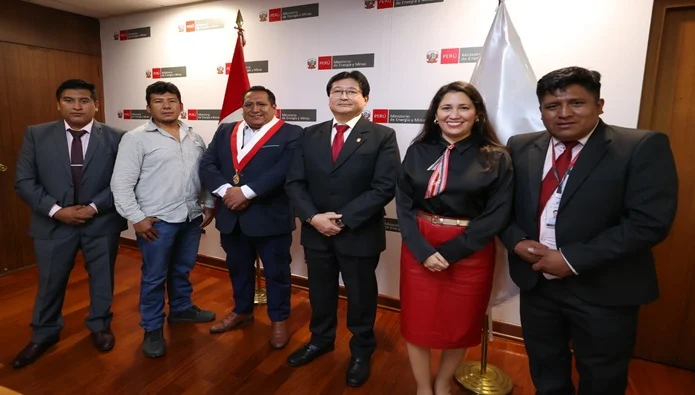
The strategic push was underscored by a recent working meeting between Minister Shinno and Congressman Bladimir Sonco. The discussions focused on evaluating the current actions being implemented by MINEM to bolster the MAPE sector, a critical component of Peru’s mineral wealth and economic landscape. This engagement signifies a collaborative effort to address the unique challenges and opportunities within this segment of the mining industry, aiming to integrate it more formally and sustainably into the national economy.
The New MAPE Law: A Framework for Modernization and Formalization
H2: Overhauling the Regulatory Landscape: The Proposed MAPE Law
A cornerstone of MINEM’s strategy is the forthcoming presentation of a new Law for Small-Scale and Artisanal Mining (MAPE). Minister Shinno announced that this crucial legislation is slated for submission within the current month. The proposed law is designed to establish a more agile and appropriate regulatory framework, specifically tailored to the distinct characteristics and operational realities of small-scale and artisanal miners.
The overarching objective of this new legal framework is to streamline and enhance the formalization processes for this significant segment of the mining activity. Currently, many MAPE operations exist in a state of informality, which can lead to environmental concerns, labor issues, and limited access to essential resources and markets. The new law aims to rectify this by creating clearer pathways for legal recognition, operational compliance, and responsible resource extraction.
The development of this law is not a unilateral effort. MINEM has engaged in extensive consultations and dialogues with stakeholders within the MAPE sector to ensure that the legislation is practical, effective, and addresses the real-world needs of its intended beneficiaries. This inclusive approach is vital for fostering buy-in and ensuring the successful implementation of the new regulations. By providing a more predictable and supportive legal environment, the new MAPE law is expected to incentivize formalization, encourage investment in cleaner technologies, and improve working conditions.
The proposed legislation is anticipated to address several key areas, including:
- Simplified Registration and Permitting: The new law is expected to introduce more straightforward procedures for miners to register their operations and obtain necessary permits, reducing bureaucratic hurdles that have historically been a barrier to formalization.
- Environmental Standards and Monitoring: While aiming for agility, the law will also emphasize the importance of environmental stewardship. It will likely outline updated environmental protection requirements and mechanisms for monitoring compliance, ensuring that MAPE activities are conducted with minimal ecological impact.
- Labor Rights and Safety: A significant focus will be placed on ensuring the rights and safety of workers within the MAPE sector. This includes provisions for fair labor practices, occupational health and safety standards, and access to social security benefits.
- Access to Technology and Training: The law may also include provisions to facilitate access to modern, cleaner technologies and provide technical training to MAPE operators, enabling them to improve efficiency, productivity, and environmental performance.
- Financial Inclusion: By formalizing operations, miners will gain better access to financial services, including loans and credit, which can be used for investment in equipment, infrastructure, and operational improvements.
The anticipation surrounding the presentation of this new law highlights the government’s commitment to recognizing and integrating the MAPE sector as a legitimate and valuable contributor to Peru’s economy, while simultaneously promoting responsible practices.
Data-Driven Policy: The National MAPE Census
H2: Illuminating the Landscape: The National MAPE Census
Complementing the legislative overhaul, MINEM, through the Vice Ministry of Mines, has announced a crucial initiative to improve data collection and analysis within the MAPE sector. Vice Minister of Mines, Mayra Figueroa, revealed that a significant agreement is set to be signed with the National Institute of Statistics and Informatics (INEI) to conduct a comprehensive national census of small-scale and artisanal mining.
This census represents a critical step towards a more informed and targeted approach to policy development and resource allocation. Currently, precise and up-to-date information on the exact number of MAPE operations, their geographical distribution, their production volumes, and the socio-economic profiles of those involved is often lacking. This data deficit can hinder the effectiveness of government interventions.
The national census will serve multiple vital purposes:
- Accurate Baseline Data: It will provide a precise baseline of the current state of the MAPE sector, offering a clear picture of its scale, scope, and characteristics across different regions of Peru.
- Informed Policy Design: The detailed information gathered will enable MINEM and other relevant government bodies to design more effective and targeted policies, programs, and support mechanisms tailored to the specific needs and challenges identified within the census.
- Resource Allocation: A better understanding of the sector will allow for more efficient allocation of government resources, ensuring that support reaches those who need it most and that investments are directed towards areas with the greatest potential for positive impact.
- Monitoring and Evaluation: The census data will serve as a benchmark against which future progress and the effectiveness of implemented policies can be measured and evaluated.
- Identification of Informal Activities: The census can help in identifying and understanding the dynamics of informal mining activities, providing a basis for developing strategies to encourage their formalization.
The partnership with INEI, a reputable national statistical agency, ensures that the census will be conducted with scientific rigor and methodological soundness, producing reliable and verifiable data. This commitment to data-driven decision-making is a hallmark of modern governance and is essential for achieving tangible improvements in the MAPE sector. The information gleaned from this census will be instrumental in shaping the future direction of mining policy in Peru, ensuring that it is responsive to the realities on the ground.
Congressman Sonco’s Support and MINEM’s Collaborative Approach
H2: A Unified Front: Political Endorsement and Ongoing Dialogue
The meeting between Minister Shinno and Congressman Bladimir Sonco highlighted a growing consensus and a unified approach towards strengthening the MAPE sector. Congressman Sonco, representing a constituency with significant mining interests, expressed his appreciation for the information provided during the meeting and unequivocally stated his willingness to actively contribute to the empowerment of small-scale and artisanal miners.
This political endorsement from a congressional representative is crucial for the successful passage and implementation of the proposed MAPE law and other initiatives. It signifies that the concerns and needs of the MAPE sector are being recognized and addressed at the highest levels of government and legislative bodies.
In response to this supportive stance, MINEM reiterated its commitment to ongoing collaboration and dialogue. The Ministry emphasized that it will continue to organize and facilitate meetings to socialize the proposed MAPE Law and its broader implications. This commitment to transparency and stakeholder engagement is vital for building trust and ensuring that the reforms are understood and embraced by the mining community.
The Ministry’s approach underscores a recognition that sustainable mining development is not solely a technical or regulatory endeavor but also requires strong political will and the active participation of all stakeholders. By fostering open communication channels and actively seeking input, MINEM aims to create a more inclusive and effective policy environment. Congressman Sonco’s commitment to championing these reforms within the legislative arena will be instrumental in navigating the political process and ensuring that the MAPE sector receives the support it deserves.
Implications for Sustainable Development and Regional Growth
H3: Beyond the Mine: Broader Economic and Social Impacts
The initiatives outlined by MINEM, particularly the new MAPE Law and the national census, carry significant implications for Peru’s broader economic and social development. Minister Shinno reiterated the overarching goal of advancing towards formal and secure mining practices, emphasizing the critical roles of technical assistance and financial inclusion.
H3: Towards a Formal and Secure Mining Future
The drive towards formalization is not merely about regulatory compliance; it is fundamentally about creating a safer, more equitable, and more environmentally conscious mining industry. Formal mining operations are better positioned to:
- Enhance Worker Safety and Well-being: Formalization mandates adherence to occupational health and safety standards, significantly reducing the risks of accidents and improving working conditions for miners. This also opens doors to social security benefits and fair labor practices.
- Minimize Environmental Degradation: Formalized operations are subject to environmental regulations and monitoring, encouraging the adoption of cleaner technologies and responsible waste management practices. This helps protect Peru’s rich biodiversity and natural resources.
- Boost Economic Contributions: By operating legally, MAPE entities can contribute more effectively to tax revenues, which can then be reinvested in public services and infrastructure development. Furthermore, formalization unlocks access to formal markets, potentially leading to higher prices for their mineral products and increased export opportunities.
- Facilitate Access to Finance and Technology: As previously mentioned, formalization is a prerequisite for accessing financial services, enabling miners to invest in upgrades, expand their operations, and adopt more efficient and sustainable technologies. This can lead to increased productivity and competitiveness.
- Strengthen Regional Development: The MAPE sector is often concentrated in remote or economically disadvantaged regions. By formalizing and supporting these operations, the government can stimulate local economies, create sustainable employment opportunities, and foster greater regional development, thereby reducing rural-urban migration and promoting equitable growth across the country.
The comprehensive approach being adopted by MINEM, encompassing legislative reform, data-driven policy, and a commitment to stakeholder engagement, signals a new era for small-scale and artisanal mining in Peru. By prioritizing sustainability, security, and inclusion, the Ministry is laying the groundwork for a mining sector that not only contributes significantly to the nation’s economic prosperity but also does so in a manner that is environmentally responsible and socially equitable, ultimately benefiting both the mining communities and the nation as a whole. The success of these initiatives will be closely watched as Peru continues to navigate the complex and vital landscape of its mining industry.