By Mónica Belling
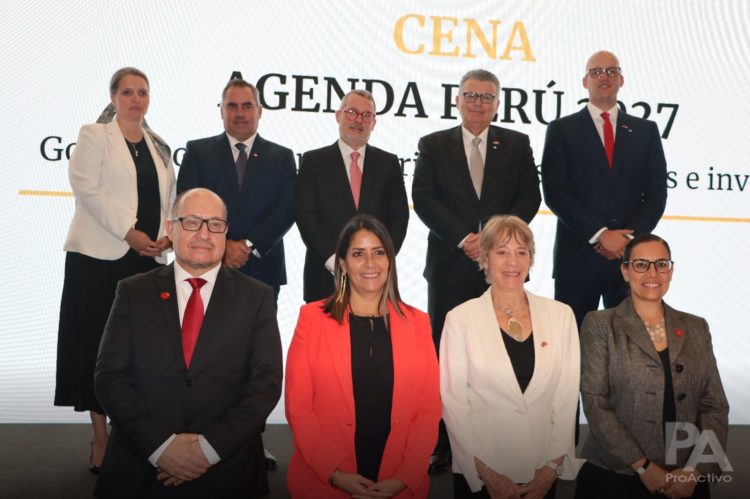
In a decisive display of economic momentum, the Peruvian mining sector has shifted into a higher gear. During the "Agenda Peru 2027" Gala Dinner, a landmark event co-organized by the Canada-Peru Chamber of Commerce and the Swiss-Peruvian Chamber of Commerce, the government laid out a bold vision for the country’s industrial future. With the Minister of Energy and Mines, Guillermo Shinno, confirming that mining investments are set to exceed $7 billion by the end of this year, the narrative for the Peruvian economy is shifting from cautious optimism to aggressive expansion.
The gala served as a high-level summit, gathering the nation’s top business leaders, government officials, and the diplomatic corps to address the critical pillars of economic development: administrative predictability, the modernization of mining regulations, and the state’s proactive stance against the twin threats of organized crime and the El Niño (FEN) climate phenomenon.
1. Main Facts: A Resurgence in Capital Deployment
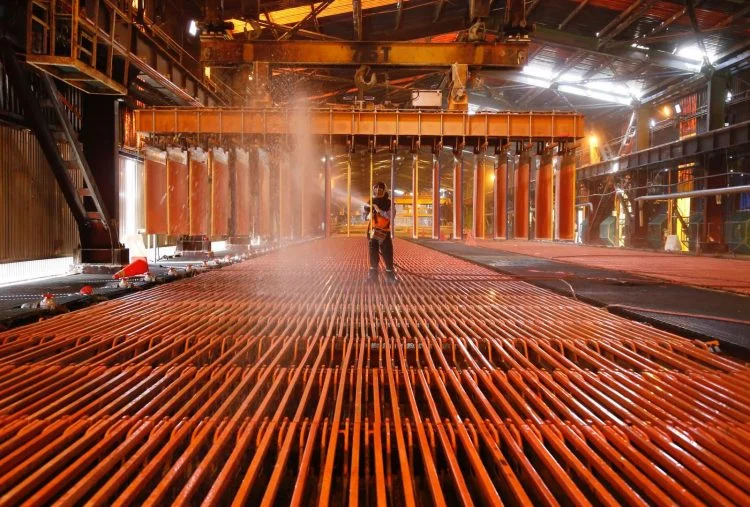
The most striking revelation from the summit was the rapid acceleration of capital expenditure. According to Minister Shinno, the sector began the year with monthly investments oscillating between $300 and $400 million. However, the onset of the second semester triggered a remarkable turnaround, with monthly disbursements climbing to approximately $700 million.
By August, the cumulative investment reached $4.8 billion. This trajectory is bolstered by a robust production forecast of at least 2.6 million fine metric tons of copper, solidifying Peru’s status as a global mining powerhouse and its firm grip on the second-place ranking in international production.
The Regulatory Overhaul
Perhaps the most significant policy shift announced is the definitive conclusion of the Integral Mining Formalization Registry (REINFO) on December 31, 2026. After nearly two decades of operation, the government has deemed the current system insufficient, having successfully formalized only 2,300 miners out of an initial pool of 80,000.
The proposed "MAPE Law" (Small-Scale Mining) aims to replace this ineffective framework. The new model seeks to establish a decentralized technical authority that prioritizes the traceability of minerals through the country’s 50 largest processing plants. By creating a clearer distinction between artisanal miners willing to formalize and those operating outside the law, the state aims to bring order to the chaotic small-scale mining landscape.
2. Chronology: The Path to 2027
The "Agenda Peru 2027" platform is not merely a one-off event; it is a long-term strategic framework designed to guide the nation toward the end of the current presidential term. The timeline of key developments discussed at the event includes:
- Q1–Q2 2026: Initial period of sluggish investment and regulatory uncertainty, marked by high political volatility.
- July 2026: The turning point. New policy initiatives from the Ministry of Energy and Mines (MINEM) catalyze a surge in mining capital, doubling the monthly investment rate.
- August 2026: Accumulated investment hits the $4.8 billion milestone, validating the government’s pivot toward business-friendly regulations.
- December 31, 2026: The hard deadline for the sunset of the REINFO registry, transitioning the sector toward the new MAPE regulatory framework.
- 2027–2031: The medium-term horizon. The government aims to integrate 20% non-conventional renewable energy (solar and wind) into the national grid and initiate the massification of natural gas in seven regions, standardizing rates with those of the capital, Lima.
3. Supporting Data: Incentivizing Exploration and Energy
To ensure the sustainability of the mining boom, the government has committed to removing systemic bottlenecks. Minister Shinno announced that the first 10 drilling platforms of any project will now be processed via an automatic approval system based on a sworn statement. Additionally, 27 administrative hurdles have been removed from the sector’s TUPA (Unique Text of Administrative Procedures), significantly reducing the lead time for exploration permits.
The energy sector is similarly undergoing a transition. The state has set a 2031 target to increase the share of renewable energies to 20%. This is paired with an ambitious plan to decentralize the benefits of the country’s natural gas reserves, ensuring that interior regions can access the same pricing tiers as the metropolitan area of Lima, thereby fueling local industrialization.
4. Official Responses: The Call for Predictability
The business community, represented by the Chambers of Commerce of Canada and Switzerland, delivered a clear message to the government: stability is the currency of investment.
Óscar Benavides, President of the Canada-Peru Chamber of Commerce, emphasized the necessity of institutional dialogue: "What we seek with this ‘Agenda Peru 2027’ is progress. To achieve that, we need to rebuild trust and generate predictability—a word that has been almost erased from the Peruvian political dictionary in recent years."
Swiss Ambassador Eric Mayoraz reinforced this sentiment, highlighting the unique role of bilateral partnerships: "Switzerland believes firmly in the value of public-private dialogue. In an international context marked by uncertainty, creating a space for concrete proposals is an opportunity for all of us to anchor our future in stability."
From the legislative branch, Miguel Ángel Torres, President of the Senate, spoke to the systemic changes aimed at preventing political volatility. "The restoration of the bicameral system is intended to stop the ‘legislative hemorrhage’ of the last decade," Torres stated, referencing the 1.9 million Peruvians who fell back into poverty during recent years of political instability. He pledged that the Senate would focus on maintaining consistent, long-term rules of the game.
5. Implications: Climate Resilience and Security
The final segment of the summit addressed the external shocks threatening national progress: the El Niño phenomenon and the rise of organized crime.
Protecting Infrastructure against El Niño
Minister of Development and Irrigation, Marco Vinelli, warned that the current El Niño cycle exhibits extraordinary thermal anomalies. To mitigate the impact, the government has allocated 2.5 billion soles, with 1.8 billion already disbursed, to fortify rivers, canals, and dikes.
"Our priority is threefold: first, protect human life; second, protect housing; and third, protect public-private infrastructure," said Vinelli. He urged the private sector to participate actively through donations and the "Works for Taxes" mechanism, emphasizing that the scale of the challenge requires a unified national effort.
Neutralizing Extortion
The Ministry of Defense, led by Rafael Belaúnde, addressed the security crisis, specifically the extortion syndicates that have paralyzed various economic sectors. The government has taken aggressive measures, including the deployment of military checkpoints and 200-meter security perimeters around the country’s five most dangerous prisons, where many of these criminal networks are based.
Belaúnde’s proposal is even more radical: the government is seeking to categorize these criminal organizations as "hostile groups" under international humanitarian law. If approved, this would grant the Armed Forces the legal authority to conduct direct military operations to neutralize criminal leadership. Furthermore, the government has mobilized 22 engineering battalions, 33 helicopters, and three multi-purpose ships equipped with desalination plants and surgical facilities to maintain logistics and health services throughout the upcoming rainy season.
Conclusion: A New Horizon for Peru
The "Agenda Peru 2027" has set a clear tone for the remainder of the decade. By pairing economic liberalization in the mining sector with a firm stance on internal security and disaster preparedness, the current administration is attempting to reverse years of stagnation. The transition from the ineffective REINFO system to the more rigorous MAPE Law, combined with a significant reduction in bureaucratic red tape, suggests that Peru is re-positioning itself to capitalize on global demand for its mineral resources.
As investors watch the implementation of these policies, the success of the agenda will likely depend on the government’s ability to maintain the delicate balance between legislative consistency, effective crime prevention, and the physical protection of the nation against the volatility of the climate. If the results of the second half of 2026 are any indication, the path toward 2027 is one of accelerated growth and renewed institutional resolve.