By Editorial Staff
The global landscape for mineral exploration is undergoing a profound transformation. While the demand for critical minerals—essential for the global energy transition—remains at an all-time high, the flow of capital into exploration projects has become increasingly discerning. Peru, long considered a premier destination for mining investment due to its world-class geological endowment, now faces a structural crisis: the gap between its resource potential and its regulatory efficiency is widening, pushing investors toward more agile jurisdictions.
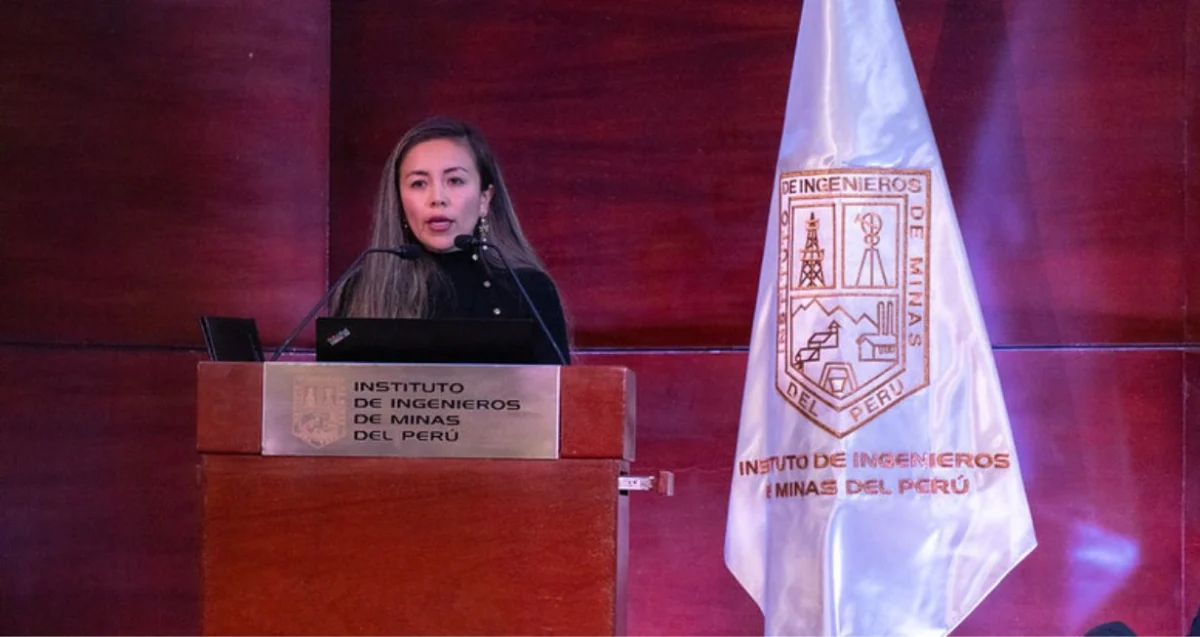
During a recent session of the "Jueves Minero," hosted by the Institute of Mining Engineers of Peru (IIMP), Fiorella Rivera, Partner and Managing Director for Latin America at Embellie Advisory, delivered a sobering assessment of the country’s position in the global market. Her analysis underscores a critical reality: in a world of finite exploration budgets, Peru is no longer competing solely on geology; it is competing on speed, predictability, and social viability.
The Regulatory Bottleneck: A Competitive Disadvantage
At the heart of the current debate is the stark contrast between Peru’s administrative complexity and the streamlined processes of its regional neighbors. Rivera highlighted a recurring frustration among global investors: the excessive time required to secure permits for early-stage exploration.
"An investor asks, ‘Why would I wait three years just to get a permit to explore?’ It is much more rational to move to a neighboring jurisdiction where that same permit takes a couple of months," Rivera noted.
This sentiment is backed by empirical data. In the Investment Attractiveness Index 2025 published by the Fraser Institute, Peru ranked 41st out of 68 jurisdictions, achieving a score of 64.98. The ranking places Peru significantly behind competitive regional counterparts, including the provinces of San Juan (18th), Brazil (19th), and Santa Cruz (21st).

The comparison with Brazil is particularly illustrative. In the Brazilian mining sector, regulatory frameworks have been optimized to allow for exploration permits to be granted within a maximum window of two to three months. For mining juniors—companies that rely heavily on continuous capital injection to survive—this difference in timing is the difference between project viability and liquidation.
Chronology of a Declining Trend
To understand the urgency of Rivera’s warning, one must look at the broader trajectory of exploration finance over the last several years:
- 2023: The global mining industry begins to feel the pinch of high interest rates and increased scrutiny from ESG-focused institutional investors.
- 2024: Despite the push for "green metals," exploration budgets plateau globally. Latin America continues to lead in total dollars received, but the ease of doing business begins to factor more heavily into board-level decisions.
- 2025: The current year has seen a continuation of a three-year downward trend in global exploration spending, which reached US$ 12.4 billion.
- Mid-2025 (Present): Data confirms that only 21% of the global budget is being funneled into "greenfield" or early-stage exploration—a historic low. This indicates that investors are increasingly risk-averse, preferring to pour money into "brownfield" projects (expanding existing mines) where the risk profile is lower, rather than searching for new deposits in complex regulatory environments like Peru.
Supporting Data: The Shrinking Pie
The numbers presented by Rivera paint a picture of an industry in defensive mode. While Latin America remains the primary recipient of global exploration funds, securing US$ 3.28 billion, the allocation of these funds is increasingly concentrated in jurisdictions that offer the least resistance.
The decline in early-stage exploration funding is particularly concerning for the long-term health of the industry. Without new discoveries, the pipeline for future production dries up. However, the current "selectivity" displayed by global capital providers is not merely a preference; it is a fiduciary necessity. In an era where capital is more expensive due to macroeconomic pressures, investors are stripping away any project that carries unnecessary bureaucratic or social friction.
What Inversionists Truly Want: Beyond the Drill Hole
The traditional mining pitch—"we have found high-grade ore"—is no longer a winning strategy. Rivera emphasized that the modern investor is conducting a sophisticated risk-adjusted analysis that transcends geology.
The Criteria for Modern Success:
- Transparency in Timelines: Projects that provide realistic, transparent timelines for permitting are favored over those that promise optimistic but unrealistic outcomes.
- Proactive Social Risk Management: Investors are no longer willing to wait for social conflicts to erupt. Projects that identify and mitigate social risks in the pre-feasibility stage are the only ones gaining traction.
- Financial Diversification: Relying on a single source of capital is now viewed as a red flag. Investors are looking for projects backed by syndicates or companies with proven track records of securing multi-channel funding.
- Local Execution Capacity: The ability to execute locally, navigate the regional political landscape, and maintain a social license is now weighted as heavily as the technical assay results.
Implications for Peru’s Mining Future
The implications of this shift are profound for the Peruvian government and the local mining industry. If the "permit-by-permit" approach continues to stagnate at current levels, Peru risks a slow-motion exodus of junior mining capital.

The "Jueves Minero" discussion served as a call to action. Rivera’s conclusion was blunt: "Today, a good geological project is not enough. The junior companies that succeed will be those that can transform their technical potential into a credible, executable, and socially viable investment proposal."
The Call for Structural Reform
For Peru to reclaim its top-tier status, it must address the "uncertainty tax." This involves not only digitizing and streamlining the permitting process but also fostering a more collaborative relationship between the state, mining companies, and local communities.
The transition from a "geology-first" model to an "investment-readiness" model is already underway globally. Countries that fail to adapt their administrative machinery to this new reality will find that their underground riches remain locked away, not due to a lack of minerals, but due to a lack of institutional agility.
Conclusion: A Pivot Point for the Sector
The mining industry in Peru stands at a crossroads. While the country’s geological wealth is arguably among the best in the world, the "Age of Easy Exploration" is over. As Fiorella Rivera highlighted, capital is abundant but cautious. It flows where it is welcomed and where it can be deployed with the least amount of friction.
For Peru, the path forward is clear: it must harmonize its regulatory framework to match its competitive ambitions. If the country can reduce the uncertainty surrounding project execution and social risk, the capital will return. If not, the global mining community will continue to look toward jurisdictions that, while perhaps less rich in mineral endowment, are far richer in administrative efficiency and investor confidence. The future of the Peruvian mining sector depends on its ability to prove that it is not just a place where minerals exist, but a place where they can be brought to market responsibly, reliably, and rapidly.