Executive Summary: A Milestone in International Trade
In a landmark development for Peru’s agricultural sector, the Ministry of Agrarian Development and Irrigation (MIDAGRI), through the National Agricultural Health Service (SENASA), has successfully facilitated the inaugural shipment of 20 tons of Peruvian bananas to the People’s Republic of China. This strategic move, finalized in the northern district of Olmos, Lambayeque, represents more than just a commercial transaction; it signals the successful culmination of years of sanitary negotiations and the consolidation of Peru’s standing as a premier global supplier of premium tropical fruit.
As the global demand for high-quality organic and conventional bananas grows, the entry into the Chinese market—the world’s most populous nation—promises to catalyze economic growth for thousands of smallholder farmers across Peru’s northern coast. By diversifying its export destinations, Peru is effectively buffering its economy against market volatility while setting a new standard for phytosanitary excellence in the Asia-Pacific region.
Chronology of a Strategic Breakthrough
The road to the Chinese market was neither short nor simple. It was the result of a deliberate, multi-year strategy led by the Peruvian government to elevate the country’s phytosanitary protocols to meet the world’s most stringent requirements.
- The Negotiation Phase (2022–2024): Recognizing the massive potential of the Chinese market, SENASA engaged in prolonged bilateral technical dialogues with Chinese customs and agricultural authorities. The focus was on establishing a robust "systems approach" to guarantee that Peruvian fruit remains free of quarantine pests.
- Protocol Formalization (Early 2025): The signing of the bilateral sanitary protocol established the legal framework for trade. This included mandatory certifications for orchards and strict adherence to post-harvest handling practices.
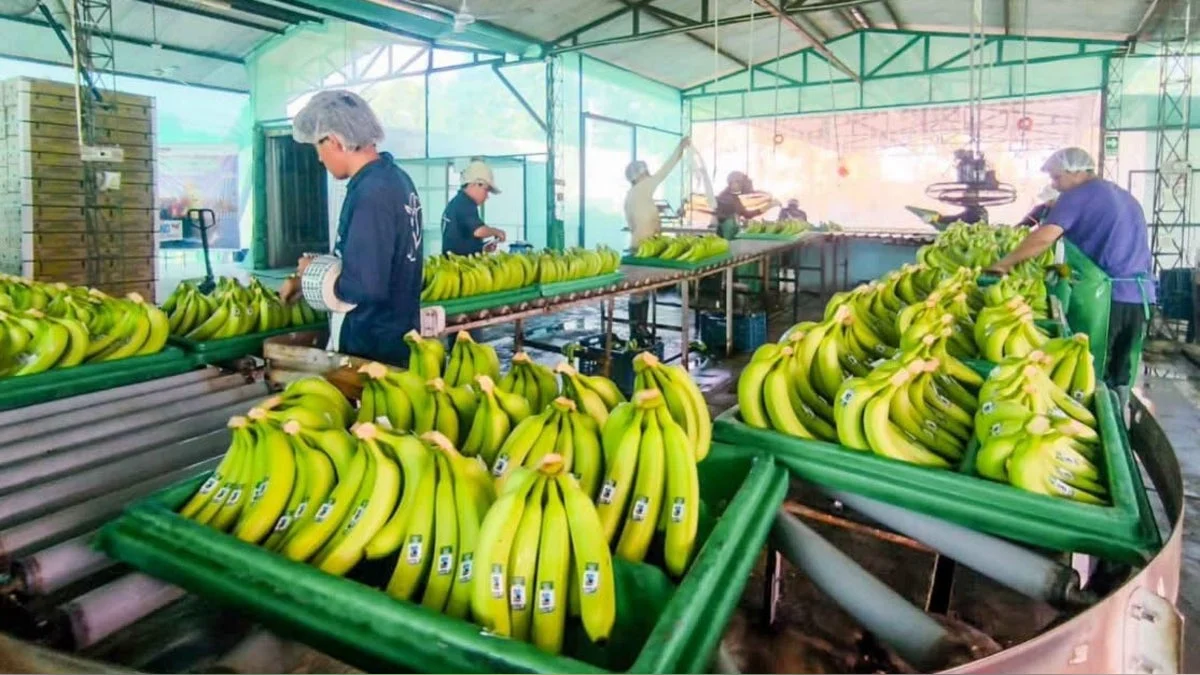
- The Pilot Shipment (July 2026): The culmination of these efforts occurred in the UPO packing plant in Olmos. On this date, the first 20-ton container was processed, inspected by SENASA officials, and officially cleared for departure to China, marking the formal opening of the trade route.
The Phytosanitary Shield: Guaranteeing Quality and Traceability
The success of this export venture rests upon the integrity of the "sanitary umbrella" provided by SENASA. To satisfy the Chinese authorities, Peru had to prove that every single banana—from the soil in Lambayeque to the cargo hold of the vessel—is subjected to rigorous monitoring.
A Tiered Inspection System
The certification process is exhaustive. It begins at the field level, where agricultural engineers map and monitor every plantation to ensure the absence of pests such as the Fusarium oxysporum or fruit flies. Each farm must be registered with SENASA, creating a digital footprint that allows for full traceability.
Processing and Packing Standards
At the UPO packing facility, the fruit undergoes secondary inspection. Technicians evaluate the physical condition of the bananas, ensuring they meet specific ripeness and aesthetic criteria required by Chinese consumers. Once packed, the crates are sealed under the supervision of SENASA, ensuring that the integrity of the product remains untampered with until it reaches its destination in Asia. This rigorous adherence to international standards not only satisfies the Chinese market but further enhances the reputation of Peruvian agricultural produce globally.
Official Statements and Industry Response
During the official ceremony in Olmos, the atmosphere was one of profound optimism. The event, attended by the Vice Minister of Agrarian Development and Irrigation, Jorge Sáenz Rabanal, served as a platform to recognize the collective effort of the public and private sectors.
"This milestone is not merely a government success; it is the manifestation of the hard work and resilience of our small-scale producers," stated Vice Minister Sáenz Rabanal. "The access to the Chinese market is a testament to the trust the international community has in the quality of Peruvian bananas and the world-class phytosanitary system that SENASA has meticulously built."
Industry representatives from the UPO packing plant emphasized that the opening of this route is a "game-changer." By reducing reliance on traditional European and North American markets, the industry can now command better prices and scale operations, which was previously hindered by market saturation in the Atlantic regions.
Supporting Data: The Global Footprint of Peruvian Bananas
Peru’s banana industry has evolved into a powerhouse of the northern regional economy. In 2025 alone, the country exported nearly 140,000 tons of bananas, generating hundreds of millions of dollars in foreign exchange and supporting the livelihoods of over 10,000 rural families.
Export Market Breakdown (2025 Figures)
- Netherlands: 45,600 tons (The primary gateway to the European Union).
- United States: 44,600 tons (Driven by high demand for organic Peruvian bananas).
- Other European Partners: Italy and Belgium remain consistent buyers.
- Asian Expansion: Before the opening of China, Peru’s presence in Asia was limited to South Korea and Japan. The addition of China is expected to shift the regional focus of exports toward the Pacific.
The dominance of the northern regions—specifically Piura, Lambayeque, and Tumbes—is absolute. These regions benefit from unique microclimates that allow for year-round production, providing a competitive advantage over other equatorial producers who face distinct seasonal weather constraints.
Economic Implications: A New Engine for Rural Prosperity
The opening of the Chinese market serves as a macroeconomic pillar for Peru’s northern development.
Direct Benefits to Smallholders
Many of the producers involved in these export batches are organized into cooperatives. By gaining access to a market of over 1.4 billion people, these cooperatives gain bargaining power. Previously, market volatility often left small farmers at the mercy of intermediaries; with a broader, more stable export base, farmers can invest in more sustainable agricultural technologies, irrigation systems, and organic certifications, which in turn command higher premiums.
Diversification and Resilience
Economic dependence on a few markets is a major risk for any agricultural-export-led economy. By diversifying into China, Peru is hedging against regional downturns in Europe or protectionist shifts in the United States. Furthermore, the logistical infrastructure required to reach China—such as improved cold-chain shipping and modernized port operations—will inevitably benefit other Peruvian exports, including avocados, grapes, and blueberries.
The "Made in Peru" Brand
As Peruvian bananas become a fixture in Chinese retail chains and fruit markets, the country’s overall agricultural brand grows stronger. The consistent arrival of high-quality, pest-free, and sustainably produced bananas acts as a "soft power" tool, promoting the "Made in Peru" label to the growing Chinese middle class, who are increasingly prioritizing imported, healthy, and organic food options.
Future Outlook: Sustaining the Momentum
While the first 20-ton shipment is a cause for celebration, the real work lies in maintaining the momentum. The Ministry of Agrarian Development and Irrigation has already announced plans to expand the number of certified plantations in the northern region to meet the projected growth in Chinese demand.
Future initiatives include:
- Technological Integration: Introducing blockchain-based tracking to provide Chinese retailers with real-time information on the origin and safety of their banana shipments.
- Sustainability Focus: Enhancing water management in the Olmos region to ensure that the increased production volume does not negatively impact local resources.
- Logistical Optimization: Negotiating direct shipping routes between the Port of Callao/Paita and major Chinese ports to reduce transit times and operational costs.
In conclusion, the arrival of Peruvian bananas in China is a clear signal that Peru’s agricultural sector has matured into a sophisticated, global competitor. By prioritizing sanitary excellence and strategic market entry, Peru has secured a bright future for its northern producers, ensuring that the "Golden Harvest" of the coast will continue to nourish global markets for years to come.