Introduction: The Deadlock at the National Labor Council
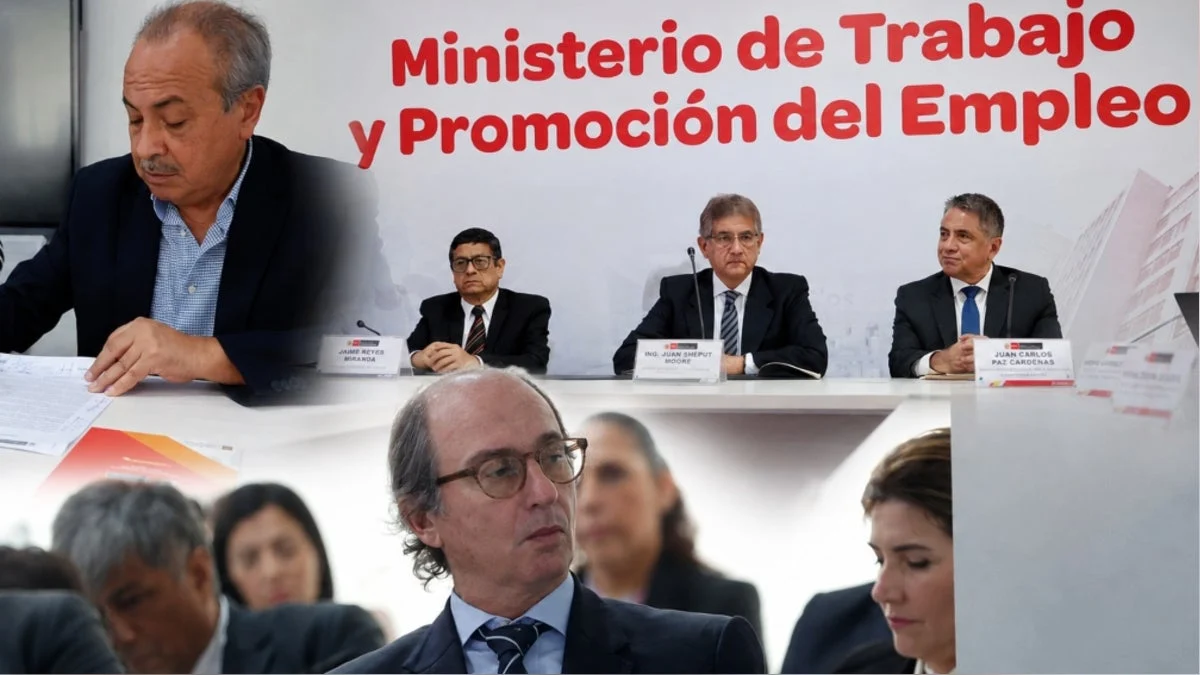
The debate surrounding the adjustment of the Remuneración Mínima Vital (RMV)—Peru’s legal minimum wage—has reached a critical impasse. During a high-stakes extraordinary session held this Thursday, September 3, the National Labor Council (CNT) failed to reach a definitive consensus regarding the implementation of a wage hike. While both labor unions and business associations have acknowledged the necessity of raising the current floor of S/ 1,130, the mechanism and the timeline for reaching the proposed target of S/ 1,300 remain significant points of contention.
The session, which brought together key stakeholders from the government, the private sector, and labor organizations, ended with an official acknowledgement of these ongoing discrepancies. As stated in the sixth agreement of the session, the involved parties "maintain divergent positions regarding the date and the methodology for the adjustment." This lack of alignment highlights the delicate balancing act the administration of President Keiko Fujimori must perform: fulfilling a core campaign promise while attempting to avoid destabilizing the fragile economic recovery of the country’s micro and small enterprises (mypes).
Chronology of the RMV Evolution
To understand the current tension, one must look at the recent trajectory of Peru’s minimum wage policy. The RMV has historically been a tool used by successive administrations to mitigate the impacts of inflation and cost-of-living increases on the working class.
- January 2025: Under the administration of former President Dina Boluarte, the RMV underwent its most recent adjustment, rising from S/ 1,025 to its current level of S/ 1,130.
- July 28, 2026: During her inaugural Message to the Nation, President Keiko Fujimori made a bold pledge to the workforce: an increase of S/ 170, bringing the total to S/ 1,300. This announcement was framed as a social contract to improve the purchasing power of vulnerable workers.
- August 2026: The Ministry of Economy and Finance (MEF) began floating the idea of a phased approach. Recognizing that a sudden jump might overwhelm small businesses, the MEF proposed a two-stage increase: an initial raise of S/ 100, followed by a subsequent adjustment of S/ 70.
- September 3, 2026: The CNT met to formalize the roadmap for this increase. Despite the initial political momentum, the session concluded without a definitive calendar, signaling that the technical and political hurdles remain substantial.
The Technical Debate: Phasing vs. Immediate Impact
The crux of the disagreement lies in the "how" and the "when." The Ministry of Economy and Finance’s proposal for a staggered implementation is designed to allow the private sector—specifically micro and small enterprises, which represent the vast majority of Peruvian businesses—to adjust their payroll structures without resorting to layoffs or shifting to the informal sector.
However, labor representatives have expressed skepticism regarding a prolonged, two-stage process. Unions argue that the current economic climate, marked by persistent inflationary pressures on food and basic services, necessitates a more immediate relief measure. For the workers, a slow, incremental rise is often perceived as failing to keep pace with the real-time erosion of their buying power.
On the other side of the table, business associations have urged caution. They argue that the "social cost" of the RMV hike must be tempered by productivity metrics. Without a corresponding increase in labor productivity, a mandated wage floor can lead to increased informality, as businesses may find it impossible to comply with the new costs and opt to operate outside the regulatory framework instead.
Institutionalizing the Adjustment: The Role of the CEPSM
A pivotal development during Thursday’s session was the decision to task the Special Commission on Productivity and Minimum Wages (CEPSM) with drafting a long-term technical framework. The goal is to move away from the current system—which often feels like an ad-hoc political negotiation—and toward an objective, data-driven methodology for calculating future adjustments.
The CEPSM is now charged with:
- Establishing a Technical Baseline: Analyzing inflation, labor productivity, and GDP growth as core indicators for any future adjustment.
- Developing a Sustainable Formula: Ensuring that any change to the RMV is sustainable for both the state’s tax base and the private sector’s bottom line.
- Reducing Political Volatility: By depoliticizing the adjustment process, the CNT hopes to create a predictable environment where both investors and workers can plan for the future.
This move toward "institutionalization" is a significant, albeit slow, step. While it does not solve the immediate impasse over the S/ 1,300 target, it provides a structured path forward that could prevent the cycle of gridlock seen in previous years.
Implications for the Peruvian Economy
The failure to reach an immediate consensus has broader implications for the Peruvian economy, which is currently navigating a period of tepid growth.
1. The Threat of Informality
Peru’s labor market is characterized by high levels of informality. When the government mandates wage hikes that exceed the productivity capacity of smaller firms, there is a documented risk that these businesses will cease formal employment. This defeats the purpose of the policy, as fewer workers end up receiving the protection and benefits associated with the formal minimum wage.
2. Consumer Confidence
For the average citizen, the RMV is more than just a number; it is a signal of the government’s commitment to social equity. A delay in the implementation of the S/ 1,300 floor could dampen consumer confidence and, consequently, domestic demand. If the government is perceived as unable to deliver on its flagship economic promises, it may face rising social pressure and protests from labor groups.
3. Investor Stability
Foreign and domestic investors prefer a predictable regulatory environment. The current uncertainty regarding the "date and mechanism" of the increase creates a period of "wait-and-see" for business owners. Clarity on the wage policy is essential for businesses to set their budgets for the upcoming fiscal year.
Conclusion: The Path Ahead
The session of the National Labor Council on September 3, 2026, served as a stark reminder that policy-making in a tri-partite system is rarely straightforward. While there is a broad, high-level consensus that the RMV should be elevated to S/ 1,300 to support the working population, the technical reality of implementation remains a formidable barrier.
The challenge for the Fujimori administration will be to mediate between these competing interests. To succeed, the government must find a middle ground that satisfies the urgent needs of the workforce without crippling the engine of the economy—the small business sector.
As the CEPSM begins its work to formalize the adjustment methodology, all eyes will be on the next CNT session. The resolution of this debate will not only dictate the wages of thousands of Peruvians but will also define the governing style of the current administration: one of cautious negotiation and structural reform, or one of continued political friction. For now, the "discrepancies" remain, and the wait for the new minimum wage continues.