Lima, Peru – In a landmark achievement for climate action in Latin America and the Caribbean, Peru has become the first nation in the region to present the "Tuki Wasi" program to the United Nations (UN) under a cooperative framework. This innovative initiative, focused on reducing greenhouse gas emissions through the implementation of improved cookstoves in rural communities, marks a significant stride in Peru’s commitment to combating climate change and enhancing the well-being of its citizens.
The "Tuki Wasi" program’s presentation at the UN signifies a crucial step in strengthening Peru’s engagement with international climate cooperation mechanisms. It paves the way for the emission reductions generated by the initiative to be recognized and transferred under stringent standards of transparency, traceability, and environmental integrity. This recognition is vital for accessing international climate finance and furthering the global effort to mitigate the impacts of a warming planet.
Furthermore, "Tuki Wasi" holds the distinction of being the first initiative to be registered in Peru’s National Registry of Mitigation Measures (Renami). Renami, a crucial tool developed and implemented by the Ministry of the Environment (Minam), serves to meticulously record and monitor all actions undertaken within the country that contribute to the reduction of greenhouse gas emissions. The inclusion of "Tuki Wasi" in this registry underscores its robust framework and verifiable impact.
A Vision for a Sustainable Future: The Genesis and Scope of Tuki Wasi
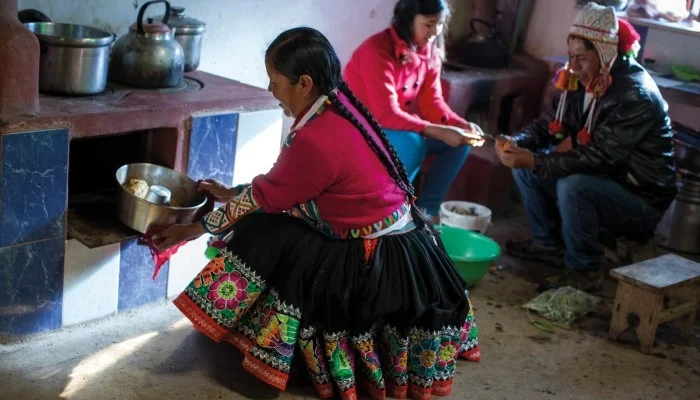
The "Tuki Wasi" program, which translates to "My House" in Quechua, embodies a holistic approach to climate action that integrates environmental sustainability with tangible social benefits. The core of the initiative lies in the widespread adoption of improved cookstoves in rural households, a seemingly simple intervention with profound implications. Traditional cooking methods in many Peruvian rural communities rely on open fires or inefficient stoves that consume large amounts of fuelwood and generate significant indoor air pollution. This not only contributes to deforestation but also poses serious health risks, particularly to women and children.
The improved cookstoves promoted by "Tuki Wasi" are designed to be more fuel-efficient, requiring less wood and burning more completely. This dual benefit – reduced fuelwood consumption and cleaner combustion – directly addresses the program’s climate mitigation goals. By burning fuelwood more efficiently, the stoves release fewer greenhouse gases, contributing to Peru’s national emissions reduction targets. Simultaneously, the improved design significantly reduces the amount of smoke and harmful particulate matter released into indoor environments, leading to substantial improvements in respiratory health.
The program’s commitment extends beyond mere technological implementation. It emphasizes community engagement, education, and the empowerment of local populations. This cooperative approach ensures that the adoption of improved cookstoves is not a top-down imposition but a participatory process, fostering a sense of ownership and long-term sustainability. Local artisans are often involved in the construction or maintenance of the stoves, creating local economic opportunities and preserving traditional knowledge.
A Chronology of Progress: From Concept to International Recognition
The journey of "Tuki Wasi" from a nascent idea to an internationally recognized climate initiative is a testament to strategic planning and collaborative effort. While the specific timeline of its conception and initial pilot phases is not detailed in the provided text, its official presentation at the UN and its registration in Renami mark significant milestones.
The formalization of the program’s international cooperation aspect was solidified through a bilateral agreement signed between Peru and Switzerland in October 2020. This agreement specifically targets the promotion of climate change mitigation actions that yield both environmental and social benefits. Switzerland, a leader in climate finance and technological innovation, has provided crucial support and expertise to "Tuki Wasi," enhancing its credibility and operational capacity.
The subsequent registration of "Tuki Wasi" within the National Registry of Mitigation Measures (Renami) by the Ministry of the Environment (Minam) was a critical step in validating its mitigation potential. Renami was established to ensure that all emission reduction actions in Peru are transparent, measurable, reportable, and verifiable (MRV), aligning with international best practices and the requirements of global climate frameworks.
The culmination of these efforts was the program’s presentation to the United Nations, a platform that offers unparalleled visibility and potential for international collaboration. By being the first Latin American and Caribbean nation to achieve this, Peru has set a precedent and demonstrated its proactive stance in contributing to global climate solutions. This presentation likely involved detailed documentation of the program’s design, implementation methodology, projected emission reductions, and socio-economic co-benefits, subject to rigorous UN scrutiny.
Supporting Data: Quantifying Impact and Reach
The tangible impact of "Tuki Wasi" is being meticulously measured and projected, providing a strong foundation for its success. The program has ambitious goals for the widespread installation of improved cookstoves across several key rural regions of Peru.
Key figures and projections include:
- Installation Targets: The initiative aims to install over 60,000 improved cookstoves.
- Geographic Focus: These installations will be concentrated in rural communities within the departments of Cajamarca, Huánuco, La Libertad, Lambayeque, and Piura. These regions often face significant challenges related to fuelwood dependency and indoor air pollution.
- Projected Emission Reductions: Through the implementation of these 60,000 improved cookstoves, it is estimated that Peru will avoid the emission of up to 726,000 tons of carbon dioxide equivalent (tCO2eq) annually by the year 2030. This significant reduction contributes directly to Peru’s Nationally Determined Contributions (NDCs) under the Paris Agreement.
- Health Benefits: Beyond emissions reduction, the improved cookstoves are expected to dramatically decrease exposure to harmful smoke within households. This is projected to lead to a substantial reduction in respiratory illnesses, particularly among vulnerable populations.
These figures are not merely statistical aspirations; they are backed by a robust methodology for calculating emission reductions, likely adhering to internationally recognized standards. The transparency inherent in the Renami registry ensures that these numbers are auditable and contribute to credible climate mitigation efforts.
Official Responses: Voices of Commitment and Vision
The significance of the "Tuki Wasi" program has been echoed by key figures within the Peruvian government, underscoring its strategic importance and potential.
Jessica Moscoso, the Director General of Climate Change and Desertification at Minam, articulated the program’s dual impact: "This milestone demonstrates that it is possible to confront climate change while simultaneously generating concrete benefits for people. The Tuki Wasi program improves the health of families, contributes to the conservation of our forests, and positions Peru as a regional benchmark in the implementation of innovative climate cooperation mechanisms."
Moscoso’s statement highlights the integrated nature of "Tuki Wasi," emphasizing that climate action is not an abstract environmental goal but a pathway to tangible improvements in the lives of citizens. The connection drawn between improved cooking practices, forest conservation, and regional leadership in climate innovation is a powerful testament to the program’s multifaceted success.
The Ministry of the Environment’s role in establishing and managing Renami is central to the program’s credibility. By providing a transparent and verifiable platform for mitigation measures, Minam ensures that Peru’s climate actions are aligned with international standards and can be leveraged for global climate finance and cooperation.
The partnership with Switzerland further amplifies the program’s reach and impact. This international collaboration not only provides financial and technical support but also lends an additional layer of validation to "Tuki Wasi," positioning it as a model for other nations seeking to implement similar initiatives.
Implications: A Model for Regional Climate Action and Sustainable Development
The successful presentation of "Tuki Wasi" at the UN carries profound implications, not only for Peru but for the broader Latin American and Caribbean region and the global fight against climate change.
Key implications include:
- Pioneering Cooperative Mechanisms: Peru’s leadership in presenting "Tuki Wasi" under a cooperative framework sets a precedent for other countries in the region. This approach, which emphasizes shared responsibility and mutual benefit in climate action, can unlock new avenues for international support and knowledge exchange. It demonstrates that developing nations can be active participants and innovators in global climate governance.
- Enhanced Access to Climate Finance: The recognition of emission reductions generated by "Tuki Wasi" under international standards opens doors for Peru to access climate finance mechanisms. This can include carbon markets, grants, and other forms of financial support specifically designed for mitigation projects, enabling the scaling up of such initiatives across the country and beyond.
- Strengthening National Climate Commitments: By registering "Tuki Wasi" in Renami and presenting it to the UN, Peru is concretely demonstrating its commitment to achieving its climate targets. This proactive approach enhances its credibility on the international stage and encourages other nations to accelerate their own mitigation efforts.
- Promoting Sustainable Development Goals (SDGs): "Tuki Wasi" directly contributes to several Sustainable Development Goals. Beyond SDG 13 (Climate Action), it positively impacts SDG 3 (Good Health and Well-being) by reducing respiratory illnesses, SDG 7 (Affordable and Clean Energy) by promoting cleaner cooking solutions, and SDG 15 (Life on Land) by contributing to forest conservation.
- Empowering Vulnerable Communities: The program’s focus on rural communities directly addresses the needs of some of Peru’s most vulnerable populations. By improving health outcomes, reducing time spent collecting fuelwood, and potentially creating local economic opportunities, "Tuki Wasi" enhances livelihoods and promotes social equity.
- A Blueprint for Scalable Solutions: The success of "Tuki Wasi" provides a scalable blueprint for other nations facing similar challenges. The model of integrating improved cookstoves with robust MRV systems and international cooperation can be adapted and replicated, accelerating climate action across diverse geographical and socio-economic contexts.
In conclusion, Peru’s "Tuki Wasi" initiative represents a significant leap forward in climate action. Its innovative, community-centric approach, coupled with its international recognition, positions it as a powerful example of how countries can effectively combat climate change while simultaneously fostering sustainable development and improving the lives of their citizens. The program’s journey from a local solution to a UN-presented initiative underscores the potential for homegrown innovations to drive global climate progress.