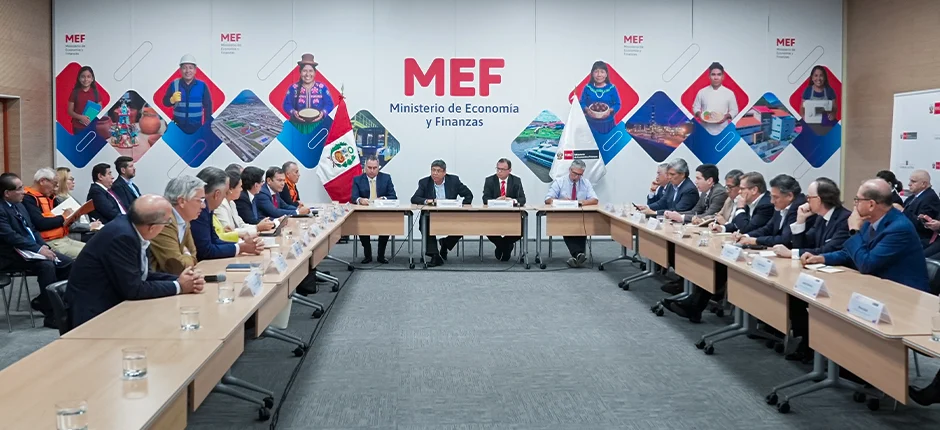
Date: September 25, 2026
The Republic of Peru stands at a critical juncture. As the nation grapples with a multifaceted crisis—defined by an alarming surge in citizen insecurity, the looming specter of the El Niño climate phenomenon, and a sluggish economy—the private sector has issued a resounding call for decisive governance. The Confederation of National Business Institutions (CONFIEP) has formally urged the Peruvian Congress to expedite the approval of legislative powers requested by the Executive Branch, arguing that the country can no longer afford the luxury of political procrastination.
Main Facts: The Demand for Executive Authority
The core of the current national debate centers on the Executive Branch’s formal request for delegated legislative powers. CONFIEP, the primary representative of the private sector in Peru, posits that the government currently lacks the agile regulatory framework required to tackle the country’s most pressing issues.
The business association has made it clear that while they support the granting of these powers, they do not advocate for an unbridled "blank check." Instead, the proposal calls for a framework that is:
- Clearly Delimited: Defined scope of authority to prevent executive overreach.
- Subject to Control: Rigorous oversight mechanisms by the legislative branch.
- Results-Oriented: Defined timelines, verifiable performance metrics, and a mandatory public accountability schedule.
According to the business coalition, the current legislative bottleneck is paralyzing essential economic recovery efforts and delaying critical infrastructure projects meant to mitigate the impact of the upcoming El Niño weather cycle.
Chronology: A Trajectory of Stagnation
To understand the current urgency, one must look at the timeline of events leading up to this September 2026 ultimatum:
- Q1 2026: Economic indicators begin to show a stagnation in formal job creation. Business leaders express concern over the lack of public investment in regional infrastructure.
- May 2026: The National Meteorology Service (SENAMHI) issues early warnings regarding the intensified risk of the El Niño phenomenon, predicting severe floods in the north and drought in the highlands.
- July 2026: Citizen insecurity reaches a record high in metropolitan areas, with business owners citing increased extortion and organized crime as major barriers to operational continuity.
- August 2026: The Executive Branch submits a comprehensive request for legislative faculties to the Congress, seeking to bypass standard, time-consuming parliamentary debates to implement emergency security and economic decrees.
- September 2026: As congressional debate stalls, CONFIEP releases its formal statement on September 25, marking the most significant intervention by the private sector to date.
Supporting Data: The Economic and Security Context
The urgency expressed by the business community is grounded in stark socioeconomic data.
The Security Crisis
Data from the National Police and independent research firms suggest that extortion, particularly against small and medium-sized enterprises (SMEs), has risen by 22% over the last twelve months. This "tax" imposed by criminal organizations is not only siphoning off liquidity from the productive sector but is also causing a significant exodus of small entrepreneurs who can no longer afford the costs of security or the risk to their personal safety.
The Economic Downturn
Formal employment growth has slowed to a crawl. In sectors such as construction and manufacturing, capital expenditure has been delayed indefinitely due to policy uncertainty. CONFIEP notes that without government intervention to streamline permitting and provide tax incentives for job creation, the country faces a risk of long-term structural unemployment.
Climate Preparedness
The "El Niño" phenomenon remains the "elephant in the room." Past experience has shown that failure to execute preventive infrastructure—such as river channeling and bridge reinforcement—results in billions of dollars in losses and the devastation of the agricultural sector. With the climate window closing, the Executive Branch argues that standard legislative processes are too slow to approve the necessary emergency budgets.
Official Responses and Political Friction
The response to CONFIEP’s demand has been varied, reflecting the deep polarization within the Peruvian political landscape.
The Executive Perspective
The government, led by the President and the Cabinet, maintains that they are ready to act. They argue that the requested powers are essential to bypass the gridlock that currently defines the relationship between the Executive and Legislative branches. They have signaled a willingness to accept the "accountability clauses" proposed by CONFIEP, provided that the Congress does not dilute the executive power to a point of inefficacy.
The Legislative Response
Members of Congress remain divided. Some factions support the request, emphasizing that the country is in a state of "emergency." Others, however, view the request as a power grab. Opposition lawmakers argue that the Executive has failed to provide a detailed plan for how these powers will be used, fearing that the government might use the authority to push through unpopular reforms under the guise of "national emergency."
The Private Sector’s Stance
CONFIEP’s leadership remains steadfast. Their representatives have been meeting with parliamentary leaders to advocate for a "middle ground" solution—one that provides the executive with the necessary tools to implement emergency decrees while maintaining a strict, non-negotiable oversight framework.
Implications for the Future of Peru
The consequences of failing to resolve this impasse are significant and far-reaching.
Impact on SMEs
Small and medium-sized businesses form the backbone of the Peruvian economy. They are the most vulnerable to the current environment. If the legislative deadlock continues, thousands of these firms will likely fold, leading to a spike in poverty levels and a decline in the standard of living for millions of citizens.
Investor Confidence
International investors watch the Peruvian political climate with caution. The country, once considered a model of fiscal responsibility in the region, is currently struggling to maintain that reputation. Without swift, decisive action, the perception of "institutional instability" will likely lead to higher borrowing costs and a decline in Foreign Direct Investment (FDI).
Social Cohesion
Ultimately, the primary implication is one of social stability. When the state fails to provide basic security—the most fundamental of its social contracts—the public loses faith in democratic institutions. The call by CONFIEP is not merely an economic request; it is a plea for the state to fulfill its primary duty: protecting its citizens and fostering an environment where progress is possible.
Conclusion: A Call for Consensus
As of September 25, 2026, the ball is firmly in the court of the Peruvian Congress. The nation’s business leaders have effectively framed the debate: it is no longer a question of political strategy, but a question of national survival.
The path forward requires a shift from political calculation to a collaborative governance model. The Executive must provide the transparency and the results that the business community and the public demand, and the Congress must prioritize the national interest over partisan differences.
Peru is a nation with immense potential, characterized by resilient entrepreneurs and a robust labor force. However, that potential is currently being stifled by bureaucratic inertia and political gridlock. As the country looks toward the final months of 2026, the message from the private sector is clear: the time for debate has passed; the time for execution, action, and results has arrived. The survival of the Peruvian economy and the safety of its citizens depend on the decisions made in the halls of Congress over the coming days.