Executive Summary: A Unified Front Against Climate Uncertainty
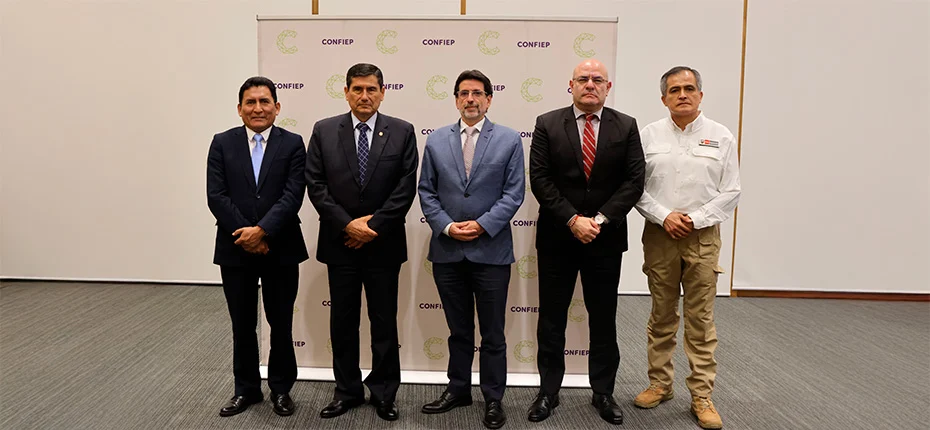
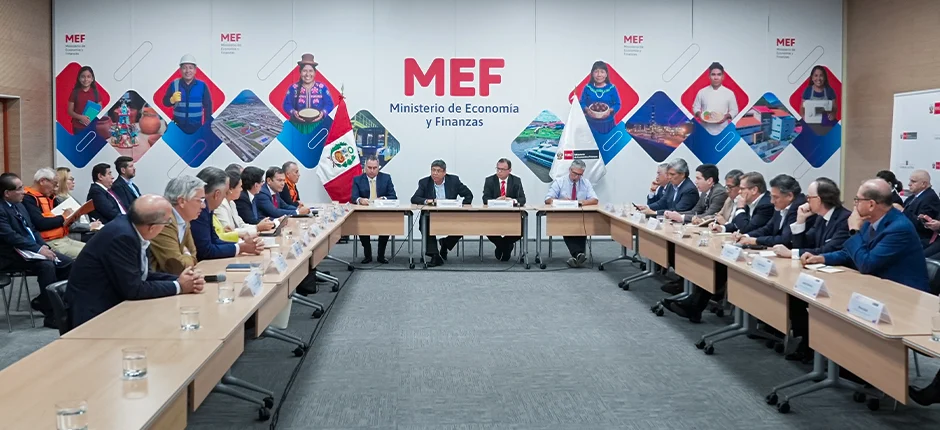
In an unprecedented display of institutional collaboration, the Peruvian Ministry of Economy and Finance (MEF) has formalised a strategic partnership with the nation’s leading business associations to fortify the country’s preparedness against the looming threats of the El Niño phenomenon (FEN). As climate models suggest the potential for severe meteorological volatility, the private sector, spearheaded by the National Confederation of Private Business Institutions (CONFIEP), has pledged its extensive logistical and operational assets to assist the Executive branch in disaster risk management.
This collaborative framework represents a paradigm shift in how the Peruvian government approaches large-scale climate contingencies. By integrating private-sector agility with public-sector coordination, the initiative aims to minimize the socio-economic impact of potential floods, infrastructure damage, and supply chain disruptions that have historically plagued the nation during extreme weather events.
Chronology of the Initiative: Building a Collaborative Bridge
The formalization of this alliance follows weeks of intense technical dialogue within the National Commission for the Management of FEN Risk.
- Early Q3 2023: Initial meteorological assessments identified a high probability of El Niño manifesting in the Pacific, prompting the MEF to prioritize emergency funding and mitigation strategies.
- Mid-August 2023: Preliminary meetings between the Ministry and private sector leaders established the necessity of a "Hombro a Hombro" (Shoulder to Shoulder) approach to streamline resource allocation.
- Late August 2023: The landmark meeting took place where the private sector formally presented its inventory of resources, ranging from heavy machinery to specialized technical teams.
- September 2023 (Current Status): The establishment of a dedicated task force, led by Carlos Neuhaus, to act as the primary liaison between the government and the private sector, marking the beginning of the operational implementation phase.
Supporting Data: The Magnitude of Private Sector Capabilities
The depth of the commitment made by the private sector is significant. During the high-level consultations, Jorge Zapata Ríos, president of CONFIEP, underscored that the sector is not merely offering moral support but is providing tangible, high-value assets.
The Asset Inventory
The private sector’s logistical pledge includes:
- Heavy Machinery: Earth-moving equipment, excavators, and dump trucks provided by members of the Peruvian Chamber of Construction (CAPECO), crucial for debris removal and road clearing.
- Hydraulic Infrastructure: A fleet of motobombs and drainage support equipment to mitigate urban flooding in high-risk zones.
- Storage and Logistics: Access to a network of strategic warehouses managed by the Association of Malls and Entertainment Centers (ACCEP), essential for the prepositioning of humanitarian aid and emergency supplies.
- Technical Expertise: Engineering teams from the Association for the Promotion of National Infrastructure (AFIN) to assist in the rapid structural assessment of bridges and public works.
Key Stakeholder Participation
The breadth of this coalition is reflected in the diverse range of participating entities:
- Agricultural & Food Security: AGAP (Association of Agrarian Producer Guilds).
- Financial Stability: ASBANC (Association of Banks of Peru).
- Industry & Energy: SNMPE (National Society of Mining, Petroleum, and Energy) and SNP (National Fisheries Society).
- Urban & Real Estate Development: CODIP (Confederation of Real Estate Developers) and CAPECO.
- Trade & Commerce: ComexPerú.
Official Responses and Strategic Governance
The dialogue between the MEF and the business sector has been characterized by a pragmatic focus on "regulatory agility."
The Call for Regulatory Simplification
A primary concern raised by the business community is the bureaucratic friction that often delays emergency response. Associations argued that during a state of emergency, standard permitting processes for the use of machinery or the construction of containment barriers are counter-productive. They have formally proposed a "fast-track" protocol for permits in identified critical zones.
In response, the MEF has adopted a stance of disciplined collaboration. The Ministry requested that all proposals for regulatory relief be submitted with comprehensive documentation, including:
- Resource Mapping: Clear identification of which assets are available and where they are stationed.
- Operational Timelines: Precise windows for deployment and mobilization.
- Impact Metrics: Justification of how specific simplifications will prevent loss of life or infrastructure damage.
Leadership and Oversight
To ensure the partnership does not lose momentum, the coordination will be centralized under the leadership of Carlos Neuhaus, Executive President of ACCEP. His role is to synthesize the disparate proposals from various guilds into a coherent operational plan. He will work in close concert with the "Hombro a Hombro" initiative, a proven platform for private-sector emergency relief that has successfully managed humanitarian response in past disasters.
Implications: The Economic and Social Stakes
The implications of this public-private pact extend far beyond the immediate response to El Niño.
Economic Resilience
For Peru, El Niño is not just a climate event; it is a major economic disruptor. Historically, the phenomenon has decimated crops, eroded transport infrastructure, and inflated food prices. By coordinating the private sector’s logistical capabilities, the government aims to protect the agricultural supply chain and prevent the inflationary spikes that typically follow natural disasters. The involvement of ASBANC also signals a focus on maintaining financial continuity, ensuring that banking services remain accessible even in regions affected by severe weather.
A New Model for Governance
This initiative represents a maturation of the Peruvian state’s approach to crisis management. By moving from a "command and control" model to a "collaborative partnership" model, the government is acknowledging that it lacks the sheer scale of logistical assets required to address a widespread climate catastrophe alone.
Furthermore, the participation of the mining, energy, and fishing sectors—the pillars of the Peruvian economy—indicates a shared understanding that corporate social responsibility is inextricably linked to national resilience. If the country’s infrastructure fails, the private sector’s productivity suffers; thus, the investment in preparedness is viewed as an act of enlightened self-interest that aligns with the broader public good.
Addressing Vulnerability
The focus on "critical zones" suggests a shift toward proactive, rather than reactive, disaster management. By identifying high-risk areas beforehand and pre-positioning assets in collaboration with local businesses, the state is attempting to shorten the "response gap"—the time between the onset of a disaster and the arrival of aid.
Conclusion: The Path Forward
The agreement between the Ministry of Economy and Finance and the nation’s business guilds is a testament to the power of unity in the face of environmental unpredictability. While the challenges posed by El Niño remain formidable, the structural integration of private logistical might with public oversight provides a robust framework for mitigation.
As the technical committees continue their work, the success of this initiative will hinge on the speed with which the MEF processes the proposed regulatory simplifications and the discipline with which the private sector maintains its readiness. If executed effectively, this partnership could serve as a global model for how emerging economies can leverage private-sector infrastructure to enhance national climate resilience, ensuring that when the rains begin to fall, the country is not only prepared but is standing firmly, "shoulder to shoulder."