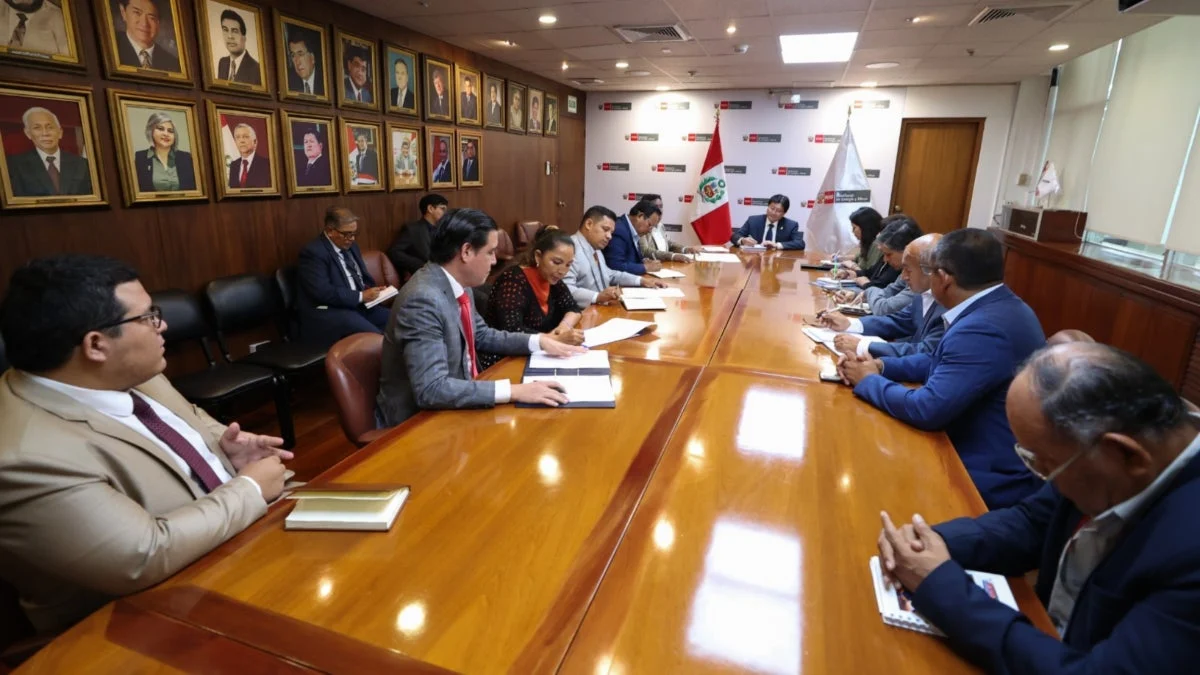
In a decisive move aimed at modernizing the backbone of the national economy, the government has officially ordered a comprehensive, 120-day reorganization of the Ministry of Energy and Mines (Minem). This sweeping structural review seeks to address deep-seated institutional inefficiencies, bureaucratic overlap, and a growing disconnect between administrative processes and the urgent demands of the energy and mining sectors.
The decree, published in the official gazette El Peruano, marks a significant shift in how the state intends to manage its most vital resources. By mandating a diagnostic audit of both the ministry and its key adscrito agencies—the Geological, Mining and Metallurgical Institute (Ingemmet) and the Peruvian Institute of Nuclear Energy (Ipen)—the administration is signaling that the era of "business as usual" has come to an end.
The Core Mandate: Identifying Structural Dysfunction
The primary driver behind this intervention is the government’s acknowledgment of "organizational and functional limitations." For years, critics have argued that the Minem has become a bottleneck for economic development, hampered by fragmented decision-making and a lack of horizontal communication between its various departments.
The scope of the audit is comprehensive. It is not merely a superficial review of personnel but an intensive examination of the ministry’s internal architecture. The government has identified several critical pain points that require immediate corrective action:
- Electrification Stagnation: Persistent difficulties in executing rural electrification projects, leaving remote communities without basic energy access despite allocated budgets.
- Administrative Bottlenecks: Significant delays in the processing of administrative files, which stifle private investment and project timelines.
- Environmental & Social Management: Deficiencies in managing the complex intersection of environmental regulations and socio-environmental conflicts, which have frequently stalled major mining projects across the country.
According to the decree, the objective is to "identify and correct duplicities, superpositions, gaps, or the fragmentation of functions." The document, signed by the President and the Minister of Energy and Mines, underscores that the current institutional framework is no longer capable of responding to the rapid pace of change in global energy markets or the nuanced demands of local stakeholders.
A Chronology of the Reorganization Process
The government has established a strict timeline to ensure that this reorganization does not become another perpetual bureaucratic study. The process is divided into two distinct phases over the next four months:
- The Diagnostic Phase (Days 1–60): The immediate focus, beginning tomorrow, will be a granular assessment of how the ministry operates. The Office of Planning and Budget is tasked with auditing internal workflows and identifying where functions overlap between the ministry and its adscrito agencies.
- The Reporting Milestone (Day 60): A formal progress report must be submitted to the High Command (Alta Dirección). This document will serve as the foundation for the proposed reforms.
- The Reform & Implementation Phase (Days 61–120): Based on the findings of the initial report, the ministry will draft a final technical document outlining specific structural, regulatory, and procedural changes. This phase will culminate in a roadmap for long-term improvement.
This timeline is designed to ensure that tangible results are visible within 120 days, putting significant pressure on the ministry’s leadership to demonstrate both transparency and a commitment to reform. Notably, the government has stipulated that this process will be funded entirely through existing budget allocations, prohibiting any requests for additional resources from the Public Treasury.
The Context: Why Now?
The timing of this reorganization is not accidental. The energy and mining sectors constitute the bedrock of the national economy, and their performance is inextricably linked to the country’s GDP growth and fiscal health.
In recent years, the "social license to operate"—the informal but vital approval from local communities—has become the primary hurdle for mining expansion. The Minem has been widely criticized for its inability to act as a credible mediator in these disputes. When administrative procedures are slow or confusing, distrust grows, and projects that are essential for national revenue are indefinitely suspended.
Furthermore, the global transition toward renewable energy and the increasing demand for "green minerals" (such as copper and lithium) mean that the ministry needs to be more agile than ever. If the institutional framework is weighed down by 20th-century bureaucracy, the country risks losing its competitive edge in the global transition to a low-carbon economy.
Implications for the Mining and Energy Sectors
The ripple effects of this reorganization will be felt across the entire industrial landscape. For investors, the promise of reduced "red tape" and clearer administrative pathways is a positive signal. If the ministry can successfully streamline its permitting processes, the "time-to-market" for energy projects could see a drastic reduction.
However, there is also caution. Critics and industry analysts are watching closely to see if this reorganization will lead to the weakening of environmental oversight in the name of efficiency. The government has attempted to preempt these concerns by emphasizing that the goal is not to eliminate regulations, but to ensure they are applied consistently, transparently, and without unnecessary duplication.
Impact on Ingemmet and Ipen
The inclusion of Ingemmet and Ipen in this process is a clear indicator that the government is looking for deep integration. Ingemmet plays a vital role in mapping and geological research, while Ipen oversees nuclear safety and research. Often, these agencies operate in silos. By forcing them into a unified diagnostic process, the government hopes to create a more synergistic relationship where geological data flows more seamlessly into the decision-making processes of the main ministry.
Official Stance and Accountability
The decree carries the full weight of the executive branch. By linking the signature of the President to this order, the administration has elevated the reorganization of the Minem to a top-tier policy priority.
The Minister of Energy and Mines, under whose authority this audit will be conducted, faces a daunting task. The internal culture of the ministry is notoriously resistant to change, and the bureaucracy has deep-rooted interests in maintaining the status quo. To succeed, the leadership will need to balance the need for reform with the necessity of maintaining operational stability during the 120-day transition.
Economic and Strategic Outlook
Looking forward, the success of this initiative will be measured by three primary metrics:
- Reduction in Conflict: A decrease in the number of stalled projects due to administrative or social mismanagement.
- Budgetary Efficiency: The ability to execute rural electrification and infrastructure budgets without the historical underspending that has plagued the ministry for years.
- Institutional Clarity: The creation of a new, simplified organizational chart that clearly defines the roles of the Ministry, Ingemmet, and Ipen, eliminating the "fragmentation" cited in the decree.
The government’s decision to pursue this reform without requesting additional funding is a strategic move to demonstrate fiscal discipline. It suggests that the problem is not a lack of resources, but a lack of management. By optimizing existing structures, the government aims to prove that the public sector can be made lean and efficient.
Conclusion: A Turning Point?
The reorganization of the Ministry of Energy and Mines is a bold acknowledgment that the current state apparatus is insufficient for the challenges of the modern era. Whether this leads to a new, streamlined era of development or gets bogged down in internal resistance remains to be seen.
What is certain is that the clock is ticking. With a 60-day deadline for the first report and a 120-day horizon for the final plan, the administration has set a fast pace. The eyes of the international investment community, local communities, and domestic industrial players are now firmly fixed on the Ministry of Energy and Mines. For the government, this is not just an administrative audit; it is a test of its ability to reform the state from within and secure the future of the nation’s most important economic engines.