Executive Summary
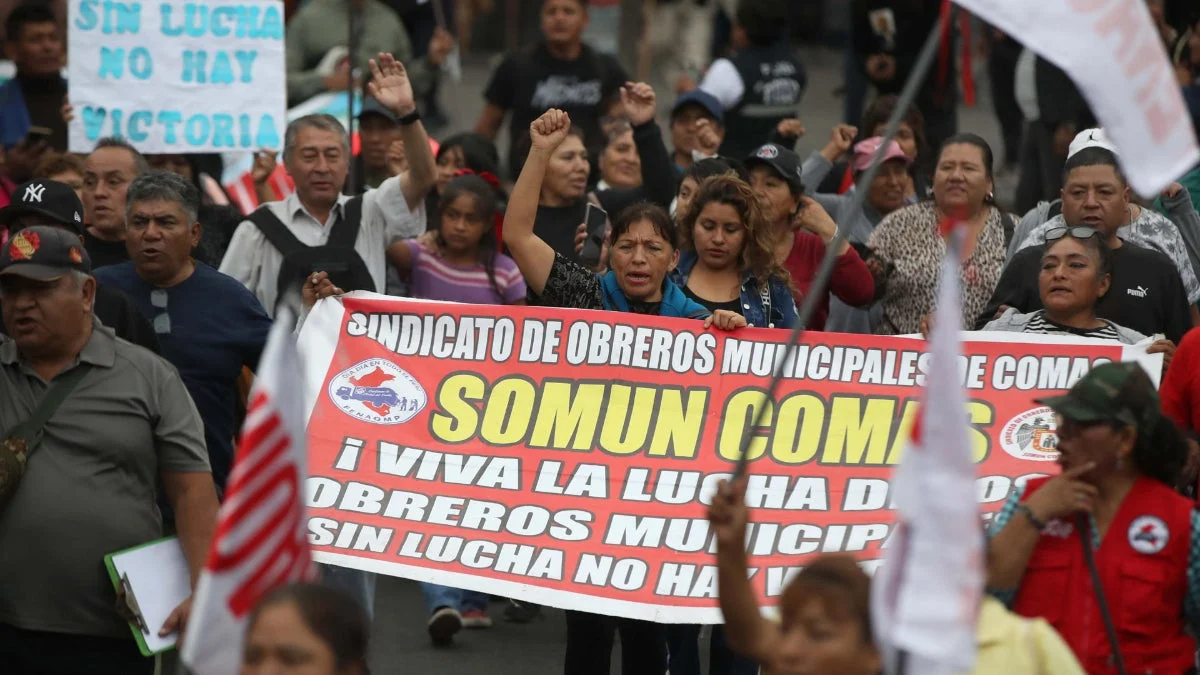
In a significant display of organized labor strength, the General Confederation of Workers of Peru (CGTP)—the nation’s largest trade union umbrella organization—staged a massive protest in the historic center of Lima this Thursday. The mobilization served as a preemptive strike against the administration’s stated intention to request extraordinary legislative faculties from the Congress of the Republic. At the heart of the contention is the government’s plan to bypass traditional legislative debate to enact sweeping reforms, with the CGTP specifically targeting proposed changes to labor regulations that they fear will erode decades of established workers’ rights.
The Chronology of Tension
The atmosphere in Lima has been increasingly volatile since the inauguration of the current administration on July 28. The timeline of the escalation is as follows:
- July 28: The new administration takes office, outlining a broad legislative agenda aimed at economic revitalization.
- Early August: The Executive branch formally signals its intention to request "extraordinary powers" from the legislature, citing the need for efficiency in passing reforms.
- Mid-August: Rumors circulate within the Ministry of Labor regarding potential flexibilization of hiring and firing processes, prompting immediate alarm among union leaders.
- August 20: The CGTP leadership formally announces the "Mobilization of Alert," calling on its regional bases to converge in Lima.
- The Day of the March: Thousands of workers gathered at the Plaza Dos de Mayo, the historic seat of the CGTP, before marching through the arteries of the city to the Plaza San Martín, chanting slogans and displaying banners that rejected "labor precarization."
Analysis: The Dispute Over Legislative Faculties
At the core of this conflict is the constitutional mechanism that allows the Peruvian Congress to delegate legislative authority to the Executive branch. While this is a common practice intended to expedite urgent economic or security measures, the CGTP views its application in the labor sector as an undemocratic "backdoor" to bypass the rigorous debate required for labor reform.
The Union’s Stance: "A Line in the Sand"
Luis Villanueva Carbajal, President of the CGTP, addressed the masses from the Plaza San Martín. His message was unambiguous: "This is a mobilization of alert to signal to the Executive that we, the workers, are not prepared to accept any type of reduction in labor rights."
Villanueva emphasized that the unions are not inherently opposed to economic growth, but they are vehemently opposed to growth built upon the "precarization" of the workforce. He noted that the history of labor in Peru is a narrative of hard-won concessions, and any legislative attempt to revert these protections—such as severance pay, collective bargaining rights, or safety standards—would be met with a sustained national strike.
The Executive Perspective
The administration maintains that the request for legislative powers is a necessary tool to modernize the Peruvian economy. Proponents of the government’s plan argue that the current labor code is overly rigid, discouraging formal employment and stifling small businesses. By obtaining legislative faculties, the government argues it can implement a comprehensive "labor modernization" package that encourages formalization without sacrificing the fundamental rights of the worker.
Supporting Data: The Fragile State of the Peruvian Labor Market
The tension between the CGTP and the government must be viewed against the backdrop of Peru’s labor landscape. According to recent data from the National Institute of Statistics and Informatics (INEI):
- Informality Rates: Over 70% of the Peruvian workforce operates within the informal sector. This creates a massive power imbalance where workers lack social security, health insurance, and retirement benefits.
- Economic Stagnation: Post-pandemic recovery has been sluggish, leading to a decline in real wages due to inflation.
- The "Flexibility" Debate: Critics of the government point out that previous attempts at "labor flexibility" in Latin America have consistently failed to formalize the workforce, instead merely reducing the income of those who were already employed in the formal sector.
The CGTP’s data analysts argue that the government’s strategy is misplaced. They suggest that instead of reducing protections for formal workers, the government should focus on tax incentives for small businesses and aggressive enforcement of existing labor laws to bring informal workers into the fold.
Official Responses and Political Implications
The Congressional Dilemma
The Congress of the Republic now faces a significant political dilemma. Granting the Executive the requested powers would likely trigger immediate social unrest, with the CGTP threatening to paralyze key industries. Denying them, however, could be framed by the government as "obstructing progress" and hindering the country’s economic recovery.
Several key congressional blocs have expressed caution. While some factions within the center-right support the executive’s push for "modernization," others are wary of the public relations fallout that would follow a direct confrontation with the unions. The Congress is currently weighing a compromise: granting the Executive powers in areas like tax reform or infrastructure, but explicitly excluding "labor matters" from the decree-making authority.
The International Perspective
The protest has not gone unnoticed by international labor organizations. The International Labour Organization (ILO) has previously monitored Peru’s adherence to Convention 87 (Freedom of Association and Protection of the Right to Organise). Any move by the Peruvian government to circumvent legislative debate on labor laws could trigger a review process by the ILO, potentially damaging the nation’s international reputation and complicating future trade agreements that require strict adherence to international labor standards.
Implications for the Future of Industrial Relations
The march in Lima is a clear indicator that the "honeymoon period" for the new administration is over. The CGTP has proven that it retains the capacity to mobilize thousands, and the government’s attempt to legislate through decree has been framed as an authoritarian overreach.
Potential Scenarios:
- The Negotiation Path: The government may seek a "social pact" with the unions, creating a tripartite commission (Government, Business, Labor) to discuss labor reforms. This would likely delay the reforms but increase their legitimacy.
- The Confrontation Path: If the Executive persists in seeking blanket powers, the country could face a series of national strikes, which would severely disrupt the already fragile economy and likely lead to a drop in the administration’s approval ratings.
- The Legislative Pivot: The Congress may choose to take the lead, forcing the government to debate labor reforms through the standard legislative process, thereby absorbing the political heat and moderating the final policy outcomes.
Conclusion: A Nation at a Crossroads
The mobilization of the CGTP is not merely about specific labor clauses; it is a fundamental defense of the democratic process. By insisting that changes to labor laws be debated in the "House of the People"—the Congress—rather than behind the closed doors of the executive office, the unions are asserting their role as a check on executive power.
As the government prepares its formal request for legislative faculties, the eyes of the nation remain fixed on the Plaza Dos de Mayo. The message from the streets of Lima is unequivocal: the workers of Peru are watching, they are organized, and they are prepared to defend their rights in every forum available to them, from the halls of Congress to the cobblestone streets of the historic capital. The administration’s next move will define not only its labor policy but the stability of its entire term in office.