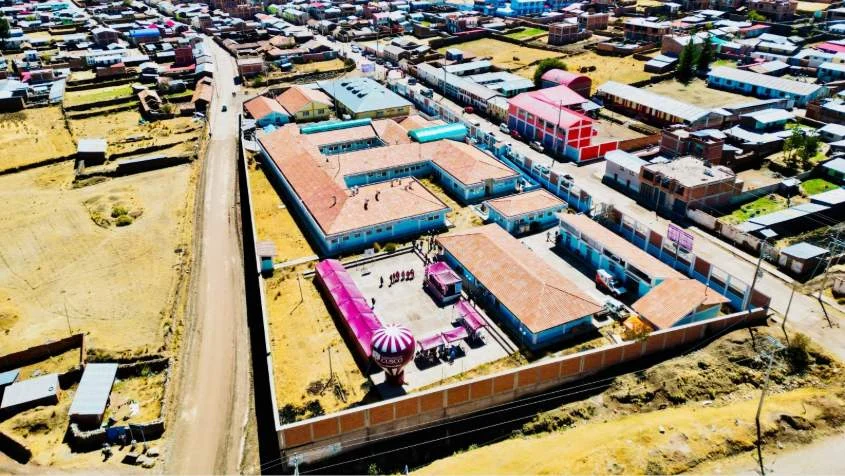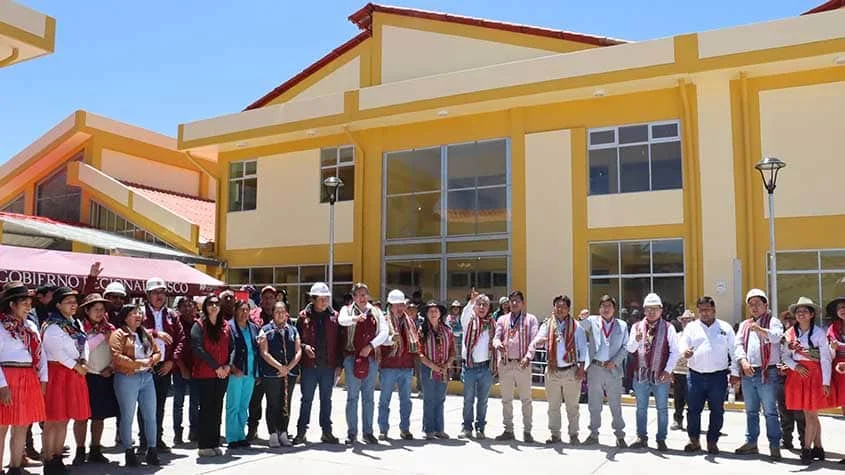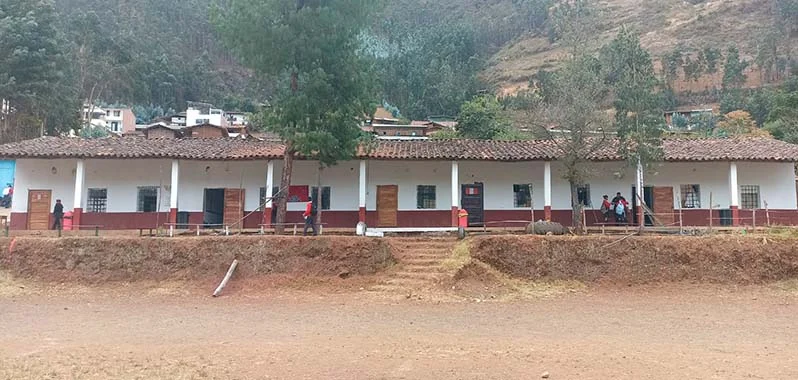
The regional government of La Libertad has initiated a multi-million-dollar tender to revitalize the century-old Ciro Alegría School, promising a modern pedagogical hub for over 700 students in the heart of the Sánchez Carrión province.
The educational landscape of the Peruvian highlands is set for a significant transformation. The Regional Government of La Libertad (GORE La Libertad) has officially launched a public tender for the comprehensive reconstruction of the historic No. 80148 "Ciro Alegría" School, located in the district of Sartimbamba. This ambitious public works project represents a major investment in the region’s human capital, aiming to replace outdated facilities with a state-of-the-art educational complex designed to meet the rigorous demands of modern 21st-century learning.
A Historic Legacy Meets Modern Engineering
For 118 years, the Ciro Alegría School has served as a cornerstone of the Sartimbamba community. The institution carries deep cultural significance, not only as an academic pillar but as a tribute to the legendary Peruvian writer Ciro Alegría. Renowned for his seminal works of indigenist literature, such as El mundo es ancho y ajeno (Broad and Alien is the World) and Los perros hambrientos (The Hungry Dogs), the author was born in this very locality.
The current initiative seeks to honor this legacy by providing the next generation of students with an environment worthy of such intellectual heritage. The project, which has been in the planning stages for some time, represents the convergence of local municipal planning and regional execution power. Initially, the technical files and definitive studies were formulated by the Municipality of Sartimbamba; however, given the scale and budgetary requirements, these were subsequently transferred to the Regional Government of La Libertad for final evaluation, budgetary adjustments, and the commencement of the procurement process.
The Financial Scope of the Intervention
With a reference value of S/ 25 million, the project is categorized as a high-impact infrastructure investment. This funding is not merely directed at basic masonry; it covers the development of a comprehensive pedagogical ecosystem. The transition from the old, deteriorated structure to a modern facility is a critical step in addressing the historical gap in infrastructure quality between urban centers and rural, high-altitude communities.

The regional government emphasizes that this investment is part of a broader strategy to revitalize the provincial education sector. By allocating substantial resources to Sánchez Carrión, the administration aims to mitigate the "educational inequality" that has long plagued remote Andean districts, ensuring that students in Sartimbamba have access to facilities that rival those in major metropolitan hubs like Trujillo.
Chronology and Execution Roadmap
The administrative timeline for this project is meticulously structured to ensure transparency and rapid commencement. According to the official calendar established by the procurement committee:
- November 2026: The selection process is expected to reach its conclusion with the adjudication of the "Good Pro" (the official awarding of the construction contract).
- December 2026: Once the contract is formalized and the land is officially turned over to the winning contractor, the symbolic "first stone" ceremony will take place, marking the start of the construction phase.
- Contractual Duration: The project has been defined as a 450-day "turnkey" operation. This duration accounts for the complexities of building in high-altitude terrain, the logistics of material transport, and the rigorous testing phases required for modern structural standards.
The 450-day deadline is not merely a suggestion; it is a binding contractual obligation. The selected construction firm will be held to strict milestones to ensure that the facility is ready for operation within the specified timeframe, minimizing the disruption to the local student population.
Architectural Vision and Facilities
The architectural design of the new Ciro Alegría school is a testament to contemporary educational planning. The project includes 22 specialized pedagogical classrooms: 12 dedicated to primary education and 10 for secondary students. Beyond the classroom count, the design prioritizes sustainability and comfort.
Key features of the new facility include:

- Climate-Responsive Design: Given the high-altitude location, the buildings will feature advanced thermal insulation and strategic orientation to maximize natural light and heat retention, ensuring a conducive learning environment regardless of weather conditions.
- Universal Accessibility: The entire campus will be built with modern accessibility standards, ensuring that students with physical disabilities can navigate the facility without barriers.
- Specialized Labs and Workshops: The project integrates a library, an innovation laboratory, connectivity modules, science laboratories, and multifunctional workshops. These spaces are intended to foster STEM (Science, Technology, Engineering, and Mathematics) skills, which are vital for the economic development of the region.
- Health and Welfare: A dedicated medical triage area (tópico) will be included to provide preventative healthcare and emergency response, a necessity for a school in a rural district.
Supporting Data: Furniture and Technological Integration
The project’s scope extends well beyond the physical structure. A significant portion of the budget is earmarked for equipping the school to international standards. The tender includes the procurement and installation of 2,066 units of ergonomic school furniture. This is a critical investment in student health, as long-term studies have shown that improper seating is a major contributor to physical fatigue and poor concentration among school-aged children.
Furthermore, the integration of 149 audiovisual and technological units reflects a commitment to digital literacy. In an era where connectivity is synonymous with opportunity, the inclusion of digital support tools is designed to bridge the connectivity gap for the 700 students who will call this school home.
Implications for the Region
The reconstruction of the Ciro Alegría School is not an isolated event. It is a strategic component of a larger regional push to modernize infrastructure in the Sánchez Carrión province. This project follows on the heels of other major interventions, such as the rehabilitation of the San Nicolás school, the upgrading of the José Faustino Sánchez Carrión Pedagogical Institute, and the construction of the Huamachuco Technological Institute.
By clustering these investments, the Regional Government is effectively creating an "educational corridor" within the province. This approach is intended to provide a continuous pathway for student development—from primary education through to technical and higher education—thereby keeping talent within the region and providing the youth of La Libertad with viable professional futures.
Official Stance and Regional Impact
During the formal announcement of the tender, regional authorities emphasized that the project serves as a clear indication of their commitment to the "forgotten" districts of the Andes. By investing in the birthplace of one of Peru’s most iconic literary figures, the government is making a symbolic and practical statement: that the quality of education in Sartimbamba is a matter of regional pride and priority.

For the local economy, the project is also expected to act as a stimulus. The influx of capital for labor, logistics, and material procurement during the 450-day construction period will provide a temporary but significant boost to the local economy. Furthermore, the completed school will serve as a permanent anchor for the district, potentially attracting further public and private investment into the surrounding infrastructure.
Conclusion: A Foundation for the Future
The tender for the Ciro Alegría School stands as a model for how regional governments can tackle the modernization of infrastructure through rigorous planning and sustained investment. By transforming the school into a modern, safe, and technologically equipped facility, La Libertad is not just rebuilding a structure; it is reinforcing the foundation upon which the future of its youth is built.
As the project moves into the selection phase, the eyes of the community and the education sector remain fixed on the upcoming milestone in November. The successful completion of this project will serve as a beacon for other provinces, demonstrating that with the right combination of technical expertise and political will, even the most remote districts can participate in the digital and educational evolution of the country.
The legacy of Ciro Alegría, who wrote of the struggles and triumphs of the Andean people, will now be inextricably linked to a school that provides the tools for those same people to write their own stories of success.