Executive Summary: A Call for Accountability
In a critical development for the future of the Peruvian Amazon, the Organization for Environmental Evaluation and Enforcement (OEFA) has committed to conducting comprehensive oversight operations in "Lote 64" (Block 64) during the first quarter of 2019. This intervention follows persistent, long-standing allegations of environmental negligence brought forward by the Federation of the Achuar Nationality of Peru (FENAP).
For years, the indigenous nations of the Amazon—specifically the Achuar and the Wampis—have decried the presence of toxic legacy oil spills that remain un-remediated. These environmental disasters, dating back to 2012, involve infrastructure once managed by Talisman Energy. Beyond the immediate ecological damage, these nations are now grappling with a public health crisis that threatens their survival, leading to a unified front demanding the immediate cancellation of oil concessions that were granted without their free, prior, and informed consent.
The Roots of the Conflict: A Chronology of Neglect
2012: The Origin of the "Situche Central" Crisis
The current conflict traces its origins to 2012, when significant oil spills were recorded in the Situche Central sector of Block 64, specifically near the 2x and 3x oil wells in the community of Putuntsa. While ownership and operational responsibilities have shifted over time, the physical contamination remains. The lack of adequate remediation has turned these sites into open wounds on the landscape, leaking toxins into the soil and water tables that sustain the local indigenous populations.
2018: Escalation at the Congressional Level
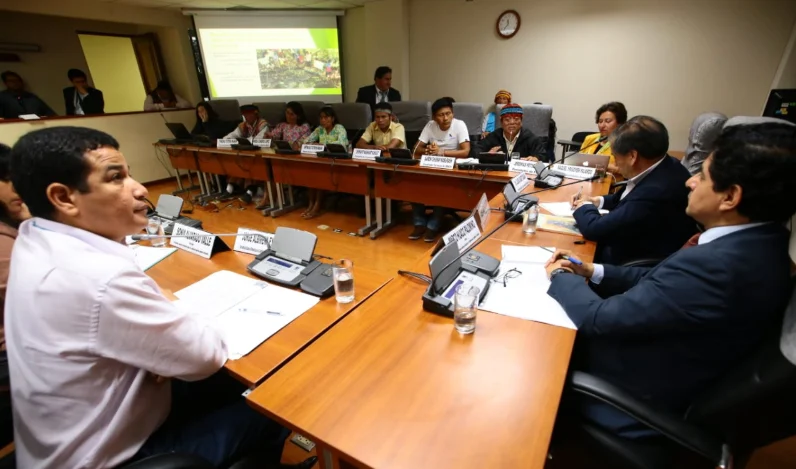
On a Monday in early December 2018, the situation reached a breaking point during a work session convened by the Commission for Andean, Amazonian, and Afro-Peruvian Peoples, Environment, and Ecology (CPAAAAE) of the Congress of the Republic of Peru.
During this meeting, indigenous leaders presented irrefutable evidence of the ongoing environmental degradation. Shiwiant Mashiant, president of the AIM basin organization (under the FENAP umbrella), provided a harrowing testimony: the pollution from the abandoned wells is not confined to the drilling sites but has permeated the water sources essential for both the community’s livestock and human consumption.
Environmental and Health Implications: A Community in Peril
The Human Toll
The impact of the oil industry in the Amazon is not merely an abstract environmental statistic; it is a lived reality of physical suffering. Jeremías Petsein Peas, president of FENAP, warned that the contamination extends beyond Block 64 to the communities of Chuintar and Uwinsta, linked to the Norperuano Pipeline, which has historically been managed by the state-owned Petroperú.
The health consequences identified by the community members are alarming. Residents report chronic stomach ailments, persistent headaches, and inexplicable skin lesions. Women and children—the most vulnerable members of these communities—are bearing the brunt of this toxic exposure. The presence of heavy metals and petroleum-derived hydrocarbons in their water sources represents a clear violation of the human right to health and a clean environment.
The Institutional Failure
Wrays Pérez, president of the Territorial Autonomous Government of the Wampis Nation (GTANW), spoke with profound frustration regarding the lack of government action. During the congressional session, he emphasized the systemic failure to prioritize the Amazon’s survival over extractive profits.
"Nothing is being done," Pérez stated. "Petroperú knows it must remediate the Norperuano Pipeline, yet the delay continues." He highlighted a recurring theme in Amazonian politics: the disparity between the wealth extracted from the land and the lack of financial resources allocated to heal the resulting environmental scars.
Official Responses and Commitments
The Role of the OEFA
The commitment from the OEFA to perform fiscal oversight in early 2019 is seen as a victory for the lobbying efforts of the indigenous federations. However, leaders remain skeptical of the efficacy of these inspections unless they lead to concrete, legally binding remediation orders. The OEFA’s mandate is to ensure that companies adhere to environmental standards, but in the case of legacy sites, the regulatory hurdles often prove difficult to overcome without sustained political pressure.
The Ministry of Health’s (MINSA) Intervention
Following the testimonies presented at the Congressional hearing, the Ministry of Health (MINSA) delegates present at the meeting pledged to initiate a diagnostic study. The promise includes providing medical attention to the affected populations. While this is a necessary step, community leaders argue that medical treatment is a "band-aid" solution if the source of the toxicity—the polluted water and soil—is not remediated.
Legal and Ethical Foundations of the Resistance
Lack of Consultation and Social License
A core pillar of the opposition from the Achuar and Wampis nations is the absence of "social license" for projects like Block 64, currently held by the company GeoPark. Both FENAP, with legal support from the International Institute for Law and Society (IIDS), and the Wampis Nation, advised by Peru EQUIDAD, argue that the contracts for these concessions were signed in violation of national and international law.
Specifically, the ILO Convention 169 mandates that indigenous peoples must be consulted regarding any project that affects their traditional lands. The Achuar and Wampis affirm that no such consultation took place. Consequently, they are calling for the total annulment of the Block 64 contract.
The Principle of Self-Determination
The Wampis Nation has become a global model for indigenous self-governance. By asserting their territorial autonomy, they are challenging the state’s right to auction off their ancestral lands to multinational corporations without consent. Their struggle is not only about the environment; it is about the right to determine the path of their own development and the protection of their sovereign territory from the ravages of extractive industries.
Looking Ahead: The Path to Justice
The situation in Loreto serves as a microcosm for the broader tensions between extractive development and the rights of indigenous peoples in the Amazon Basin. The persistence of the Achuar and Wampis in the face of bureaucratic inertia highlights a growing trend: indigenous nations are increasingly utilizing international legal frameworks and strategic alliances with NGOs to hold governments and corporations accountable.
Key Demands for the Future:
- Immediate Remediation: A comprehensive, government-funded plan to clean up the legacy spills in Block 64 and along the Norperuano Pipeline.
- Health Monitoring: A long-term, state-sponsored health program to monitor and treat the populations suffering from exposure to toxic contaminants.
- Cancellation of Unlicensed Concessions: The legal nullification of oil contracts that were signed without the Free, Prior, and Informed Consent (FPIC) of the affected indigenous nations.
- Institutional Reform: Greater transparency in the oversight process, ensuring that regulators like OEFA are empowered to enforce sanctions against companies that abandon their environmental responsibilities.
The fight of the Achuar and Wampis is far from over. As the 2019 fiscal inspections approach, the eyes of the environmental community will be on the Amazon. Whether this marks the beginning of a true path toward environmental justice or remains another instance of broken promises will depend on the sustained pressure of the indigenous movement and the willingness of the Peruvian state to place human life and ecological health above corporate interests.
In the words of the indigenous leaders, the Amazon is not merely a resource; it is a life-support system. As the water flows, so too does the vitality of their culture and their people. Protecting that flow is not an option—it is a necessity for the survival of the Amazon and the global climate.