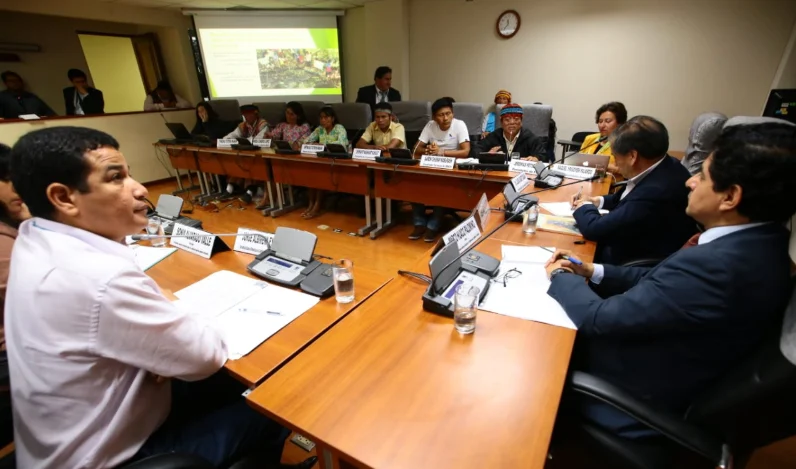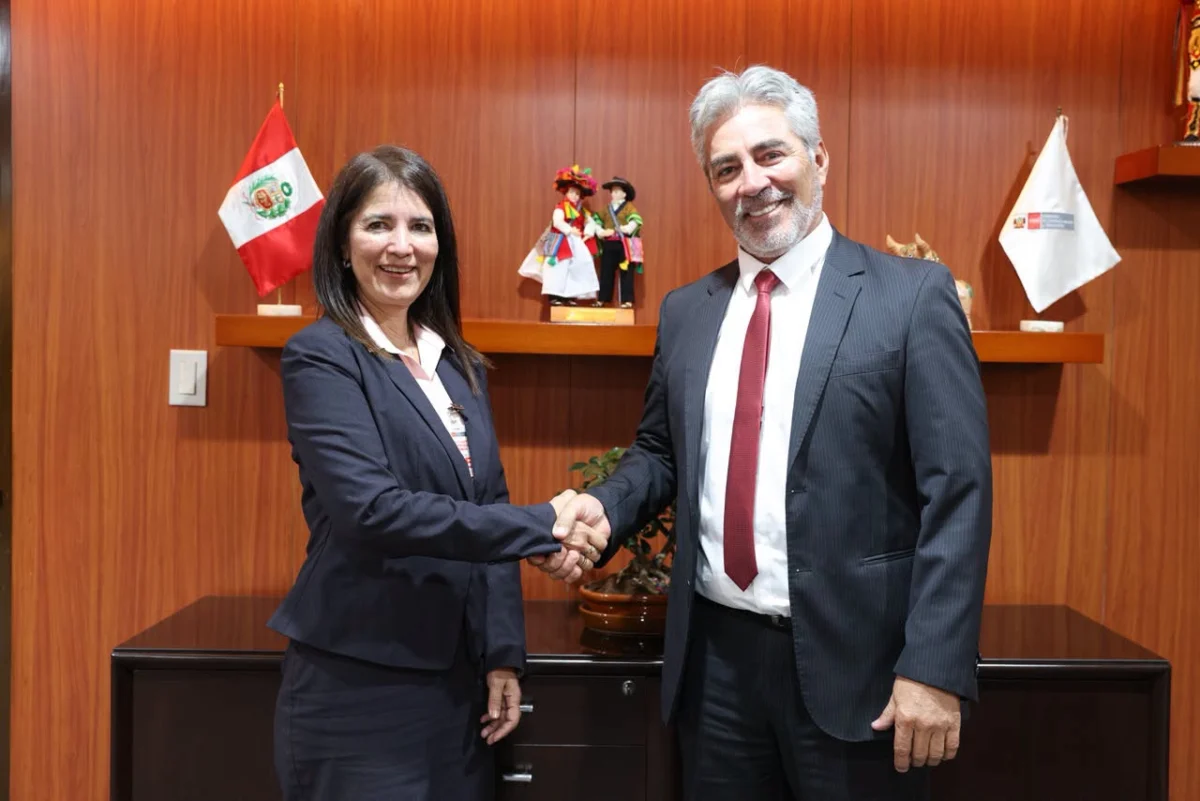
In a high-level effort to address the deepening water crisis in southern Peru, the Minister of Housing, Construction, and Sanitation, Mauricio Arnillas, held a pivotal summit this week with top executives from Sociedad Minera Cerro Verde. The meeting, which brought together government leadership and private sector stakeholders, focused on accelerating structural solutions to guarantee potable water access for the population of Arequipa—a region currently grappling with severe infrastructure gaps and rising social volatility.
Representing Cerro Verde were Julia Torreblanca, Vice President of Corporate Affairs, and Miluska Cervantes, Manager of Government Relations. The dialogue marks a significant milestone in a long-standing public-private partnership model that aims to close historical sanitation gaps and build resilience against the growing threat of climate-induced water scarcity.
The Urgency of the Crisis: A Region at a Breaking Point
Arequipa, while historically a pillar of Peru’s economic growth, is currently facing a precarious reality regarding its hydrological resources. The urgency for this ministerial intervention was underscored by events in July 2026, when residents from 23 population centers in the district of La Joya took to the streets, blocking the Panamericana Sur highway.
The protests, which lasted for several days, were sparked by a total lack of potable water service that had stretched for over three weeks. According to local representatives, the conflict was ignited by the stagnation of an integral sanitation project that was promised to supply the district. This incident served as a stark reminder to the central government that water insecurity is not merely a technical challenge, but a catalyst for social unrest. As drought cycles become more frequent, the partnership between the Ministry and Cerro Verde seeks to preemptively address these vulnerabilities before they escalate into regional crises.
A Legacy of Collaboration: The “Virtuous Circle of Water”
Cerro Verde’s involvement in Arequipa’s water management is not a reactive measure, but the result of a two-decade-long commitment branded as the "Virtuous Circle of Water." This framework has become a case study in how large-scale mining operations can coexist with urban development by investing in shared infrastructure.
Key Infrastructure Milestones
Over the last twenty years, the company has channeled over $700 million into regional water infrastructure. Key projects include:

- The Represas (Reservoir) System: Critical co-financing for the Pillones, Bamputañe, and San José de Uzuña dams, which regulate the flow of the Chili River, ensuring water availability during the dry season.
- La Tomilla II: A foundational treatment plant that significantly increased the volume of potable water available to the metropolitan area.
- Urban Expansion: Massive investments in connectivity networks for the Cono Norte and Cono Este districts, bringing piped water to neighborhoods that had previously relied on expensive, unregulated water trucks.
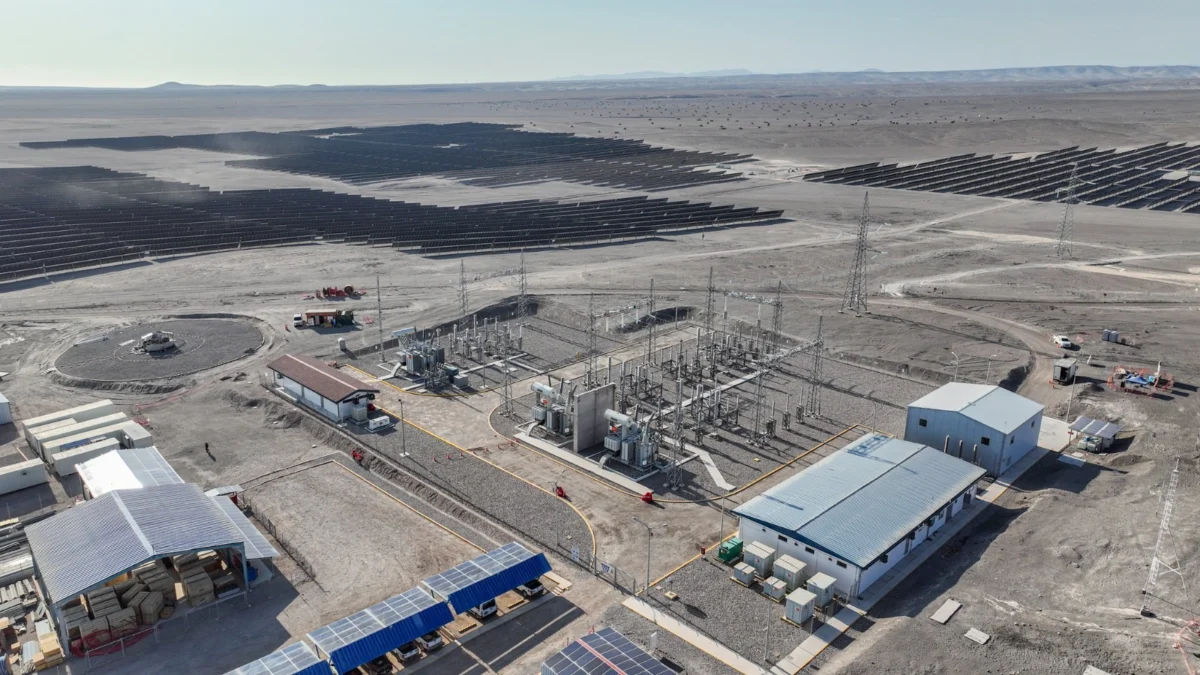
Perhaps the most significant achievement is the La Enlozada Wastewater Treatment Plant (PTAR). Currently, this facility processes approximately 80% of the city’s sewage. Crucially, Cerro Verde operates and maintains this facility at no cost to the residents of Arequipa, absorbing the operational burden and preventing the expense from being passed on to the public in the form of higher tariffs. To date, this infrastructure has successfully recovered over 1.6 billion cubic meters of water—volume that would have otherwise been discharged as untreated sewage into the ocean—repurposing it for both urban consumption and industrial productivity.
Future Projections and Financial Commitments
During the meeting, the focus shifted from past successes to future mitigation strategies. Both the Ministry and Cerro Verde outlined a roadmap to ensure long-term water security through 2060.
Strategic Investments and Agreements
- PTAR La Enlozada Expansion: A formal agreement has been signed with Sedapar (the local water utility) to incrementally expand the treatment capacity of La Enlozada from 1,800 liters per second to 2,800 liters per second. This project is intended to keep pace with the city’s demographic growth over the next four decades.
- Infrastructure Strengthening: Cerro Verde has committed $116 million in direct funding to support Sedapar in upgrading its aging distribution systems and leak-detection technology.
- Works for Taxes (Obras por Impuestos): Beyond direct investment, the company has pledged $510 million through the "Works for Taxes" mechanism. This financial instrument allows the private sector to execute public infrastructure projects in exchange for tax credits, effectively bypassing the bureaucratic bottlenecks that often stall government-led construction.
Official Responses and Stakeholder Perspectives
Minister Mauricio Arnillas emphasized the necessity of this synergy, stating, "The challenges facing Arequipa cannot be solved by the state alone. The collaboration with Cerro Verde represents a strategic alliance that prioritizes the human right to water while maintaining the operational sustainability of the region."
On the corporate side, the representatives reiterated that the company’s "social license to operate" is inextricably linked to the prosperity of the region. "By investing in water, we are investing in the health and future of the people of Arequipa," noted Julia Torreblanca. "Our objective is to ensure that the infrastructure we build today remains functional and efficient for the generations of tomorrow."
Recognition of Environmental Stewardship
The effectiveness of this model has not gone unnoticed by the international and domestic community. In May 2026, Cerro Verde was honored with the prestigious PRISMA 2026 Award. The accolade recognized the transformative impact of the La Enlozada plant on the health of the Chili River and the overall sustainability of the Arequipa basin.
Furthermore, the Ministry of Housing recognized the firm during the II Forum on Circular Economy in Water and Sanitation, citing it as a benchmark for industrial water reuse. These honors serve to validate a collaborative model that, while complex, has successfully navigated the political and environmental minefields of the region.

Implications for Future Governance
The ongoing dialogue between Minister Arnillas and Cerro Verde carries broader implications for the Peruvian mining sector. As global expectations for Corporate Social Responsibility (CSR) evolve, the Arequipa model provides a blueprint for how large-scale resource extractors can pivot from being perceived as consumers of water to being the primary architects of regional water security.
However, challenges remain. The reliance on private sector funding for essential public services poses questions regarding long-term institutional independence. Critics argue that public infrastructure should remain firmly under the control of state-owned utilities, while proponents argue that the efficiency and technical expertise of a private partner—coupled with substantial capital injection—is the only realistic path forward given the current constraints of the public budget.
As the implementation phase of these new commitments begins, the eyes of the nation will be on Arequipa. If the expansion of the La Enlozada plant and the rollout of the $510 million "Works for Taxes" projects proceed as planned, Arequipa may become the primary example of how a desert city can sustain a modern, growing population through the intelligent, disciplined, and collaborative management of its most precious resource.
The coming months will be critical, as the Ministry and the company must now coordinate with local municipalities to ensure that the infrastructure works are not delayed by permitting processes or local political friction. For the residents of Arequipa, the goal is simple: a future where the tap running dry is a memory of the past, rather than a recurring threat to their livelihood.