Introduction: A Beacon of Peruvian Engineering
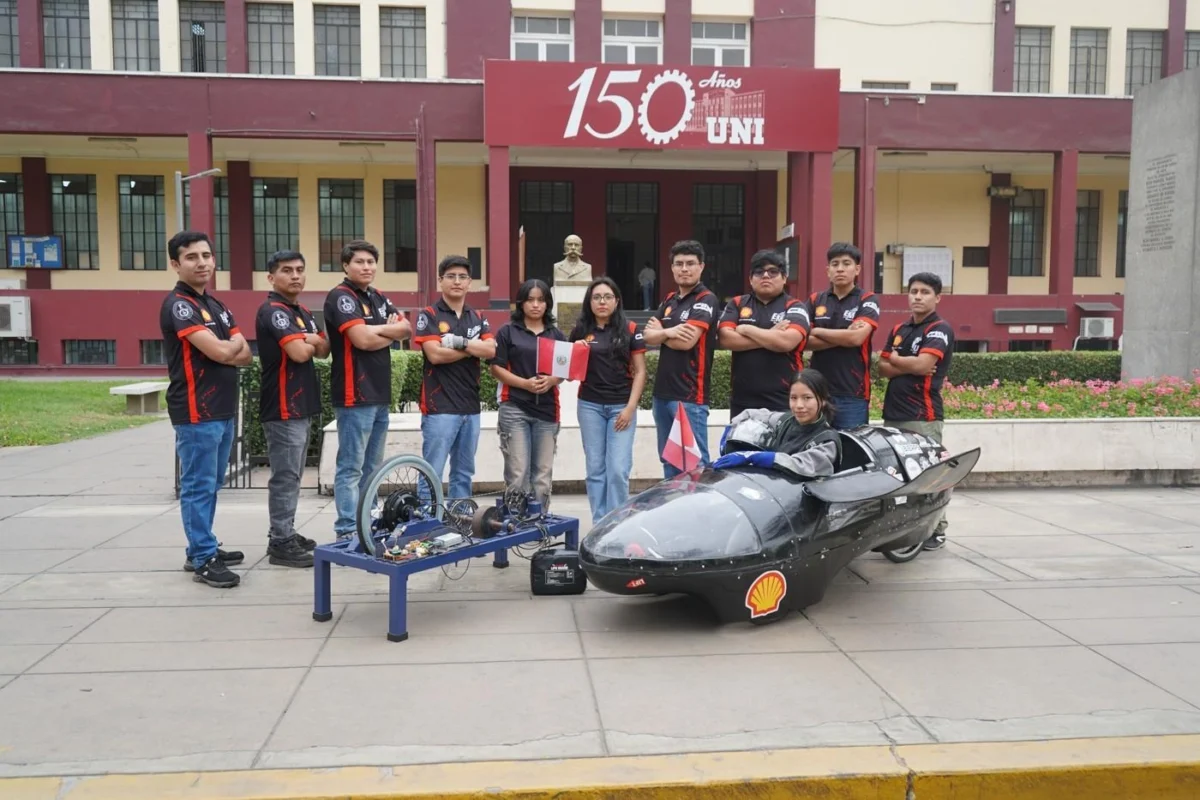
In the heart of Lima, within the hallowed halls of the Universidad Nacional de Ingeniería (UNI), a group of ambitious students is redefining the boundaries of sustainable mobility. Known as Eco Motors UNI (EMU), this multidisciplinary team of engineers has become the gold standard for high-efficiency vehicular innovation in Peru. As they prepare to cross borders for the third consecutive year, all eyes are on the Pier Mauá in Rio de Janeiro, where the Shell Eco-marathon Brazil 2026 will take place from August 24 to 27.
At the center of their mission is the "Hualkana 3," a state-of-the-art prototype that embodies years of rigorous research, late-night laboratory sessions, and a commitment to energy efficiency. However, as the team gears up for the global stage, they face a familiar hurdle: the logistical challenge of funding their journey. Their quest is not merely a sporting endeavor; it is a testament to the potential of Peruvian talent to compete on the highest levels of international engineering.
The Chronology of Success: From Lima to Rio
The journey of EMU is characterized by a trajectory of exponential growth. What started as an academic project has evolved into a powerhouse of technical excellence, earning the respect of global peers and international judges.
2024: Breaking the Barrier
The Shell Eco-marathon Brazil 2024 marked the team’s international debut. For most rookie teams, the technical inspection phase is a "great filter," where nearly 90% of participants fail to meet the stringent safety and mechanical requirements set by Shell’s global engineering panel. EMU not only passed these inspections on their first attempt but stood out as the sole Peruvian representative, marking their territory on the track.
2025: Consolidation and Maturity
Returning to Brazil in 2025, the team proved that their success was no fluke. Facing even more rigorous standards and a field of highly experienced international teams, EMU successfully navigated every phase of the inspection process. Their ability to adapt to changing technical regulations demonstrated a level of engineering maturity rarely seen in undergraduate teams.
2025: Local Recognition
Beyond the track, the team dominated the local academic circuit. They secured the first place at the Feria ABET 2025, where they showcased their custom-built test bench—a project that outperformed nearly 50 other high-level engineering designs. Furthermore, they earned the second place at the UNICTEC 2025, cementing their reputation as the most innovative student group at the university.
Supporting Data: The Anatomy of "Hualkana 3"
The Hualkana 3 is more than a car; it is a masterpiece of fluid dynamics and material science. Every component has been engineered to minimize energy loss and maximize distance.

- Aerodynamic Optimization: The team utilized advanced CFD (Computational Fluid Dynamics) simulations via ANSYS Fluent to sculpt the body, significantly reducing the drag coefficient.
- Chassis and Body: Constructed from high-strength, ultralight carbon fiber, the chassis provides maximum structural rigidity while keeping the total weight of the vehicle to an absolute minimum.
- Propulsion System: The vehicle features a custom-tuned Hub BLDC motor, boasting an energy efficiency rating exceeding 80%.
- Control and Safety: The electronics suite is designed for precision, including a state-of-the-art power management system and a dual-emergency cutoff mechanism to ensure driver safety under all conditions.
The "Efficiency Quotient": Perhaps the most striking statistic regarding the Hualkana 3 is its range. With just one Peruvian Sol (S/ 1) worth of electricity, the prototype is estimated to travel nearly 200 kilometers—a distance equivalent to driving from Lima to Barranca. This serves as a powerful metaphor for the team’s mission: doing more with less.
Official Perspective: Why This Matters for Peru
The implications of EMU’s success extend far beyond the finish line in Rio de Janeiro. Their participation serves as a catalyst for three major pillars of national development:
1. Fostering a Culture of Innovation
By focusing on clean energy and high-efficiency systems, EMU is helping to shift the narrative of Peruvian industry toward sustainable technology. They are proving that Peru can be a contributor to, rather than just a consumer of, global green technology.
2. The Formation of Future Leaders
The students involved in EMU are not just learning how to build a car; they are mastering project management, international logistics, resource acquisition, and high-pressure problem solving. These individuals are the future architects of Peru’s transportation and energy sectors.
3. National Pride and Visibility
When the Peruvian flag is displayed at the Shell Eco-marathon, it signals to the world that Peruvian universities are centers of excellence. This visibility is vital for fostering academic exchanges and attracting future investment into the country’s STEM (Science, Technology, Engineering, and Mathematics) programs.
The Challenge: Financing the Dream
Despite the technical prestige of the project, the financial burden of international competition remains a significant obstacle. Because the Shell Eco-marathon does not charge an entry fee, the focus of the team’s fundraising is entirely on the logistics of transporting the prototype and the team to Brazil.
The team has already received support from key industry partners, including Delcomp, Evinka, ROCC Ingenieros, and Carbono Perú. However, the scale of an international operation in a city like Rio de Janeiro requires additional support.

"We are not just asking for sponsorship; we are inviting the business community, our alumni, and technology advocates to invest in a vision," says a representative from the team. The goal is clear: to ensure that the Hualkana 3 reaches the starting grid, allowing the team to continue their streak of representing Peru on the international stage.
Implications: A Call to Action
The story of Eco Motors UNI is a microcosm of what is possible when academic discipline meets technical ambition. As they prepare for the 2026 season, they represent the untapped potential of Peru’s youth.
For the private sector, supporting EMU is an opportunity to associate with a high-impact project that aligns with global Environmental, Social, and Governance (ESG) goals. For the academic community, it is a rallying point for excellence.
As the countdown to August 24 begins, the team remains steadfast in their preparation. They are not merely building a vehicle to win a race; they are engineering a future where efficiency and sustainability are the foundations of progress. The Hualkana 3 is ready to take flight; all it needs now is the support to reach its destination.
How to Support
Companies, individuals, and organizations interested in partnering with or supporting the Eco Motors UNI team can reach out to the Faculty of Mechanical Engineering at the Universidad Nacional de Ingeniería. By supporting this initiative, you are not just funding a trip to Brazil—you are fueling the next generation of engineers who will drive the transition toward a more sustainable and efficient future for Peru and the world.
About Eco Motors UNI (EMU):
EMU is the premier student-led vehicular innovation group at the Universidad Nacional de Ingeniería. Composed of students from the Faculty of Mechanical Engineering, the team focuses on applying interdisciplinary research to solve the challenges of modern, sustainable, and energy-efficient transportation.