As Peru stands on the precipice of a transformative era in civil engineering—characterized by ambitious projects such as the Nueva Carretera Central—the global landscape of subterranean construction is shifting toward unprecedented scales of precision and safety. At the forefront of this evolution is the Zhongtie 1662, a colossal Tunnel Boring Machine (TBM) developed in China that serves as a benchmark for what modern engineering can achieve in highly complex, high-pressure environments.
The deployment of this machine, spearheaded by the China Railway Tunnel Group (CRTG), represents a paradigm shift in how engineers approach the delicate balance between structural necessity and environmental preservation. As Peru evaluates its own long-term infrastructure needs, the capabilities demonstrated by the Zhongtie 1662 offer a glimpse into the technologies that could define the nation’s future connectivity.
The Technical Titan: Anatomy of the Zhongtie 1662
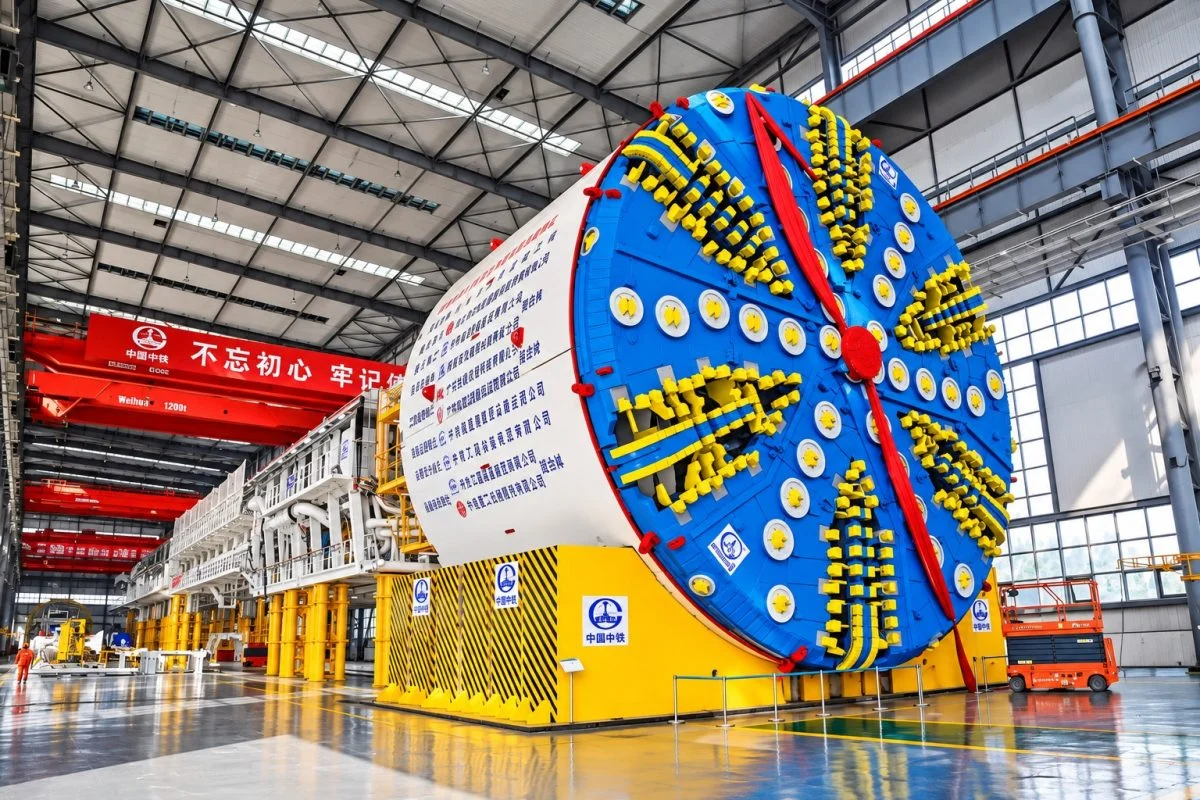
The Zhongtie 1662 is not merely a tool; it is a mobile factory of immense proportions. With a diameter of 16.68 meters—an aperture equivalent to the height of a five-story building—this TBM is designed to navigate the most challenging geological conditions. Stretching 125 meters in length and weighing approximately 4,800 tons, it is currently deployed in the Chinese city of Hefei to excavate a critical vehicular tunnel beneath the Dongpu Reservoir.
Key Specifications:
- Diameter: 16.68 meters.
- Weight: ~4,800 tons.
- Total Length: 125 meters.
- Operating Capability: Designed to function under pressures up to 8 bar.
- Primary Application: High-pressure sub-aqueous tunneling.
The machine’s mission in Hefei is as delicate as it is massive. It must carve a 2.9-kilometer path under an active reservoir that serves as a vital source of drinking water and a primary flood-control asset. The route is fraught with engineering risks, passing in close proximity to a dam, a viaduct, and sensitive water protection zones. The TBM’s ability to execute this trajectory without disturbing the surface—or compromising the reservoir’s integrity—is a testament to the sophistication of modern mechanized excavation.
Chronology of Innovation: From Conventional to Intelligent Excavation
The trajectory of tunnel boring technology has been marked by a transition from manual, dangerous methods to highly automated, smart-system integration.
- Early Era (Pre-2000s): Reliance on drill-and-blast methods or manual shield tunneling. Exposure of workers to high-pressure environments and geological unpredictability was high.
- The Mechanization Phase (2000–2015): The introduction of standard TBMs allowed for faster, safer excavation in uniform soil conditions. However, high-pressure, water-bearing strata remained a significant hurdle.
- The Era of Intelligence (2016–Present): With the development of machines like the Zhongtie 1662, the industry has entered a phase characterized by "smart tunneling." This involves real-time data monitoring, automated material evacuation, and, crucially, the elimination of hyperbaric interventions for maintenance.
Safety as a Pillar: Overcoming the Hyperbaric Challenge
Perhaps the most significant innovation of the Zhongtie 1662 is its approach to maintenance. Traditionally, when the cutter heads of a TBM wear down—a common occurrence in hard rock or abrasive soil—the maintenance process is hazardous. Workers must enter the cutting chamber under high pressure, a process known as "hyperbaric intervention," which carries severe risks of decompression sickness and physical injury.
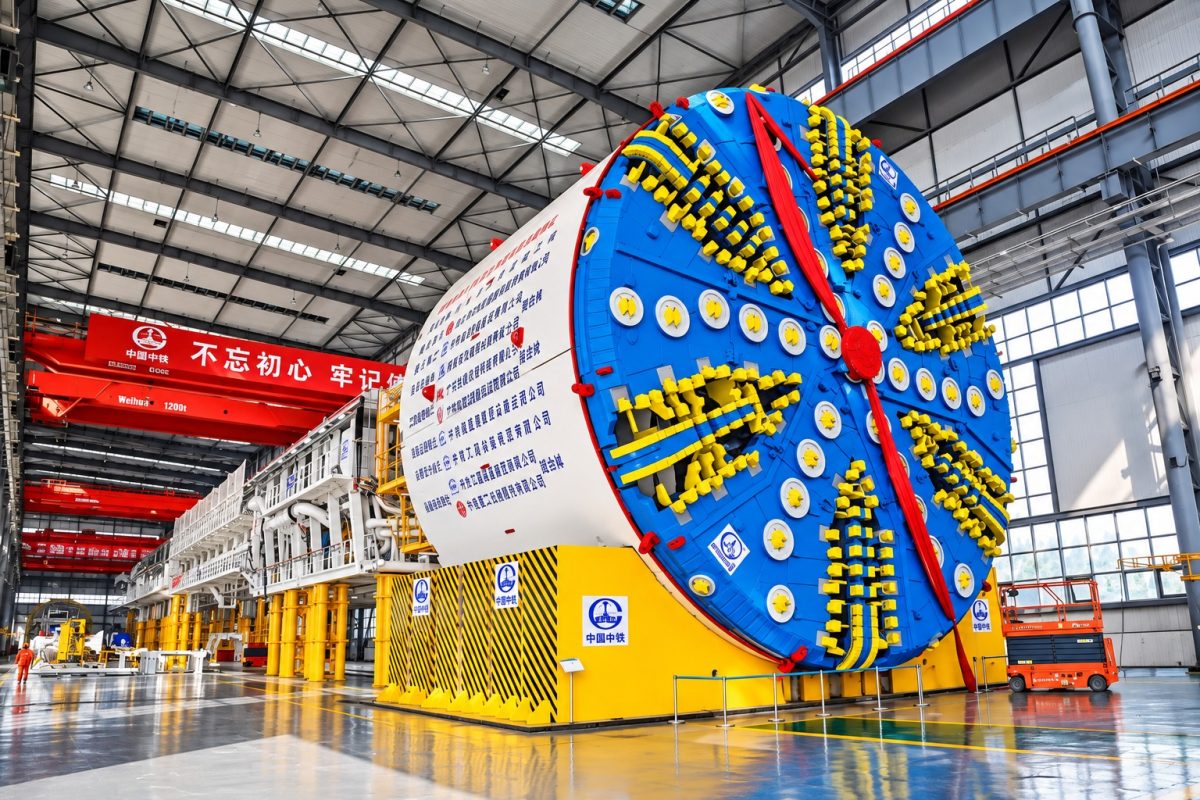
The Zhongtie 1662 renders this practice largely obsolete. It features an advanced system that allows for the replacement of cutters in an environment of up to 8 bar without exposing personnel to such extreme pressures. This is achieved through a combination of remote-operated robotic maintenance tools and a design that isolates the maintenance chamber from the active, pressurized cutting face.
Furthermore, the machine utilizes a continuous material evacuation system. Through a sophisticated screw conveyor and an external crushing system, the excavated muck is removed from the chamber before it can cause blockages or require human intervention. This systemic automation ensures that the most dangerous zones of the excavation process are kept free of human presence, significantly reducing the "human risk factor" that has historically plagued the tunneling industry.
Strategic Implications for Peru
The relevance of these technological advancements for Peru cannot be overstated. As the country moves forward with the Nueva Carretera Central, which proposes 185 kilometers of road including 39 kilometers of tunnels and 19 kilometers of viaducts, the need for safe, efficient, and reliable tunneling technology is urgent.
The Challenge of the Andes
The geography of the Andes presents a unique set of challenges: seismic activity, fractured rock mass, high altitudes, and the requirement to minimize environmental impact on fragile ecosystems. The CRTG, which has previously participated in projects such as the access tunnel to Machu Picchu, is currently sharing its global expertise at the II Latin American Meeting of Tunnels and Underground Spaces.
Fredy Osorio, a lead engineer with CRTG in Peru, notes that the lesson for Peru is not that one machine fits all, but rather the importance of tailored engineering. "The value for Peru does not consist in thinking that one machine can be used for any project," Osorio explains. "Each tunnel requires a solution designed specifically for its geology, depth, and function. What is relevant is understanding how far the technology has advanced and having the teams capable of selecting and adapting those solutions."
Infrastructure and Urban Development
Beyond the Nueva Carretera Central, the expansion of Lima’s urban railway systems and the integration of the country’s diverse regions require an intelligent approach to infrastructure. The shift toward mechanized, intelligent excavation offers several strategic advantages for the Peruvian government:
- Reduced Surface Impact: By moving transport infrastructure underground, the country can preserve agricultural land and protected areas.
- Operational Continuity: Intelligent monitoring systems allow for predictive maintenance, ensuring that tunnels remain operational for decades with minimal downtime.
- Enhanced Safety: By adopting global best practices in TBM technology, Peru can set new standards for worker safety in civil engineering, moving away from high-risk manual labor.
Official Responses and Industry Outlook
The industry sentiment, echoed by experts at the II Latin American Meeting of Tunnels, is one of cautious optimism. There is a clear recognition that the capital expenditure for high-end TBMs like the Zhongtie 1662 is significant, but the long-term lifecycle savings—in terms of construction speed, safety, and durability—are immense.
"The most important aspect is not only the diameter of the machine," Osorio emphasized during his address. "The true innovation lies in the ability to construct under increasingly complex and sensitive environments while simultaneously reducing the exposure of people and making decisions based on more precise, real-time data."
As the discussions in the engineering community progress, the focus is shifting toward the procurement of "smart" assets. Peru’s decision-makers are now tasked with evaluating not just the cost of construction, but the cost of the risk associated with traditional methods versus the value of investing in advanced, automated, and safer technologies.
Conclusion: A New Horizon for Peruvian Engineering
The Zhongtie 1662 serves as a symbol of the next generation of infrastructure. It proves that the limitations of the past—geological complexity, water pressure, and safety concerns—are no longer insurmountable barriers. For a country like Peru, which is looking to modernize its logistical corridors and integrate its isolated regions, the adoption of these technologies is not merely a choice, but a necessity.
By leveraging international expertise and embracing the intelligence of machines that can "think" and adapt to the rock face, Peru can ensure that its next wave of infrastructure is built to last. As the nation prepares for the massive undertaking of the Nueva Carretera Central and other vital projects, the lessons provided by the Zhongtie 1662 provide a roadmap for a future that is not only deeper and faster but, above all, safer for the workers and the land alike.