In a move that underscores its commitment to the expansion of Peru’s energy infrastructure, ENGIE Transmisión Perú S.A.—a wholly-owned subsidiary of ENGIE Energía Perú S.A.A.—has officially finalized the acquisition of 100% of the shares of Terna Perú S.A.C. This strategic transaction, valued at approximately US$15 million, marks a significant milestone in ENGIE’s ongoing efforts to solidify its position as a key player in the nation’s electricity transmission sector.
The acquisition follows the successful completion of all conditions precedent established in the purchase agreement signed in February 2026. By absorbing Terna Perú S.A.C., ENGIE now assumes full control of the critical Aguaytía-Pucallpa Transmission Line, an asset that serves as a vital artery for energy delivery in the region. The seller in this transaction was the Italian consortium comprised of Terna Plus S.r.l. and Rete S.r.l., both of which are subsidiaries of the Italian power giant Terna S.p.A.
Key Technical Specifications of the Asset
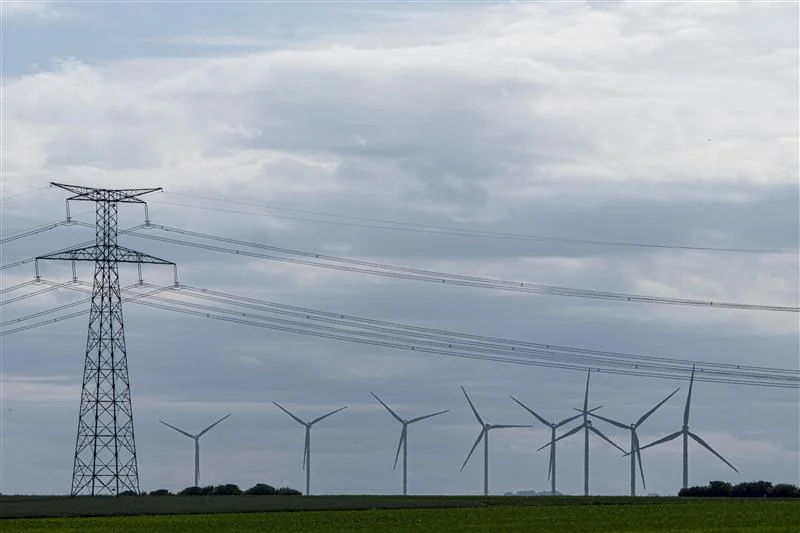
The centerpiece of this acquisition is the Aguaytía-Pucallpa 138 kV transmission line, which spans a total length of 132 kilometers. This infrastructure is not merely a static asset; it is a high-voltage connection that enables the reliable transport of power to the Ucayali region, a critical hub for regional development and industrial activity.
The line, specifically the "Second Circuit," was originally awarded by ProInversión in 2017 under a Build-Own-Operate-Transfer (BOOT) model. Since entering commercial operation in May 2021, the line has demonstrated consistent performance. The current concession remains in effect until 2051, providing ENGIE with a long-term, stable revenue stream and an opportunity to integrate the asset into its broader portfolio of operational excellence and grid management.
Chronology of Expansion: A Strategic Trajectory
ENGIE’s entry into the acquisition of Terna Perú is not an isolated event; it is the culmination of a deliberate, multi-year strategy to scale its footprint in the Peruvian transmission market. The company has methodically built its presence through a combination of asset acquisitions and the successful bidding for high-priority public infrastructure projects.
2023–2024: Establishing a Strong Pipeline
In December 2024, ENGIE solidified its growth strategy by securing three major projects under the Group 4 of the 2023–2032 Transmission Plan. This award mandated the construction of 170 kilometers of transmission lines across the regions of Ancash, Junín, and Ucayali. These projects were identified as crucial for closing the gap in regional connectivity and improving the reliability of the national grid.
2026: Consolidation and New Frontiers
The momentum continued into 2026, a pivotal year for the company. In June of this year, ENGIE was awarded the "Good Pro" (the official contract award) for four projects under the Group 1 of the 2025–2034 Transmission Plan. This massive undertaking involves the development of 400 kilometers of transmission lines spanning Piura, Lambayeque, Junín, and Ayacucho.
The acquisition of the Aguaytía-Pucallpa line in October 2026 serves as the operational bridge between these future projects and the company’s existing assets. By managing both the construction of new lines and the operation of existing ones, ENGIE has effectively verticalized its expertise in the transmission space.
Official Perspectives: Aligning with the Energy Transition
The acquisition has been framed by company leadership as a fundamental step toward a more resilient national power grid. Jimmy Aoki, Managing Director of Networks at ENGIE Perú, emphasized the strategic alignment of this purchase with the company’s broader mission.
"With this incorporation, ENGIE now reaches 608 km of transmission lines in active operation, with nearly 600 km currently in various stages of development across Peru," Aoki stated. "This acquisition reinforces our strategy of growth in electricity transmission and strengthens our capacity to develop and operate energy infrastructure that is essential for a secure, competitive, and sustainable energy transition."
Aoki’s statement reflects the broader corporate strategy of ENGIE globally: to facilitate the decarbonization of the energy sector by ensuring that the grid is capable of handling renewable energy inputs. By investing in transmission, the company is ensuring that power generated in remote areas can be safely and efficiently delivered to consumption centers, thereby reducing bottlenecks and lowering the risk of supply disruptions.
Implications for the Peruvian Energy Sector
The integration of the Aguaytía-Pucallpa line into the ENGIE network has several far-reaching implications for the energy market in Peru:
1. Operational Efficiency and Reliability
By centralizing the operation of key transmission lines under a single, experienced operator like ENGIE, the system benefits from standardized maintenance protocols, synchronized monitoring, and unified emergency response capabilities. This level of professionalization reduces the risk of unplanned outages and ensures that the infrastructure is maintained to international standards.
2. Supporting Renewable Integration
Peru’s energy matrix is shifting. As the nation moves toward more solar and wind projects, particularly in the northern and southern regions, the demand for high-capacity, robust transmission lines becomes paramount. The 400 km of new lines being developed by ENGIE will serve as a backbone for these new energy sources. The acquisition of existing assets provides the company with the necessary scale to manage this complexity.
3. Economic Impact and Regional Development
Reliable electricity is the lifeblood of regional economic development. The Pucallpa region, in particular, relies on stable energy to support commerce, public services, and infrastructure. By ensuring the longevity and performance of the Aguaytía-Pucallpa connection, ENGIE is providing the certainty that businesses and local governments need to plan for long-term investments.
4. Competitive Landscape
The sale by Terna Plus and Rete S.r.l. highlights the dynamic nature of the Peruvian transmission market. International players are increasingly refining their portfolios, often divesting from standalone projects to focus on larger, more integrated regional platforms. ENGIE’s acquisition strategy demonstrates that it is positioned to be a long-term buyer and operator, signaling confidence in the stability of the Peruvian regulatory environment.
Looking Ahead: The 2025–2034 Horizon
As ENGIE looks toward the 2025–2034 period, the company’s focus remains clear: the expansion of the "Transmission Backbone." With projects currently underway in Piura, Lambayeque, Junín, Ayacucho, and Ucayali, the company is effectively creating a grid network that connects the coast to the highlands and the Amazon basin.
The total portfolio of 1,200 km (including operating and development assets) positions ENGIE as a top-tier provider in the Peruvian market. The company’s ability to navigate the complex regulatory hurdles imposed by ProInversión, combined with its technical expertise, suggests that it will likely continue to be a dominant force in future public tenders.
Conclusion
The acquisition of the Aguaytía-Pucallpa transmission line for US$15 million is a small but significant piece of a much larger puzzle. It serves as a testament to ENGIE’s long-term vision for the Peruvian energy market. By building a network that is not only vast in distance but also robust in technology and maintenance, the company is doing more than just moving electricity—it is moving the country toward a more sustainable and secure future.
As the energy transition gains pace, the importance of the "wires" that carry that energy cannot be overstated. With this latest transaction, ENGIE has firmly cemented its role as the backbone of that transition, ensuring that as Peru’s energy needs evolve, the infrastructure will be there to support them. The integration of the Terna Peru asset is, quite literally, a power move that ensures the lights stay on for millions of Peruvians while paving the way for the next generation of energy infrastructure.