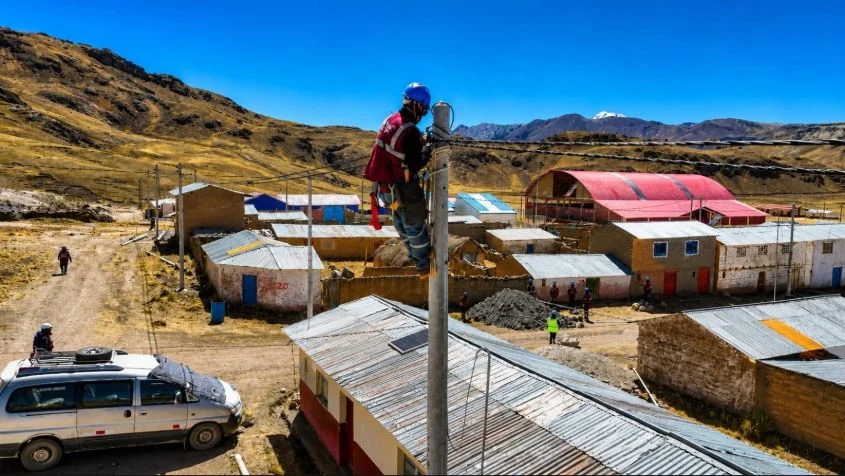
In a significant stride toward regional development and social equity, the Government of Cusco, through its Regional Management of Energy, Mines, and Hydrocarbons, has successfully finalized the execution of 11 critical electrification projects. This achievement represents a pivotal moment for the southern Andean region, bringing the promise of reliable energy to over 61,400 families who have long awaited integration into the modern electrical grid. With a total investment exceeding 74.8 million soles, these projects are not merely infrastructure milestones; they are catalysts for economic opportunity, educational advancement, and improved quality of life across the rugged terrain of the Cusco province.
A Strategic Commitment to Regional Electrification
The completion of these 11 projects marks a triumph of regional planning and execution. By focusing on rural electrification, the Cusco administration is effectively bridging the "energy gap" that has historically marginalized remote communities. The projects have been strategically deployed across several provinces, with a particular focus on areas where the lack of electricity has hindered local commerce and agricultural productivity.
Key provinces that have seen direct benefits from these initiatives include Canas, Canchis, Espinar, Chumbivilcas, and Paucartambo. By installing thousands of kilometers of transmission lines and implementing state-of-the-art distribution infrastructure, the government has ensured that these communities can now access essential services, support small-scale manufacturing, and provide students with better conditions for evening studies.
Chronology of Progress: From Planning to Power
The journey toward this regional electrification milestone has been characterized by systematic planning and rigorous oversight.
- Initial Planning Phase: The regional government identified the most vulnerable provinces where energy poverty was most acute.
- Funding and Budgetary Allocation: With a combined investment of 74.8 million soles, the projects were fast-tracked through the Regional Management of Energy, Mines, and Hydrocarbons.
- Execution Phase: Over the past 24 months, engineering teams worked in some of the most challenging geographical conditions in the Andes to ensure the stability of the grid.
- Operational Integration: The final phase involved the connection of households to the regional grid, a process that required close coordination with local utility providers and community leaders.
- The Next Wave: As these 11 projects conclude, the Regional Government is already looking ahead, with 9 additional projects currently in active development. These upcoming works represent a further investment of 128.2 million soles, signaling a sustained commitment to long-term energy security.
Supporting Data: The Scale of Investment
The numbers underlying this initiative reflect the sheer scale of the operation. The investment of 74.8 million soles covers the entirety of the completed 11 projects, which serve as the foundation for future grid expansions.

The current pipeline—comprising 9 active projects—boasts a modified budget of 128.2 million soles. This represents an aggressive scaling of energy infrastructure, suggesting that the Cusco Regional Government is prioritizing energy as the cornerstone of its socio-economic agenda. Beyond electricity, the government is also tackling the formalization of the mining sector. Recently, 22 small-scale and artisanal miners were formally integrated into the legal economy, a move designed to ensure that mineral extraction in the region adheres to safety, health, and environmental standards.
The Gas Revolution: A Historic Shift in Matrix
Perhaps the most transformative aspect of the current administration’s energy policy is the push for the mass adoption of natural gas. For over four decades, the people of Cusco have lived atop one of the most significant gas reserves in the continent, yet they have historically remained disconnected from the direct benefits of this resource.
This narrative is now changing. In a historic milestone for the region, the district of San Jerónimo has received its first-ever domestic natural gas connections. This accomplishment, occurring 43 years after the initial development of the region’s gas potential, marks the beginning of a broader strategy: the implementation of Satellite Regasification Plants. These facilities will allow the government to extend natural gas access to residential, commercial, and eventually industrial sectors, effectively diversifying the energy matrix and lowering costs for thousands of households.
Official Responses and Strategic Vision
The vision behind these initiatives is rooted in the belief that energy is a fundamental human right. During the inauguration of the latest project milestones, the Governor of Cusco, Werner Salcedo Álvarez, emphasized the intrinsic link between energy and prosperity.
"Energy represents development, equality of opportunity, and better living conditions for our families," Governor Salcedo Álvarez stated. His administration has consistently argued that the decentralization of energy infrastructure is the most effective way to combat poverty in the Andean highlands. By providing consistent power, the regional government is essentially laying the groundwork for digital connectivity, modern healthcare equipment, and the modernization of local agriculture.

Furthermore, the regional government has taken a proactive stance on environmental oversight. By formalizing artisanal miners, the government is not only protecting the rights of these workers but is also enforcing stricter environmental protection standards, ensuring that the economic gains of the region do not come at the cost of the fragile Andean ecosystem.
Implications for the Future
The implications of these developments for the Cusco region are profound.
Economic Implications
Reliable electricity acts as a force multiplier for local economies. In provinces like Chumbivilcas and Espinar, where agriculture and livestock are primary industries, the availability of electricity allows for the implementation of irrigation pumps, cold-storage facilities, and small-scale food processing. These advancements reduce post-harvest losses and increase the value-added potential of local produce.
Social and Educational Implications
The impact on education cannot be overstated. With electricity, schools can adopt modern digital teaching aids, and households can provide a stable environment for children to complete their studies after sunset. This is a critical step in narrowing the educational achievement gap between rural Cusco and the urban centers of Peru.
Environmental and Regulatory Implications
The push for natural gas as a bridge fuel represents a shift toward a cleaner, more sustainable energy mix. By reducing reliance on biomass or high-emission fuels for cooking and heating, the region will see a decrease in indoor air pollution, leading to significant long-term public health benefits. Additionally, the ongoing efforts to formalize the mining sector indicate a maturing regulatory environment that prioritizes safety and sustainability, which could attract more responsible investment to the region.

Conclusion: A Model for Regional Development
The success of the Cusco Regional Government in executing these 11 projects serves as a blueprint for other regions across Peru. By combining large-scale infrastructure investment with a clear social mandate, the administration has proven that energy poverty is a surmountable challenge.
As the 9 projects currently in execution reach completion, and as the natural gas network expands into more districts, the Cusco region is poised for a period of sustained growth. The "Energy for All" approach is not just a slogan but a tangible reality that is being built, one pylon and one pipe at a time. The legacy of these efforts will likely be measured not just in megawatts or connections, but in the expanded potential of the 61,400 families who now possess the power to participate fully in the regional and national economy.
With a clear trajectory toward further modernization and a focus on inclusive growth, the Government of Cusco is successfully transforming its energy sector into a engine of progress for the entire Andean region.