By Editorial Staff
The landscape of Peruvian economic policy is undergoing a period of intense scrutiny following the inaugural messages of the new administration. Alonso Segura, the current president of the Fiscal Council (Consejo Fiscal) and a former Minister of Economy and Finance, has emerged as a primary voice of caution. In a recent interview with RPP TV’s "Las cosas como son," Segura articulated significant reservations regarding the government’s ambitious labor and infrastructure agenda, warning that these policies could exacerbate structural issues within the Peruvian economy.
The Core Dispute: Minimum Wage and Labor Market Pressures
The most immediate point of contention is the administration’s proposal to increase the Minimum Vital Remuneration (RMV) by 15%, raising it from 1,130 to 1,300 soles. Segura described this move as "surprising," noting that there was no discernible wage pressure or macroeconomic justification for such a sharp hike.
"It is well known that the RMV in Peru is already very high in terms of the national wage distribution," Segura stated. "It is positioned at the top end of the scale. What this generates, in the context of the Peruvian economy, is not prosperity, but rather increased unemployment and, crucially, a deeper entrenchment of informality."
According to Segura, previous adjustments to the minimum wage had tracked reasonably well with inflation. However, a 15% jump exceeds the inflation-adjusted benchmarks, creating a "downward pressure" on the lower end of the labor market. Small and medium-sized enterprises (SMEs), which form the backbone of the Peruvian economy, may find themselves unable to absorb this increased labor cost, potentially leading to layoffs or the migration of workers into the unregulated informal sector.
Chronology of Policy Shifts and Political Rhetoric
The announcement of the RMV increase came as a surprise to many economic analysts, as it was not a prominent feature of the electoral discourse. The sequence of events leading to this critique is as follows:
- Pre-Inauguration: Economic policy discussions focused primarily on fiscal consolidation and the need to stimulate private investment after a period of stagnation.
- The Inaugural Message: The administration, led by President Keiko Fujimori, unveiled a sweeping package of infrastructure projects and the aforementioned minimum wage hike, aiming to signal a commitment to social and physical development.
- The Fiscal Council’s Response: Within 48 hours of the announcement, the Fiscal Council, acting as an independent watchdog, began analyzing the long-term sustainability of these promises.
- The RPP Interview: Alonso Segura provided the first detailed public critique of the administration’s economic roadmap, highlighting the divergence between political promises and fiscal reality.
The Infrastructure Paradox: Ambition vs. Fiscal Reality
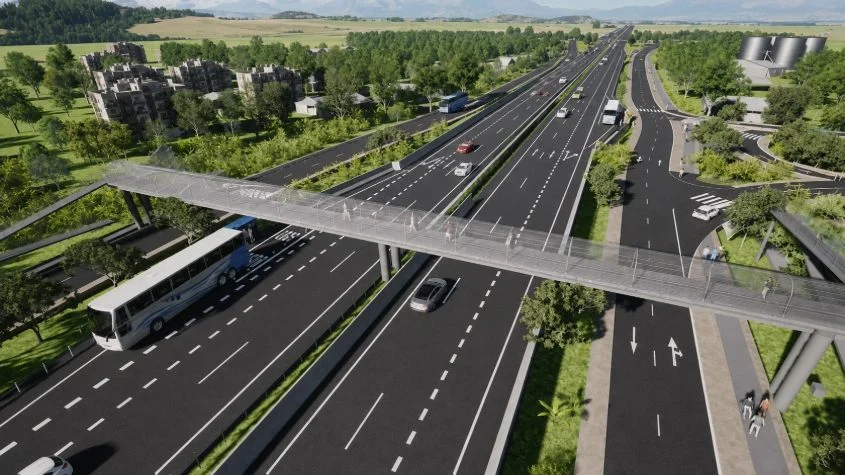
Beyond labor policies, the administration has proposed an aggressive infrastructure agenda. The plan includes the completion of the "Nueva Carretera Central," the construction of Metro lines 3, 4, 5, and 6 for Lima and Callao, and the rollout of metro systems in Arequipa, Piura, and Trujillo. Additionally, the government has promised the development of high-speed commuter trains linking Lima to Ica and Lima to Barranca.
While Segura acknowledged that "closing the infrastructure gap" is an admirable and necessary goal for Peru, he emphasized that it must be grounded in fiscal discipline.
"The fiscal capacity of Peru—the available fiscal space—simply does not reach for this level of expenditure," Segura asserted. "We are looking at projects that, while transformative in theory, would require a level of public debt or budgetary reallocation that would compromise the nation’s macroeconomic stability."
Supporting Data: The Risks of Unfunded Mandates
The skepticism voiced by the Fiscal Council is supported by broader concerns regarding Peru’s fiscal deficit and the rigidity of its budget. Historically, Peru has maintained a reputation for fiscal prudence, which has helped it weather global economic storms. However, the current proposed spending package threatens this hard-won stability.
The Regulatory Conflict
A significant portion of Segura’s critique was directed at the recent legislative changes regarding Public-Private Partnerships (APP). The Congress, in a move Segura termed "grave," introduced an article into a supplementary credit bill that eliminates the mandatory "prior opinion" of regulatory bodies in the approval of APP contracts.
"The regulatory bodies are the experts in competition and tariff structures," Segura explained. "The Ministry of Economy and Finance is not the expert in this specific matter. If a contract is poorly drafted from the outset, you risk long-term damage to consumers and users, and the tariff structures become impossible to correct once they are set."
This legislative maneuver effectively bypasses the technical checks and balances intended to prevent monopolistic practices or predatory pricing. Segura’s warning is clear: by sidelining the technical regulators, the government is prioritizing speed over quality, which will likely result in higher costs for citizens and legal vulnerabilities for the state in the long run.
Official Responses and Political Implications
The administration has yet to provide a detailed rebuttal to the Fiscal Council’s concerns, though government spokespersons have emphasized that the infrastructure projects will be financed through "innovative mechanisms," including private capital participation.
However, political analysts note that the friction between the executive branch and independent institutions like the Fiscal Council is a bellwether for the upcoming legislative session. The administration is currently attempting to balance its populist promises—intended to build a base of popular support—with the need to maintain the confidence of international markets and credit rating agencies.
The clash also highlights the ongoing tension between the legislative branch’s recent actions and the executive’s economic goals. The inclusion of the article stripping power from regulators is a signal that the political class may be willing to sacrifice technical oversight to expedite projects that provide "quick wins" for the public.
Implications for the Future: A Call for Transparency
The warnings issued by Alonso Segura serve as a roadmap for what the administration must address if it hopes to maintain economic stability. The implications are three-fold:
- Investment Climate: If international investors perceive that regulatory safeguards (such as the prior opinion of experts) are being bypassed, the risk premium on Peruvian sovereign debt and private projects will likely rise, potentially making these very infrastructure projects more expensive or less attractive.
- Labor Market Stability: A 15% increase in the RMV, if not met with corresponding productivity gains, could lead to a permanent shift toward informality, effectively shrinking the tax base—the very tax base needed to pay for the massive infrastructure projects the government is proposing.
- Institutional Integrity: The erosion of the Fiscal Council’s influence or the sidelining of technical regulators could mark a departure from the "Peru model" of technocratic economic management, leading to greater volatility and potential political crises.
Conclusion
The current administration faces a defining challenge: whether to pursue a strategy of rapid, debt-funded expansion that risks long-term instability, or to adopt a more measured approach that prioritizes institutional strength and fiscal health. Alonso Segura’s critique is not merely a technical disagreement; it is a fundamental challenge to the administration’s economic philosophy.
As the government moves forward with its legislative agenda, the role of the Fiscal Council will become increasingly critical. The public and international observers will be watching closely to see if the administration chooses to incorporate the warnings of these experts or if it continues down a path that, according to the country’s leading fiscal minds, leads to significant economic risk. The next few months will be decisive in determining whether Peru can maintain its path of growth or if it will be derailed by the pressures of unsustainable promises and the weakening of essential regulatory oversight.