Executive Summary
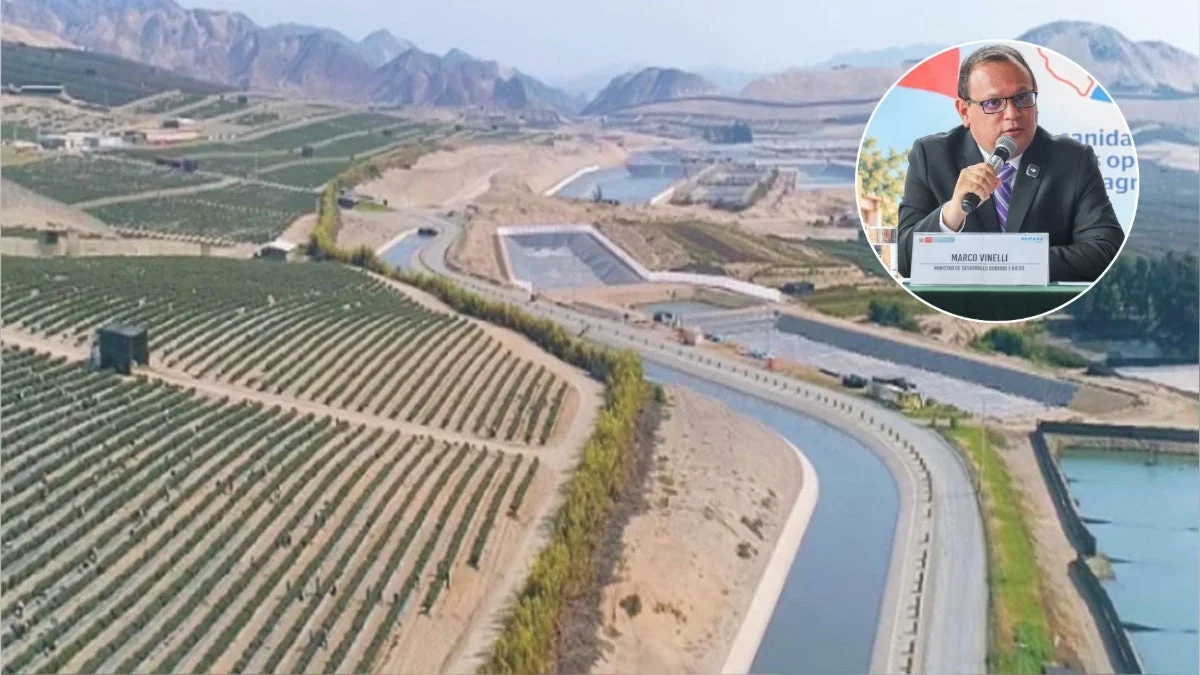
In a pivotal development for Peru’s agricultural sector, the Ministry of Agrarian Development and Irrigation (Midagri) has announced the formal signing of a contract for the design and construction of the Siphon No. 3, a critical component of the Chavimochic III irrigation project. Scheduled for signature on September 30, this S/145 million investment marks a significant step forward in unlocking the potential of the La Libertad region. The project, which spans a 3.5-kilometer stretch, is essential for the effective distribution of water to vast agricultural zones. This development is part of a broader, multi-billion-sol initiative executed under a Government-to-Government (G2G) framework with Canada, aimed at revitalizing one of the most ambitious hydraulic engineering projects in the country.
The Strategic Importance of Siphon No. 3
The Siphon No. 3 is not merely a piece of infrastructure; it is the vital artery of the Chavimochic III project. For years, the lack of completion of the third line of the siphon has been a bottleneck, preventing the full realization of the irrigation system’s capacity.
By investing S/145 million into this specific segment, the Peruvian government is addressing the structural limitations that have historically hindered the expansion of farmland in the northern coastal desert. With a construction timeline estimated at 50 weeks, the project is expected to proceed with an efficiency mandated by the G2G agreement, ensuring that the engineering standards meet international benchmarks.
This infrastructure will ensure that water transported from the Santa River reaches the arid plains of La Libertad, converting thousands of hectares of dry, unproductive land into high-value agricultural zones.
Chronology: A Long Road to Completion
The journey of the Chavimochic III project has been marked by complex legal, technical, and political challenges.
- Early Conceptualization: Initially designed to modernize agriculture in La Libertad, the project suffered from long periods of stagnation due to contract disputes and project abandonment.
- The Pivot to G2G: Recognizing that the traditional procurement models were failing to deliver the project, the Peruvian government opted for a Government-to-Government (G2G) model. This shift was intended to bring in international technical expertise and transparency.
- The 2024 Agreement: The bilateral agreement with Canada in 2024 served as the catalyst for current progress. This agreement specifically covers the technical oversight and delivery of the pending works, including the Palo Redondo dam and the Siphon No. 3.
- September 30, 2024: The formal signing of the contract for the Siphon marks the official start of the construction phase for the first major component under the new administrative roadmap.
- Looking Ahead (November 2024): The Ministry has already signaled that the next milestone—the contract for the completion of the Palo Redondo dam—will be signed in November, maintaining the momentum built in the third quarter of the year.
Supporting Data and Financial Framework
The financial scale of Chavimochic III is massive, reflecting its status as a project of national importance. The total estimated investment for the completion of the project exceeds S/4,000 million.
Financial Breakdown:
- Midagri’s Direct Responsibility: The Ministry of Agrarian Development and Irrigation is directly overseeing S/1,422 million of the total budget.
- Siphon No. 3 Investment: S/145 million, allocated for a 50-week execution cycle.
- Budgetary Commitment: The government has explicitly earmarked S/500 million within the 2027 fiscal budget to ensure that the momentum of the construction does not falter as the project nears completion.
Impact Metrics:
- Land Reach: The completed Chavimochic III system is designed to provide reliable irrigation to over 111,000 hectares of land.
- Social Impact: The project is projected to directly benefit more than 32,000 families, providing them with the necessary water resources to transition toward export-oriented agriculture, such as blueberries, avocados, and asparagus.
Official Responses and Strategic Vision
Minister of Agrarian Development and Irrigation, Marco Vinelli, has been the primary architect of the recent "destrabe" (unlocking) strategy. In his official statement, Minister Vinelli emphasized that the signing of the Siphon No. 3 contract represents a "decisive commitment to the farmers of the north."
"Today, we announce that the contract for the design and execution of this critical component will be signed, marking the beginning of the end for the stagnation of this project," Vinelli stated. The Ministry’s communication strategy focuses on reliability and transparency, utilizing the G2G framework to reassure stakeholders that the project is now under professional, internationally-monitored management.
The government’s rhetoric is clear: Chavimochic III is no longer a "potential" project but an active construction site. The focus is now on adherence to the 50-week timeline for the siphon and the successful transition to the next phase in November.
Implications: A New Era for La Libertad
The successful execution of the Siphon No. 3 and the subsequent completion of the Palo Redondo dam will have profound implications for the national economy and the region of La Libertad.
Economic Implications
- Export Growth: The region of La Libertad is already a powerhouse in the agro-export sector. The added water security will likely trigger an increase in private sector investment in agro-industrial processing plants, further adding value to raw agricultural products before they are shipped abroad.
- Employment Generation: The construction phase alone will generate hundreds of direct and indirect jobs. Once operational, the expansion of the agricultural frontier will create thousands of permanent positions in harvesting, logistics, and technical crop management.
- GDP Contribution: As a significant contributor to Peru’s agricultural GDP, the full functionality of Chavimochic III is expected to boost the regional economy, providing a long-term buffer against localized climate shocks.
Socio-Political Implications
The completion of this project is a test of the Peruvian state’s capacity to execute large-scale infrastructure projects. Years of delays had eroded public trust in the state’s ability to deliver on promises regarding irrigation. By successfully utilizing the G2G model, the government is attempting to restore this faith, showing that complex, stalled projects can indeed be completed if managed with the right international partnerships.
Challenges and Future Considerations
While the mood is one of optimism, the project is not without risks. The engineering challenges of building a 3.5-kilometer siphon are significant, requiring precise geological surveying and material handling. Furthermore, the 50-week window is ambitious. Any delays in the supply chain or technical difficulties during excavation could pressure the budget and the timeline.
Additionally, the third component—the concession of the system—remains on the horizon. The government will need to ensure that the transition from construction to operation is seamless. Attracting the right private sector partners for the concession phase will be essential to ensure that the infrastructure is maintained at high standards for the decades to come.
Conclusion
The signing of the Siphon No. 3 contract is a landmark event that signals a transition from administrative planning to physical reality for the Chavimochic III project. With a clear budget, a concrete timeline, and an international partner in the Canadian government, the Ministry of Agrarian Development and Irrigation is finally moving to address one of the most critical water-infrastructure gaps in the country. For the 32,000 families and the thousands of hectares of potential farmland in La Libertad, the arrival of the Siphon No. 3 signifies a future of water security and economic prosperity. As November approaches, all eyes will be on the Palo Redondo dam, as the final pieces of the Chavimochic puzzle begin to fall into place.