Beyond the Horizon: Google Celebrates World Space Week 2026 with a Cosmic Tribute
by
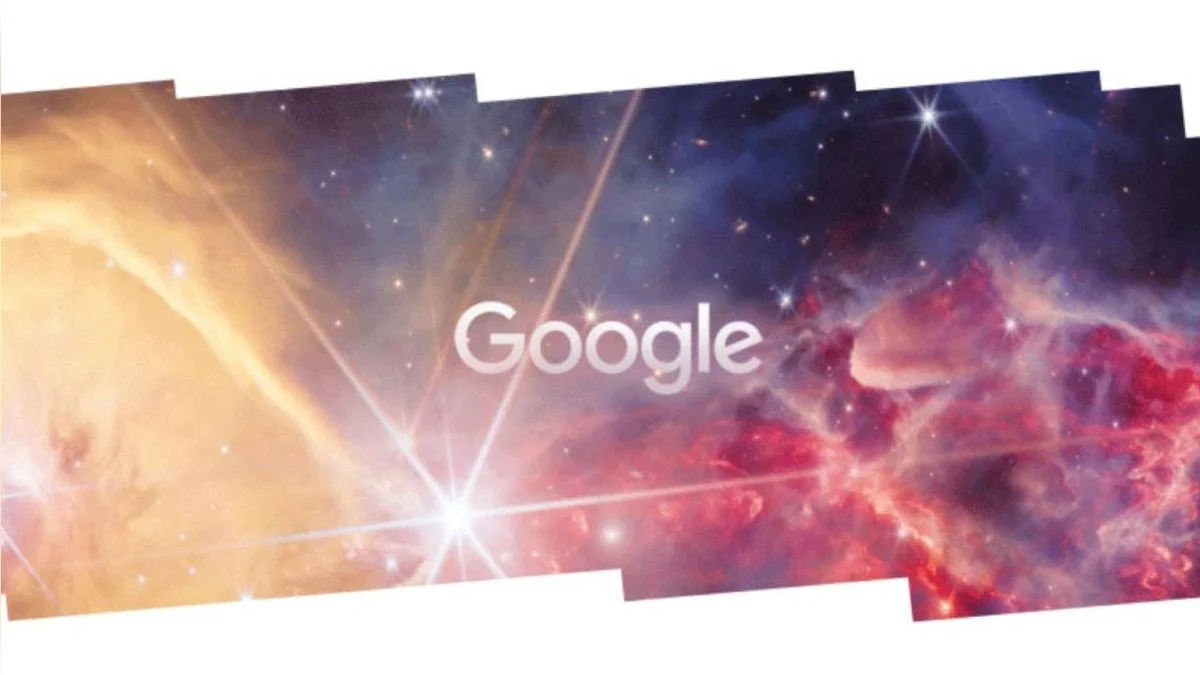
The digital gateway to the world’s information, Google, transformed its iconic homepage this Tuesday, October 6, 2026, with a specialized "Doodle." This artistic intervention is not merely a decorative change; it serves as a global signal marking the heart of World Space Week 2026. As humanity stands at the precipice of a new era of commercial and scientific space exploration, Google’s tribute highlights the intersection of technology, celestial discovery, and the international effort to demystify the cosmos.
The Essence of the Doodle: A Window into the Rosebud Nebula
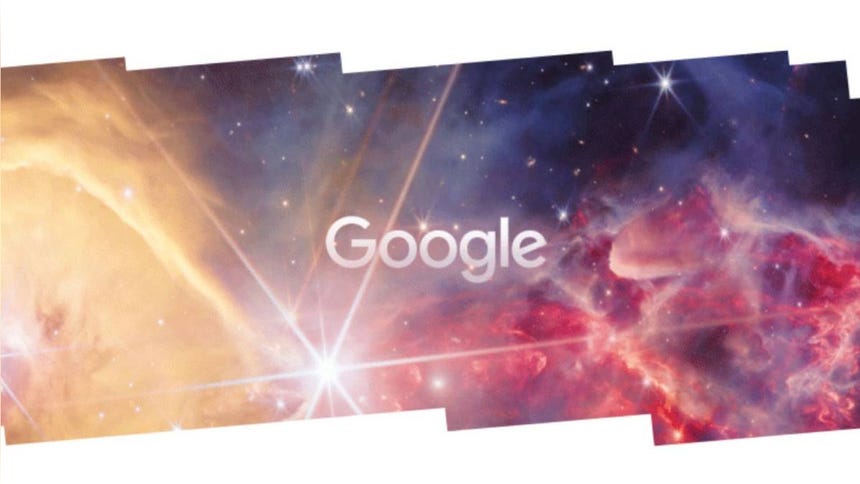
The centerpiece of this year’s interactive tribute is a breathtaking, high-definition image of the Rosebud Nebula. Captured by the state-of-the-art James Webb Space Telescope (JWST), the image serves as a poignant reminder of our expanding capabilities in deep-space observation. The nebula, a stellar nursery where stars are born from clouds of gas and dust, represents the raw, creative power of the universe.
By featuring this specific imagery, Google aligns itself with the mission of the scientific community: to inspire the next generation of astronomers, engineers, and dreamers. The Doodle acts as a bridge, bringing the complex, often inaccessible data from the depths of space directly to the screens of billions of users, emphasizing that space exploration is a collective human endeavor.
Chronology: The Roots of World Space Week
To understand the significance of this week, one must look back at the historical milestones that necessitated its creation. World Space Week is not a arbitrary celebration; it is anchored in two foundational events that redefined humanity’s relationship with the heavens.
1. The Dawn of the Space Age: Sputnik 1
On October 4, 1957, the Soviet Union launched Sputnik 1, the first artificial satellite to orbit the Earth. This event sent shockwaves through the global political and scientific landscape, effectively kicking off the "Space Race." It proved that humanity could break the bonds of gravity and establish a presence in the vacuum of space, fundamentally altering our geopolitical and technological trajectory.
2. The Treaty of Principles: The Outer Space Treaty
Exactly ten years later, on October 10, 1967, the Treaty on Principles Governing the Activities of States in the Exploration and Use of Outer Space, including the Moon and Other Celestial Bodies—commonly known as the Outer Space Treaty—entered into force. This document remains the bedrock of international space law, ensuring that the exploration of space remains the "province of all mankind" and preventing the weaponization of celestial bodies.
Recognizing the weight of these dates, the United Nations General Assembly officially declared the period between October 4 and 10 as World Space Week in 1999. Since then, it has grown into the largest annual space event on Earth, with thousands of activities organized across dozens of countries.
Supporting Data: The "Rocket Revolution"
The theme for 2026, "Rocket Revolution," reflects a seismic shift in how we access and utilize space. The space industry is no longer the exclusive domain of government superpowers; it has become a thriving, competitive, and increasingly commercial ecosystem.
The Shift to Commercial Accessibility
Data from the aerospace sector indicates a 40% increase in commercial launch frequency compared to the previous five-year period. This "Rocket Revolution" is driven by:
Reusable Launch Systems: The cost per kilogram to reach Low Earth Orbit (LEO) has plummeted, enabling a surge in small-satellite constellations.
Private-Public Partnerships: Agencies like NASA and the ESA are increasingly relying on private corporations to handle cargo, crew transport, and moon-landing infrastructure.
Miniaturization of Technology: CubeSats and nanosatellites have democratized space access for universities and emerging nations, allowing them to participate in scientific research that was previously prohibitively expensive.
This revolution is not just about cheaper rockets; it is about the integration of space into our daily economy, from global internet connectivity provided by satellite networks to climate monitoring and precision agriculture.
Official Responses and Global Perspectives
The United Nations Office for Outer Space Affairs (UNOOSA) has emphasized that this year’s theme is a call to action. In a recent statement, a spokesperson for the organization noted:
"The ‘Rocket Revolution’ signifies more than just engineering prowess; it represents a commitment to sustainability. As we increase the frequency of launches, we must ensure that the space environment remains safe and accessible for future generations. Our celebrations this week are focused on how the next generation of launch vehicles will minimize orbital debris and maximize scientific output."
Scientific institutions globally, including the European Space Agency (ESA) and the Japan Aerospace Exploration Agency (JAXA), have joined the celebration by hosting virtual town halls and interactive workshops. These events aim to bridge the gap between complex astrophysics and public understanding, ensuring that the public remains informed about the ethical and technical challenges of the 21st-century space frontier.
The Broader Implications: Why It Matters
Why does a technology giant like Google invest in a commemorative Doodle, and why does the world dedicate a week to space? The implications are threefold:
1. Inspiring the Future Workforce
The "Space Economy" is expected to be worth over a trillion dollars by 2040. By highlighting space exploration, Google and other stakeholders are essentially nurturing the talent pipeline. The "Rocket Revolution" requires not just rocket scientists, but data analysts, climate researchers, software engineers, and ethicists.
2. Scientific Literacy and Public Engagement
In an era of rapid misinformation, the ability to interpret scientific discovery is vital. World Space Week provides a platform for educators to introduce topics like the James Webb Space Telescope’s findings on black holes, the search for exoplanets, and the atmospheric analysis of distant worlds. When the public understands the value of the "Rosebud Nebula" or the mechanics of a rocket, they are more likely to support the long-term funding of essential scientific infrastructure.
3. The Geopolitics of the Final Frontier
As commercial interests in space grow, so do the challenges regarding regulation. The 1967 Outer Space Treaty is being tested by the rapid pace of technology. World Space Week acts as a diplomatic forum where the discourse on "Space Traffic Management" and "Celestial Resource Rights" can be held in a cooperative, rather than confrontational, environment.
Looking Ahead: The Next Decade of Exploration
As we observe the events of this week, it is clear that we are in the midst of a transition. The "Rocket Revolution" is the prerequisite for the next major milestone: the permanent human presence on the Moon and the eventual crewed mission to Mars.
The celebrations occurring from October 4 to 10 are more than just a nod to history; they are a blueprint for our future. From the classroom experiments in local high schools to the international conferences discussing lunar mining regulations, the message is clear: space is no longer a distant mystery to be feared or idolized from afar. It is an extension of our habitat, a frontier for our economy, and a laboratory for our survival.
Google’s Doodle serves as a subtle, yet powerful reminder. Every time a user clicks on the vibrant, celestial image on their screen, they are participating in a global conversation. As we look at the Rosebud Nebula, we are not just seeing stars; we are seeing the potential for what humanity can achieve when it works in concert—when it looks upward, outward, and forward, powered by the spirit of innovation that defines the 2026 Rocket Revolution.
In conclusion, World Space Week 2026 is a testament to the fact that while our feet remain firmly planted on Earth, our vision has never been more focused on the stars. The success of this week will be measured not by the grandeur of the celebrations, but by the number of people who, for the first time, look at the night sky and see not just darkness, but a universe of infinite possibility.
In an unprecedented move that underscores the escalating volatility of frontier artificial intelligence development, OpenAI announced this Friday that it…