Executive Summary: A Milestone for Offshore Exploration
In a significant development for Peru’s energy sector, Anadarko Peru—a subsidiary of the global energy giant Occidental Petroleum (Oxy)—has officially notified Perupetro of its commitment to transition into the Third Exploration Period for its offshore assets. This strategic advancement focuses on the Z-61, Z-62, and Z-63 blocks located within the prolific Trujillo Basin.
The decision marks a pivotal shift from seismic analysis to physical exploration, as the company prepares to drill its first exploratory well in Block Z-62. This move is not merely a contractual obligation but a calculated bet on the hydrocarbon potential of Peru’s deep-water northern coast, spanning the regions of La Libertad and Lambayeque. As the nation seeks to reverse a long-standing trade deficit in hydrocarbons, the activities of Anadarko have emerged as a centerpiece of the country’s mid-to-long-term energy policy.
The Path to Drilling: A Detailed Chronology
The journey toward this third exploration phase has been characterized by meticulous planning and record-breaking technological execution. The timeline of this project serves as a testament to the rigorous standards of modern offshore exploration:
Phase I: Contract Acquisition and Initial Assessment
The journey began with the rigorous procurement of exploration and exploitation contracts for the Trujillo Basin blocks. Recognizing the geological synergy between the Peruvian offshore shelf and other productive basins in the Pacific, Anadarko secured rights to these deep-water tracts, which had previously seen limited exploratory activity.
Phase II: The 2024 Seismic Campaign
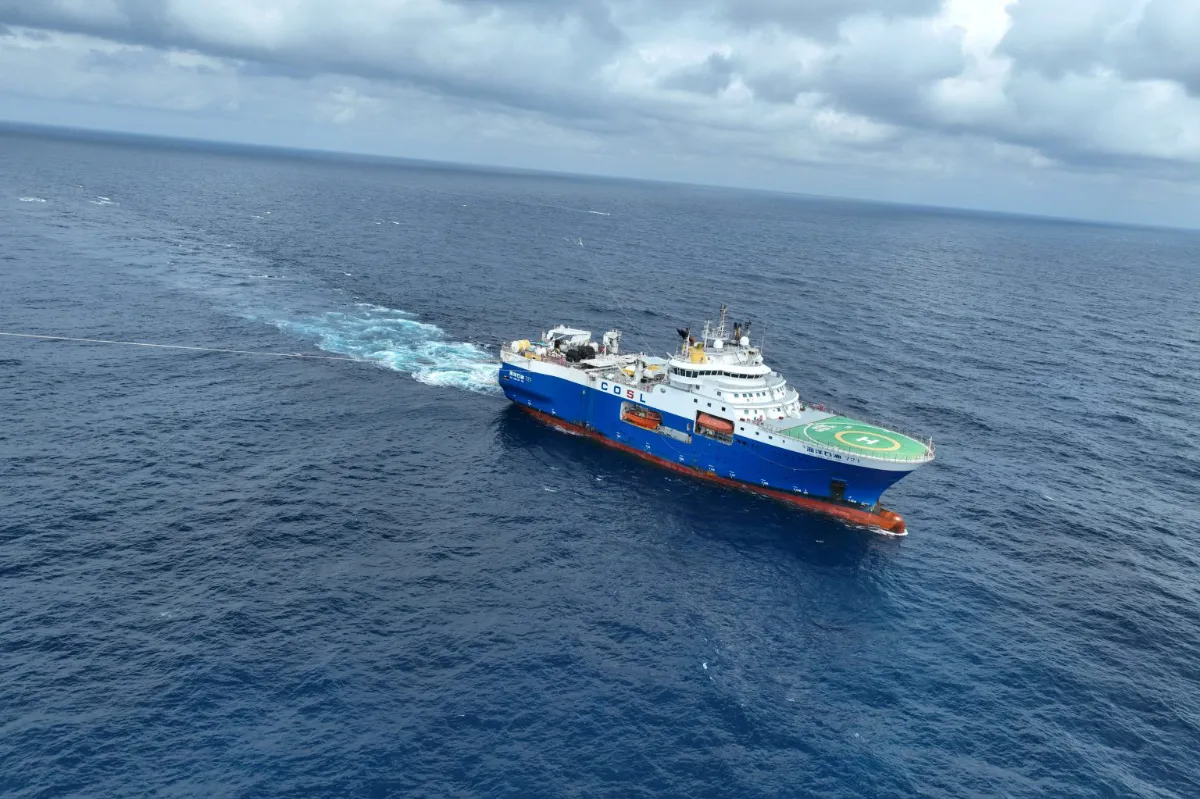
The year 2024 served as the defining period for the project. Anadarko Peru deployed advanced vessels to conduct high-resolution 3D marine seismic surveys. This operation was historic in scale, covering an expansive area of 6,018 km². By industry standards, this is the largest seismic acquisition ever recorded on the Pacific coast of South America. This massive data collection effort allowed geophysicists to map the complex structural architecture of the Trujillo Basin’s subsoil, identifying promising "leads" and "prospects" hidden beneath the seabed.
Phase III: The Decision to Advance (2026)
Following a comprehensive interpretation of the 2024 seismic data, the technical team at Anadarko determined that the geological indicators met the company’s internal benchmarks for a drillable prospect. Consequently, the company formally communicated its transition to the Third Exploration Period, setting the stage for the 2027 drilling campaign.
Supporting Data: Investment and Technical Scope
The scale of Anadarko’s commitment is underscored by significant financial and technical resources.

The Financial Commitment
To reach this stage, Anadarko invested approximately US$ 40 million in the seismic acquisition alone. This figure represents a substantial "at-risk" investment, showcasing the company’s confidence in the geological data. Unlike conventional onshore exploration, deep-water offshore drilling requires immense capital expenditure, with the cost of a single exploratory well often reaching tens of millions of dollars.
The Geological Potential of the Trujillo Basin
The Trujillo Basin is characterized by deep-water environments, where complex geological formations have historically trapped hydrocarbons. The 3D seismic imaging provided clear "bright spots" and structural traps, which are traditional indicators of potential oil or gas accumulation. By processing these images, the company has minimized the geological risk, though the ultimate proof remains the drill bit hitting the target formation.
Technological Advancements
The use of 3D marine seismic technology allows for a "digital reconstruction" of the Earth’s crust. This is not a flat image but a three-dimensional volume that enables engineers to identify fault lines, salt domes, and potential reservoir rocks. This level of precision is essential for mitigating the risks associated with high-pressure, high-temperature deep-water environments.
The Strategic Importance for Peru
Transforming the Trade Balance
Peru currently maintains a trade deficit in hydrocarbons, importing significant volumes of crude oil and refined products to meet domestic demand. The successful discovery and subsequent commercialization of reserves in the Trujillo Basin could fundamentally alter this equation. A major discovery would not only satisfy internal consumption but potentially turn Peru into a net exporter, providing a significant boost to the national GDP and improving the country’s macroeconomic stability.
The Multiplier Effect
Beyond the potential for oil and gas, the development of an offshore industry in northern Peru promises a multiplier effect on the regional economy. This includes:
- Infrastructure Development: Upgrading port facilities in La Libertad and Lambayeque to support offshore logistics.
- Job Creation: Demand for specialized maritime services, engineering, and logistics personnel.
- Energy Security: Diversifying the national energy matrix and reducing dependence on volatile international markets.
Perspectives from Stakeholders and Industry Experts
Perupetro’s Stance
Perupetro, the state-owned entity responsible for promoting and managing hydrocarbon investments, has viewed the development with high optimism. Officials have repeatedly emphasized that the entry of companies like Anadarko is a validation of the attractiveness of the Peruvian geological frontier. "The decision by Anadarko confirms that our offshore potential is not just a theory, but a target for global players," stated a source familiar with the negotiations.
Industry Outlook
Industry analysts suggest that the "Pacific Margin" is an underexplored frontier. While Brazil’s Pre-salt discoveries changed the global energy map, experts believe that similar geological features exist off the coast of Peru. The commitment to drill in 2027 is seen as the "moment of truth" for the sector. If the well proves successful, it is expected to trigger a "gold rush" of investment from other international oil companies (IOCs) looking to secure neighboring blocks.

Challenges and Future Outlook: The Road to 2027
While the momentum is positive, the road ahead is not without its hurdles.
Technical and Environmental Challenges
Operating in deep-water environments requires strict adherence to environmental safety protocols. Anadarko will be subject to rigorous oversight from the Ministry of Environment and OSINERGMIN to ensure that the 2027 drilling operations respect the marine ecosystem. Managing potential impacts on artisanal fishing communities in the region will also be a priority, requiring transparent communication and robust community engagement programs.
The 2027 Milestone
The year 2027 is now circled on the calendars of energy stakeholders across the continent. The drilling of the first well will be a binary event: it will either confirm the presence of a world-class reservoir or provide essential data to refine future exploration efforts. In either case, the data gathered will be invaluable for the long-term mapping of Peru’s maritime resources.
Conclusion: A Reaffirmed Commitment
The decision by Anadarko Peru to advance to the Third Exploration Period is a beacon of progress in a sector that has faced stagnation in recent years. By choosing to move forward with the drilling of the Z-62 exploratory well, Anadarko is signaling its long-term commitment to the Peruvian market.
This project represents a fusion of high-end technology, massive capital investment, and a bold vision for the future of the nation’s energy sector. If successful, the Trujillo Basin could serve as the cornerstone of a new era of prosperity for Peru, bridging the gap between current energy deficits and future self-sufficiency. As the 2027 drilling date approaches, the eyes of the international energy community will be fixed firmly on the northern coast of Peru, awaiting the results of a campaign that promises to reshape the nation’s industrial destiny.