Executive Summary: The Political Pivot of Small Business
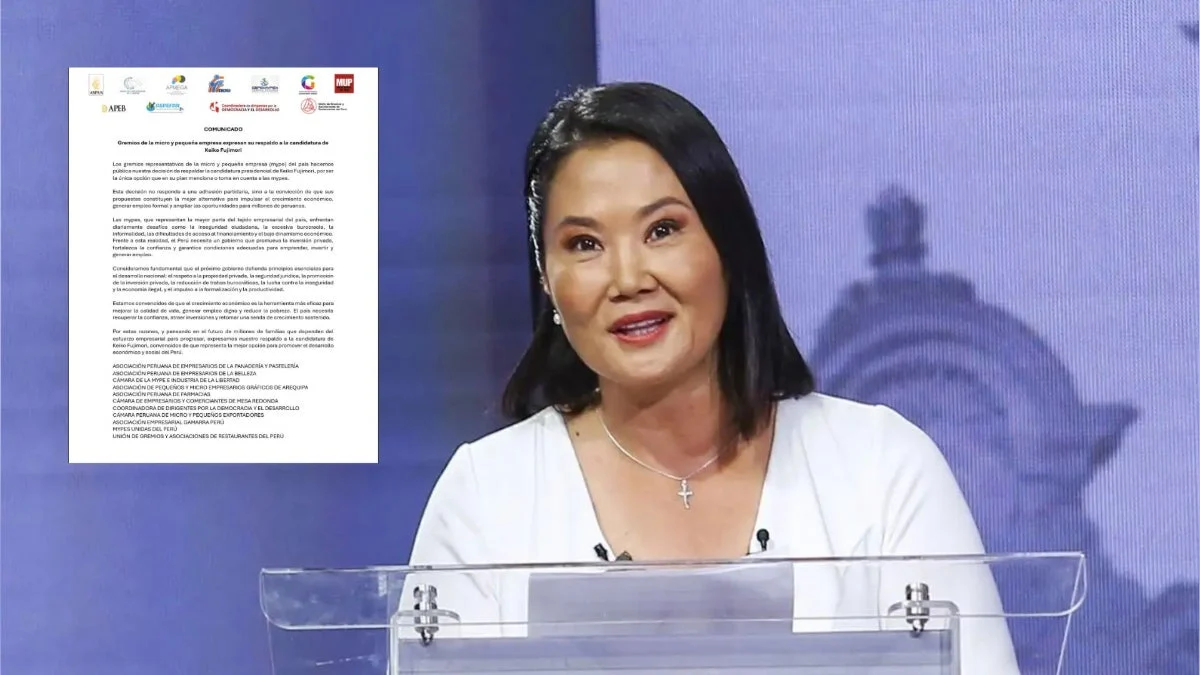
In a significant development for the upcoming 2026 General Elections in Peru, a coalition of eleven prominent micro and small enterprise (MYPE) associations has officially announced its support for the presidential candidacy of Keiko Fujimori. The endorsement, delivered via a formal manifesto, marks a tactical alignment between one of the country’s most vital economic engines and the Fuerza Popular leader.
The signatory organizations, representing diverse sectors from textile manufacturing in Gamarra to the culinary and pharmaceutical industries, contend that Fujimori’s current government platform offers the most robust roadmap to address the structural hurdles currently strangling the small business sector. The move is framed by the participants not as an ideological surrender to partisan politics, but as a pragmatic economic calculation intended to rescue the nation from a period of stagnation.
Chronology: Building the Consensus
The decision to endorse Fujimori follows months of increasing frustration within the business community regarding the country’s economic trajectory.
- Early 2024: Mounting reports of extortion and rising insecurity lead to the first series of "business strikes" across various industrial hubs, including Gamarra and Mesa Redonda.
- Mid-2024: MYPE leaders begin a series of closed-door dialogues with various political candidates to assess their specific proposals for economic reactivation.
- Late 2024: The coalition of eleven guilds begins drafting a "List of Economic Demands," which includes tax simplification, security guarantees, and credit access.
- Current Date: The coalition issues its official manifesto, explicitly citing the alignment between their specific demands and the policy measures proposed by Fujimori’s campaign team.
Supporting Data: The Vital Role of MYPEs in the Peruvian Economy
To understand the weight of this endorsement, one must look at the sheer scale of the micro and small enterprise sector. According to recent data from the Ministry of Production (PRODUCE), MYPEs constitute over 99% of all formal businesses in Peru.
Economic Impact
- Employment: MYPEs are the backbone of the Peruvian labor market, accounting for approximately 80% of total employment.
- GDP Contribution: Despite high levels of informality, the sector contributes roughly 20-25% to the national GDP.
- The "Informality Trap": A significant portion of the sector operates outside the formal tax and legal system, a reality that the coalition argues is not a choice, but a consequence of excessive bureaucratic hurdles and a lack of institutional support.
The Challenges Defined
The manifesto highlights five critical pain points that have eroded the competitiveness of small businesses:
- Insecurity: The surge in extortion, kidnapping, and organized crime targeted at small merchants.
- Bureaucratic Red Tape: The cost of compliance, which often exceeds the financial capacity of a micro-enterprise.
- Credit Access: High interest rates and the "credit crunch" affecting small entrepreneurs.
- Economic Volatility: The decline in domestic demand and the impact of inflationary pressures.
- Lack of Formalization Incentives: The perception that the state punishes formal businesses with high taxes rather than incentivizing them with growth opportunities.
The Eleven Signatories: A Broad-Based Coalition
The diversity of the signatories underscores the widespread dissatisfaction with the current economic status quo. The organizations representing the backbone of the Peruvian economy include:
- Asociación Peruana de Empresarios de la Panadería y Pastelería: Representing the essential food production sector.
- Asociación Peruana de Empresarios de la Belleza: A fast-growing service sector guild.
- Cámara de la Mype e Industria de La Libertad: A critical regional representative from the north of the country.
- Asociación de Pequeños y Micro Empresarios Gráficos de Arequipa: Representing the industrial creative sector.
- Asociación Peruana de Farmacias: Crucial for public health accessibility.
- Cámara de Empresarios y Comerciantes de Mesa Redonda: The heart of Peru’s commercial import and wholesale trade.
- Coordinadora de Dirigentes por la Democracia y el Desarrollo: A civic-business hybrid organization.
- Cámara Peruana de Micro y Pequeños Exportadores: The face of Peru’s international trade aspirations.
- Asociación Empresarial Gamarra Perú: The most influential textile hub in the country.
- Mypes Unidas del Perú: A national umbrella organization.
- Unión de Gremios y Asociaciones de Restaurantes del Perú: Representing the world-renowned Peruvian gastronomy sector.
Official Responses and Strategic Rationale
In the official communique, the spokespeople for the coalition were explicit: "This decision does not respond to a partisan affiliation, but to the conviction that [Fujimori’s] proposals constitute the best alternative to boost economic growth, generate formal employment, and expand opportunities for millions of Peruvians."
Why Fujimori?
The campaign of Keiko Fujimori has strategically emphasized "The Economy First," a pillar that resonates deeply with the coalition. Fujimori’s platform includes:
- "Security for Business": A promise to declare a state of emergency in high-crime commercial hubs and deploy specialized police units to combat extortion rackets.
- "Burocracia Cero": A proposed digital-first initiative to eliminate unnecessary permitting and licensing requirements for small businesses.
- "Tax Relief": A plan to offer tax breaks for businesses that transition from informal to formal status, effectively lowering the barrier to entry for the massive informal sector.
Implications for the 2026 Election
The endorsement by this coalition provides a significant boost to the Fuerza Popular campaign, but it also carries potential risks.
The Political Landscape
For the Fujimori campaign, the support provides an "economic validation" that counters the narrative of her being a divisive figure. By positioning herself as the "candidate of the small entrepreneur," she aims to capture the centrist, pragmatic vote that prioritizes stability over radical change.
The Economic Outlook
The coalition’s demands serve as a "litmus test" for any future government. By publicly stating these priorities, the guilds have set a benchmark. If a candidate wins on this platform, they will be held accountable by these eleven organizations. The focus on "legal security" and "property rights" suggests a collective desire to return to a free-market model, rejecting the interventionist policies that characterized the previous administration.
The Challenge of Implementation
While the endorsement is a major win, the implementation of these reforms will face significant hurdles:
- Congressional Fragmentation: Even with a win, the executive branch will need to navigate a notoriously fractured Peruvian Congress to pass the necessary tax and security legislation.
- Public Distrust: The sectors representing the MYPEs often distrust the state regardless of who occupies the Presidential Palace. The challenge for the Fujimori team will be to translate the "promise" of reform into tangible, daily changes that a small business owner in Gamarra can feel within the first 100 days.
Conclusion: A Turning Point for Peruvian Enterprise
The alignment of the MYPE sector with Keiko Fujimori signals a shift toward a more demand-driven political discourse. The message from the eleven guilds is clear: Peru’s micro and small entrepreneurs are no longer content to wait on the sidelines while the macro-economy fluctuates. They are demanding a seat at the table and a government that prioritizes the stability of the small firm as the primary driver of national prosperity.
As the 2026 election approaches, the success of this alliance will depend on the ability of the candidate to maintain this coalition while broadening her appeal to the wider electorate. Whether this endorsement is the catalyst for a national economic recovery or merely a tactical maneuver in a complex political game remains to be seen. However, one thing is certain: the voice of the small entrepreneur will be the decisive factor in the upcoming battle for the future of Peru.