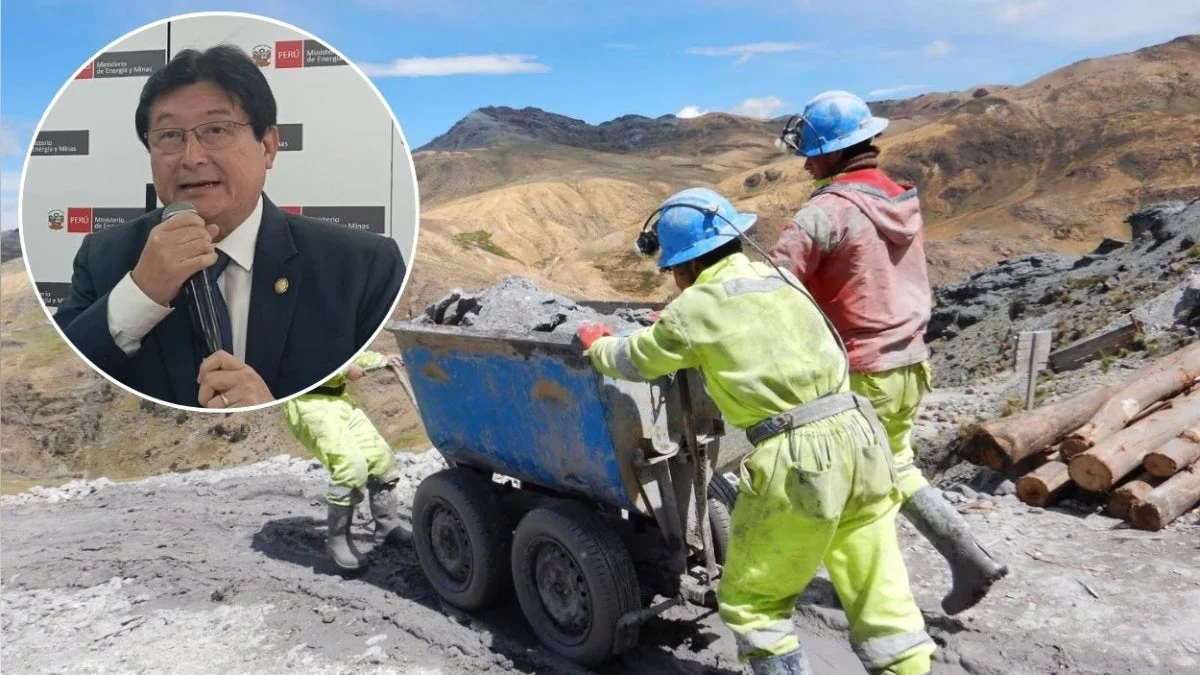
In a significant policy pivot, the Peruvian government has unveiled a comprehensive legislative proposal aimed at fundamentally transforming the nation’s approach to small-scale and artisanal mining. Minister of Energy and Mines, Guillermo Shino, recently introduced the "MAPE Law" (Mining of Artisanal and Small-Scale nature), an ambitious project designed to replace the chronically stagnant REINFO (Integral Mining Formalization Registry) with a permanent, robust, and technologically driven framework.
The proposal, currently under review by the Executive branch and slated for submission to Congress by October 15, seeks to end the cycle of perpetual extensions that have characterized the formalization process for years, instead opting for a structured, two-year "consolidation" phase that mandates transparency, fiscal accountability, and environmental responsibility.
The Core Objectives: Moving Beyond the REINFO Trap
For over a decade, the REINFO process has served as a temporary umbrella for thousands of miners. However, critics argue that the system has become a shield for illicit activities rather than a path toward legality. Minister Shino was blunt in his assessment: "If we continue as we were, another 20 years will pass, and we will only have formalized a handful more. That is not the objective of anyone."
The government’s new strategy rests on a clear demarcation between miners willing to operate within the law and those utilizing the system to mask illegal extraction. By setting a hard deadline of December 31, 2026, for the current REINFO, the government is signaling that the era of indefinite extensions is over. Those who remain registered by that date will be eligible for a final two-year "consolidation regime," while those outside the system will face strict, ordinary legal requirements to operate.
Chronology of the Formalization Crisis
To understand the necessity of this legislative overhaul, one must look at the trajectory of the mining formalization efforts in Peru:
- 2012–2016: Initial attempts to formalize the sector were hampered by overly bureaucratic processes, leading to low participation and high informality.
- 2017: The creation of the REINFO was intended to simplify the process, yet it quickly became a long-term "holding bay" for operators who never completed the necessary environmental or legal steps.
- 2020–2024: Multiple legislative extensions allowed miners to keep operating without full compliance, resulting in a loss of state control and increased environmental degradation.
- October 2024 (Projected): Submission of the MAPE Law to Congress, marking the first time the executive branch proposes a permanent, non-extendable framework for the sector.
- January 1, 2027: Start of the "Consolidation Regime," a two-year window that serves as the final bridge to permanent formal status.
Establishing "Formape": A Specialized Engine for Change
A cornerstone of the new legislation is the creation of Formape, a specialized agency under the Ministry of Energy and Mines (MINEM). Formape is envisioned as the operational engine that will guide the formalization process, moving away from the passive regulatory approach of the past.
Key Functions of Formape:
- Technical Assistance: Providing on-the-ground support to miners to meet safety and environmental standards.
- Traceability Management: Overseeing systems to identify the origin of minerals, ensuring that only legally extracted products enter the supply chain.
- Environmental Oversight: Collaborating on the evaluation of environmental management instruments, ensuring that requirements are proportional to the scale of operations without compromising ecological standards.
- Capacity Building: Promoting technological innovation to phase out mercury and improve the handling of cyanides.
By delegating operational duties to this specialized body, the Ministry of Energy and Mines can maintain its role as the governing authority while ensuring that formalization is not just a paperwork exercise, but a genuine transition to sustainable mining.
Bridging the Gap: Concessionaires and Miners
One of the most persistent hurdles in Peruvian mining has been the friction between large-scale concessionaires and small-scale artisanal miners working within those same areas. The new proposal addresses this by offering incentives for legal contracts.
Currently, many concessionaires refuse to sign exploitation contracts with smaller miners for fear of "joint and several liability"—the legal burden of being held responsible for a third party’s environmental or safety violations. The MAPE Law proposes that if a contract is signed for a minimum of three years, the legal liability will fall exclusively on the artisanal miner.
This, paired with potential tax incentives—such as the waiver of certain penalties and "right of occupancy" fees for those who formalize—is intended to encourage a collaborative, rather than adversarial, relationship between large and small mining interests.
Financial Inclusion and Fiscal Control
The proposal also recognizes that formalization cannot occur in a vacuum; it requires access to the banking system. Minister Shino highlighted that the informal nature of the current sector forces miners into cash-only transactions, which are highly susceptible to money laundering and exploitation.
The legislation mandates that the Banco de la Nación facilitate the opening of current accounts for small miners. This move is designed to:
- Bank the Unbanked: Allow miners to conduct legitimate transactions through the formal financial system.
- Enhance Traceability: Create a clear digital trail of mineral sales, making it significantly harder for illegal operators to "launder" their product.
- Strengthen Audits: Allow the Financial Intelligence Unit (UIF) to better monitor suspicious financial flows within the sector.
Official Responses and Stakeholder Implications
The reception of the proposal has been mixed but largely viewed as a necessary step toward order.
The Government Perspective
Minister Shino emphasized that the law is not just about the miners currently in the system, but about setting a precedent for new, small-scale producers. The government is firm: if a miner refuses to allow official inspection, they will be summarily excluded from the process. This "fiscalization-first" approach is intended to restore the state’s authority in regions where illegal mining has historically operated with impunity.
The Environmental Concern
Environmental NGOs have cautiously welcomed the focus on technological improvement and mercury reduction. However, they emphasize that "simplification" of environmental requirements must not equate to a weakening of safeguards. The Ministry has responded by stating that while small-scale miners will not be held to the same standards as massive open-pit operations, they will still be required to utilize, at minimum, sustainable practices that prevent water and soil contamination.
Challenges Ahead: The Legislative Battle
While the proposal is comprehensive, it is not yet law. Several critical components remain in the drafting phase, requiring intense coordination between the Ministry of Economy and Finance, the Ministry of the Interior, and the Ministry of the Environment.
Key pending definitions include:
- Tax Regime: How will small miners be taxed? The government is considering making mineral processing plants responsible for tax retention to simplify the process.
- Explosives Regulation: A notoriously difficult area that requires the cooperation of the Ministry of Defense and the Interior.
- The "Four-Month" Rule: The project mandates that once the law is passed, all necessary regulations must be fully defined and operationalized within four months.
Conclusion: A Turning Point for Peru
The MAPE Law represents a shift from a reactive to a proactive state policy. By creating a dedicated agency, leveraging financial inclusion, and providing a clear, non-extendable timeline for formalization, the government is attempting to solve a problem that has plagued the nation for decades.
The success of this initiative will ultimately depend on its implementation and the willingness of the informal sector to engage with a system that demands transparency. As the proposal moves to Congress this October, the eyes of the mining world will be on Lima, watching to see if Peru can finally turn the tide on illegal mining and integrate these thousands of workers into a productive, legal, and sustainable future.
The path ahead is narrow, and the political opposition will likely be fierce. However, for a country whose identity and economy are so deeply rooted in the earth, the necessity of this reform is undeniable. The era of the "REINFO extension" is closing; the era of structured, accountable mining must begin.