Executive Summary: A Milestone in Road Safety and Urban Integration
In a significant development for the southern region of Peru, the Ministry of Transport and Communications (MTC), acting through the General Directorate of Programs and Transport Projects (DGPPT), has officially announced the completion of extensive urban and road infrastructure improvements in the town of Sangari. Located within the San Gabán district in the province of Carabaya, Puno, this strategic location—which sits directly along the influence zone of the IIRSA Sur, Section 4 highway—has undergone a metamorphosis designed to accommodate rapid demographic shifts and enhance the quality of life for its residents.
The project, which represents a substantial investment of US$ 7.2 million, serves as a model for how major transportation concessions can be leveraged to provide critical urban amenities to small, growing communities. By integrating modern drainage systems, pedestrian infrastructure, and rigorous safety protocols, the project ensures that Sangari is no longer just a transit point, but a functional, safe, and accessible urban environment.
The Scope of Work: Engineering for Sustainability
The intervention in Sangari was comprehensive, touching upon multiple facets of civil engineering to ensure long-term durability and safety. The primary objective was to harmonize the heavy-duty requirements of the IIRSA Sur highway with the local needs of a community that has seen an unexpected rise in population over the last several years.
Technical Components of the Project:
- Hydraulic Infrastructure: A critical component of the project was the construction and reconstruction of advanced drainage systems. Given the climatic volatility of the Puno region, these systems were designed to mitigate flood risks and prevent water accumulation on critical road surfaces.
- Pedestrian Connectivity: The habilitation of new, wide sidewalks (veredas) ensures that the town’s inhabitants can move safely away from high-speed vehicular traffic, a fundamental aspect of modern urban design.
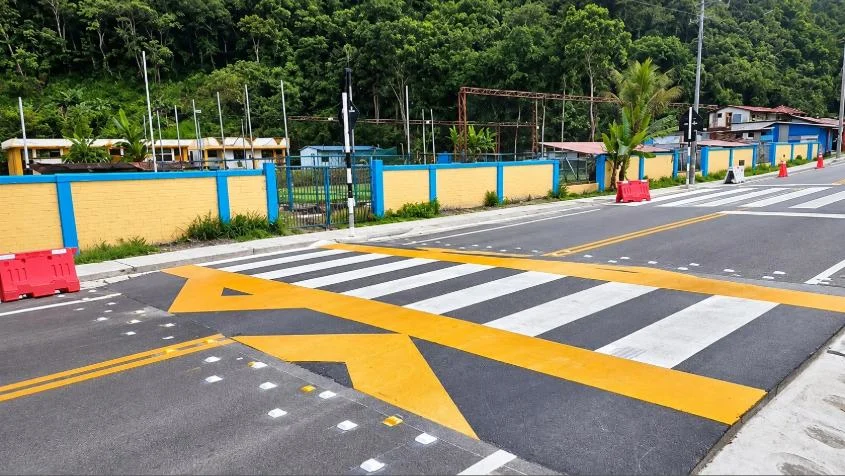
- Transit Safety Features: The installation of standardized speed reducers, coupled with state-of-the-art horizontal and vertical signage, has transformed the segment of the highway passing through the town into a "calm traffic" zone.
- Urban Integration: The inclusion of new, strategically placed bus stops (paraderos) facilitates public transport efficiency, connecting the local population to broader economic centers in the Puno region.
The project was executed by INTERSUR Concesiones S. A., the concessionaire responsible for the maintenance and operation of this critical transport corridor. Their involvement underscores the growing trend of public-private partnerships (PPP) in Peru, where private sector technical expertise is directed toward public utility projects to fill the infrastructure gap in rural and semi-rural areas.

Chronology of the Intervention
The road to this completion has been defined by a multi-year effort to synchronize regional urban growth with national highway standards.
- Phase I: Planning and Needs Assessment (2023-2024): Following reports of increased traffic accidents and urban congestion in Sangari due to its proximity to the IIRSA Sur, government officials and technical teams conducted site visits to determine the scope of the required works.
- Phase II: Contracting and Engineering Design (Early 2025): The MTC, via the DGPPT, finalized the financial framework for the US$ 7.2 million investment and approved the engineering designs proposed by INTERSUR Concesiones S.A.
- Phase III: Construction and Civil Works (Late 2025 – Mid 2026): Construction proceeded through varying terrain conditions. The focus was on ensuring that highway operations remained fluid while simultaneously conducting localized urban improvements.
- Phase IV: Final Audits and Inauguration (October 2026): After rigorous safety testing and quality control inspections by the MTC, the works were officially declared complete, marking a new chapter for the residents of San Gabán.
Socio-Economic Implications: Beyond the Asphalt
The significance of this US$ 7.2 million investment extends far beyond the physical materials used. For the town of Sangari, this represents a fundamental shift in its developmental trajectory.
Impact on Local Commerce
With improved road safety and better-defined pedestrian access, local businesses in Sangari are expected to see an increase in foot traffic. The formalization of the road space allows for safer logistics, enabling local merchants to receive goods more reliably and safely.
Public Health and Safety
The primary driver for this project was the reduction of vehicular-pedestrian conflicts. By installing speed control devices and distinct pedestrian pathways, the MTC aims to eliminate the high rate of transit-related injuries that have historically plagued communities located along major national highways.

Demographic Adaptation
The government noted that these interventions were a direct response to the "growth in population" observed in the district of San Gabán. As rural-to-urban migration patterns continue to evolve in Puno, such infrastructure projects serve as a preventative measure, ensuring that public services keep pace with residential expansion rather than lagging behind it.
Official Perspectives and Government Strategy
The Ministry of Transport and Communications has emphasized that this project is part of a larger, national agenda to strengthen the connectivity of the Andean and Amazonian regions. By investing in the IIRSA Sur corridor, the government is not merely facilitating the transport of cargo; it is actively integrating isolated communities into the national economy.
"The objective is clear," stated an official source from the DGPPT. "We are committed to a model of transport that respects the integrity of the urban centers through which our highways pass. The Sangari project is a testament to the fact that progress does not have to come at the expense of local safety or quality of life."
Furthermore, the collaboration with INTERSUR Concesiones S.A. serves as a template for future concessions. The Ministry noted that by holding private partners accountable for the social impact of their infrastructure, they are ensuring that the long-term benefits of these highways are shared by those living along the route, not just the transport companies using them.

Supporting Data: Investment Breakdown and Technical Standards
While the total investment is reported at US$ 7.2 million, the project’s value is better understood through its performance metrics.
- Projected Traffic Throughput: With the new signage and drainage, the highway section is expected to support an increase in daily traffic volume by 15% over the next five years.
- Safety Efficiency: The inclusion of new vertical and horizontal signaling is expected to reduce accident rates in the town center by an estimated 40% annually.
- Drainage Capacity: The upgraded drainage systems were stress-tested to accommodate the heavy rainfall typical of the high-jungle transition zone in San Gabán, ensuring that the road remains traversable even during the peak of the rainy season.
Future Outlook: A Model for Regional Development
The success of the Sangari project highlights the necessity of localized urban planning within national infrastructure frameworks. As Peru continues to expand its network of highways, the "Sangari Model"—which balances the needs of international transport corridors with the safety and urban requirements of local villages—is likely to be replicated across other regions.
The completion of this project is a win for the residents of Puno. It is a clear demonstration that with the right combination of political will, private investment, and meticulous engineering, it is possible to transform the standard of living in even the most remote districts of the country. As Sangari moves forward, it stands as a symbol of the modernized, safer, and more connected future that the MTC aims to provide for all Peruvians.
As for the broader region of Puno and neighboring Cusco, the momentum continues. With concurrent efforts in water and sanitation infrastructure, such as the recently inaugurated systems in San Jerónimo, the south of Peru is undergoing a massive, multi-sectoral upgrade that promises to catalyze economic prosperity for years to come.