This Tuesday, September 29, millions of Spotify users across the globe found themselves staring at unresponsive interfaces, error messages, and silent playlists. The popular music streaming platform, which serves as the primary gateway to audio entertainment for a significant portion of the global population, experienced a widespread technical failure that disrupted core services, including music playback, account authentication, and content discovery.
For users in Peru, Argentina, Colombia, Spain, the United States, and several other nations, the disruption was immediate and frustrating. While many initially suspected their local internet service providers or mobile data connectivity, it soon became clear that the issue originated at the heart of Spotify’s infrastructure.
Main Facts: The Scope of the Outage
The disruption, which began during the morning hours of September 29, was not limited to a single region or device type. Users reported a trifecta of technical failures that effectively rendered the application useless for many.
- Authentication Errors: Many users were abruptly logged out of their accounts. When attempting to re-authenticate, the system failed to verify credentials, leaving subscribers unable to access their libraries or premium features.
- Playback Interruptions: For those who remained logged in, the music player frequently stalled. Songs would buffer indefinitely, or the application would crash entirely during the transition between tracks.
- Search and Discovery Failures: The search engine, a critical component for finding new content, returned empty results or "service unavailable" prompts, preventing users from accessing their favorite playlists or podcasts.
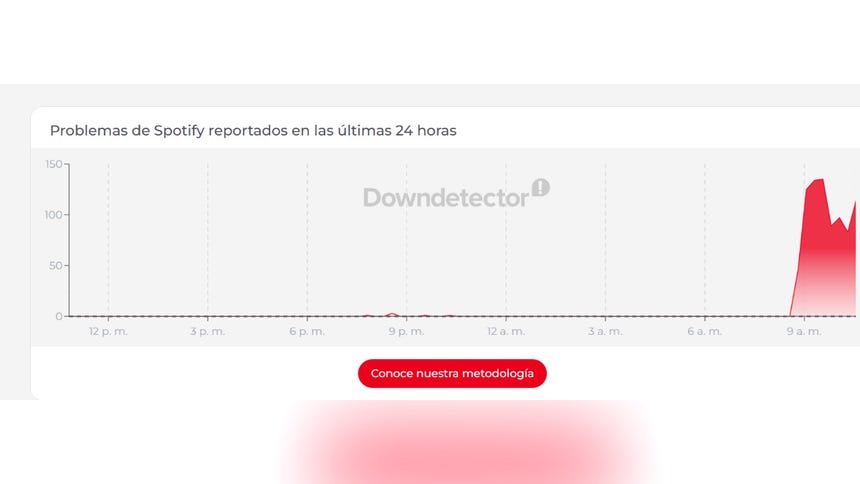
According to data provided by Downdetector, a premier third-party service that monitors real-time outages, the spike in reports began at approximately 8:30 a.m. (Peruvian time). By 9:00 a.m., the volume of reports had surged into the tens of thousands, signaling a massive server-side failure that affected the company’s internal content delivery network (CDN).
A Chronology of the Disruption
The timeline of the event illustrates the challenges faced by massive digital infrastructure when confronted with systemic technical debt or unexpected server load.
- 08:30 a.m. (PET): The first reports of connectivity issues began appearing on Downdetector. Social media platforms, particularly X (formerly Twitter), became the unofficial support forum as users began tagging the official Spotify account to report that their music had stopped playing.
- 09:15 a.m. (PET): The volume of reports reached a critical threshold. Complaints flooded in from across the Americas and parts of Europe, confirming that this was not a localized outage but a global event.
- 10:00 a.m. (PET): Spotify’s official support channels acknowledged the issue. The company posted a brief statement confirming they were investigating the root cause.
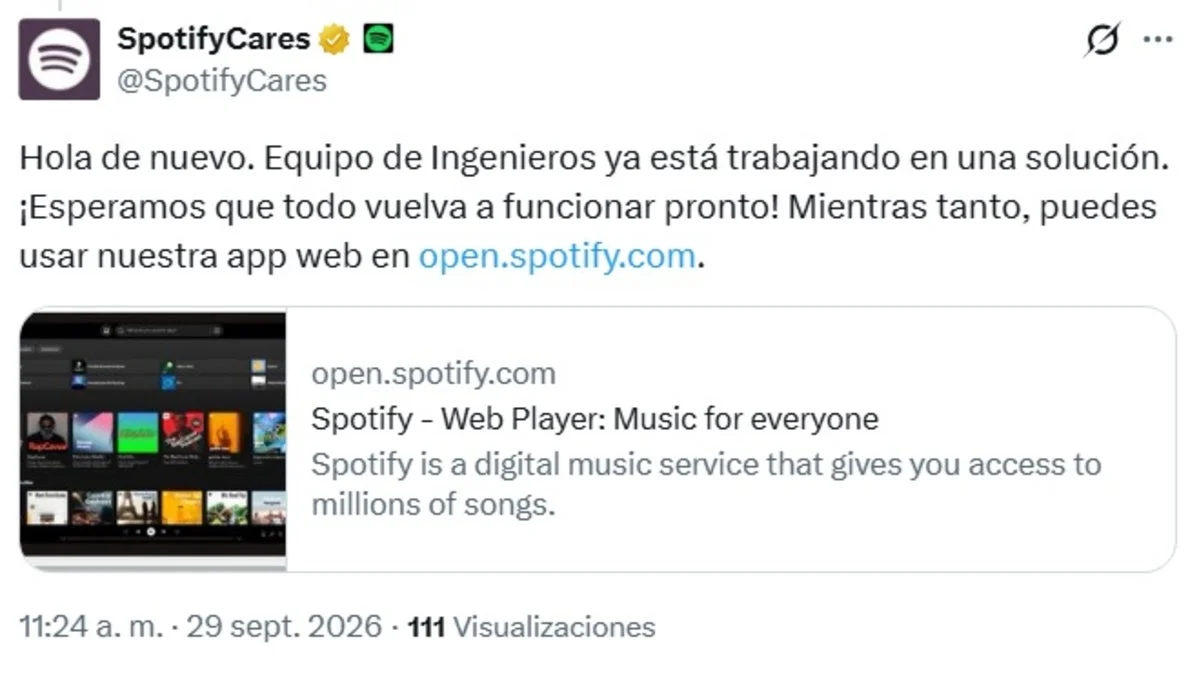
- 11:30 a.m. (PET): As the outage crossed the three-hour mark, frustration mounted. The company provided a secondary update, assuring users that their engineering teams were working on a fix, while simultaneously suggesting the web player as a potential—though not guaranteed—alternative.
- Ongoing (As of press time): While some users reported intermittent restoration of service, many mobile app users continued to face sync issues and library access problems, proving that a full recovery of such a complex, distributed system is rarely instantaneous.
Supporting Data and Technical Context
The scale of this outage highlights the fragility of modern cloud-based entertainment. Spotify operates on a complex architecture that relies on distributed servers to minimize latency for users in different hemispheres. When these servers fail, the "handshake" between the user’s client and the backend database is broken.
Data from independent monitoring services indicated that while the platform’s website remained partially reachable, the API calls—which manage the "listening experience"—were timing out at an alarming rate. This suggests that the issue was not related to the user interface itself, but rather to the authentication servers and the media stream authorization services.
Furthermore, the surge in social media traffic regarding the outage serves as a testament to the platform’s ubiquity. For millions, Spotify is no longer just an app; it is a utility integrated into their workdays, gym routines, and commutes. The sudden cessation of service led to a digital "blackout" for a significant portion of the gig economy, where background music is a staple of professional environments.

Official Responses and Corporate Communication
In an era of instant digital transparency, corporate communication during an outage is vital. Spotify opted for a measured, platform-agnostic approach.
"We are aware of some issues right now and are currently investigating them," the company stated via its official support handle on X.
As the hours progressed and the pressure from the user base increased, the company refined its messaging: "The engineering team is already working on a solution. We hope everything will be back to normal soon!"
Critically, the company recommended the use of the web browser version of their service. While this was a practical piece of advice, it underscored the reality that the primary failure point was likely within the mobile infrastructure, which handles a much higher volume of concurrent connections compared to the browser-based player.

The Broader Implications of Digital Outages
The incident on September 29 serves as a stark reminder of our dependence on centralized digital services. When a giant like Spotify goes offline, the implications are multifaceted:
1. The Vulnerability of Subscription Models
When users pay for a premium service, they expect a certain level of "five-nines" (99.999%) availability. Outages like this raise questions about service level agreements (SLAs) for individual consumers. While the financial impact of a few hours of downtime is negligible for an individual, the aggregate frustration erodes brand loyalty.
2. The Centralization of Content
As we move further away from local, offline file storage (like MP3s on a hard drive) toward cloud-based streaming, we lose control over our own media libraries. During an outage, the user is effectively "locked out" of their own curated culture. This event acts as a wake-up call for users to keep offline backups of essential playlists.
3. Engineering Challenges at Scale
Maintaining a platform that caters to hundreds of millions of concurrent users is an engineering feat of immense proportions. Minor bugs in software deployments, misconfigured load balancers, or unexpected traffic spikes can trigger cascading failures that are notoriously difficult to debug in real-time. This incident will undoubtedly lead to an extensive "post-mortem" analysis by Spotify’s DevOps teams to ensure that such a widespread failure does not repeat itself.
Conclusion: Looking Ahead
As of this report, the situation remains fluid. While the technical teams are clearly making progress, the "aftershocks" of the outage—such as sync errors and playlist update delays—may persist for some time as the global server network reconciles its state.
For the millions of listeners in Peru and beyond, the return of their music is a welcome relief. However, the event stands as a significant case study in the fragility of our modern digital ecosystem. As we continue to integrate these services into the fabric of our daily lives, the demand for stability and transparency will only grow.
Spotify has promised that they are doing everything in their power to restore full functionality. For now, users are advised to stay updated via the official status pages and to remain patient while the engineers navigate the complexities of one of the world’s largest music delivery systems.