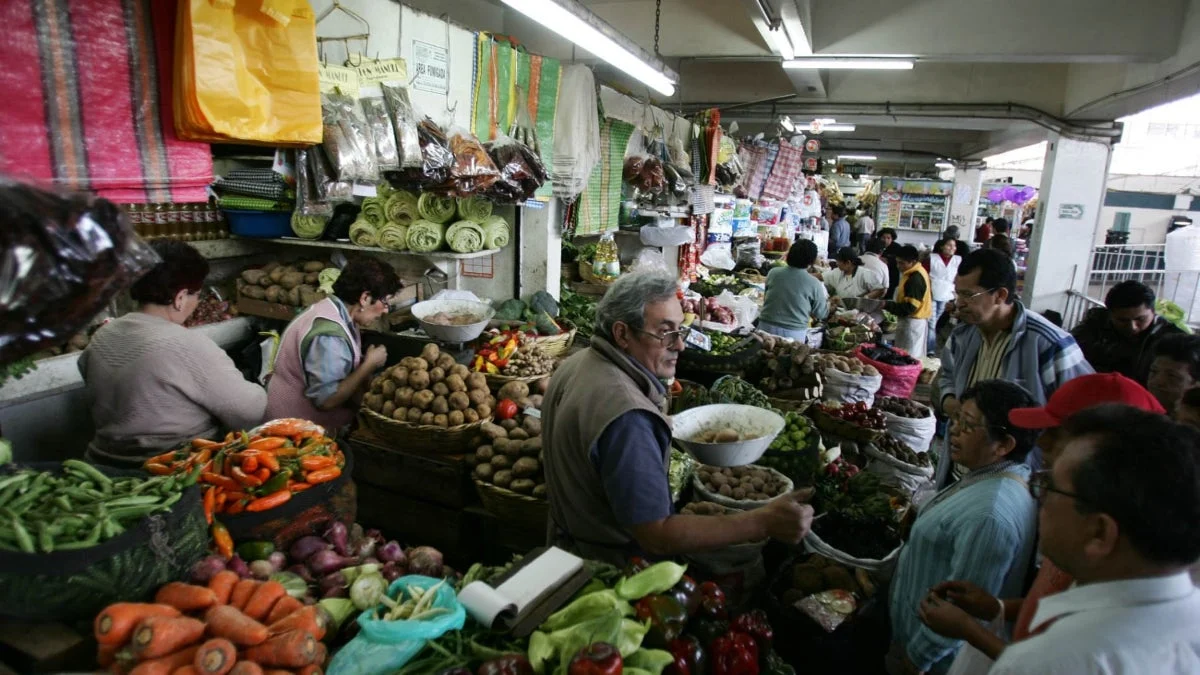
The latest data from Peru’s National Institute of Statistics and Informatics (INEI) paints a complex picture of the economic landscape in Lima Metropolitan Area. As the "El Niño Costero" climate phenomenon intensifies, its repercussions are being felt directly in the household budgets of millions. The recent surge in the prices of staple agricultural products—ranging from tomatoes to green peas—has placed significant upward pressure on the Consumer Price Index (IPC), highlighting the vulnerability of food supply chains to climate-induced instability.
The Core Facts: A Spike in Essential Goods
During the month of September, Lima residents faced a stark reality at the market stalls. The INEI report confirmed that the cost of several essential items in the family basket saw double-digit percentage increases. Leading the charge was the tomato, which experienced a staggering price hike of 28.92%. This single commodity exerted the most significant pressure on the monthly inflation rate, contributing 0.059 percentage points to the IPC.
Following closely behind were green peas (arveja verde) and fresh corn (choclo). Green peas saw an increase of 18.54%, while fresh corn rose by 16.81%. These hikes were not isolated incidents but part of a broader trend affecting fresh produce, which included price climbs for maracuyá (passion fruit), avocado, carrots, yellow potatoes, olluco, and brown sugar. Collectively, the category of vegetables, legumes, and tubers saw a 5% price increase across the capital.
Chronology of the Climatic Disruption
The roots of this inflationary pressure can be traced back to the onset of the El Niño Costero phenomenon, which has disrupted traditional agricultural cycles. The progression of these events followed a pattern that has severely hampered local production:
- Early Season Instability: Changes in ocean temperatures and atmospheric patterns triggered anomalous rainfall outside of the standard seasonal windows.
- Mid-Cycle Crop Damage: The shift in weather conditions created ideal environments for pests, which ravaged crops across the coastal regions that supply Lima.
- Water Scarcity Issues: Paradoxically, alongside unseasonal rains, many agricultural zones experienced a deficit in hydraulic resources, preventing optimal crop irrigation and development.
- September Peak: These cumulative stresses culminated in September, where the reduction in harvest yields led to a drastic tightening of supply in Lima’s wholesale and retail markets, forcing prices upward.
Supporting Data: The Dual Forces of the Market
While the headline figures focus on the rising cost of vegetables, the INEI report clarifies that the food market was influenced by two opposing forces throughout September.
The Upswing (Climatic Impact)
The agricultural sector struggled under the weight of climate change. The combination of pests, water deficits, and unseasonal weather led to higher production costs. Farmers, facing lower yields and increased expenditure on fertilizers and pest control, were forced to pass these costs onto wholesalers. As a result, the "Horticulture and Legumes" index surged, impacting the daily spending power of the average household.
The Downswing (Market Correction)
Conversely, not all food prices trended upward. The division of "Food and Non-Alcoholic Beverages" was the only category to record a slight deflationary dip of -0.07% in September, largely thanks to significant price drops in specific high-demand items.
- Chicken (Eviscerated): Dropped by 4.57%.
- Bonito (Fish): Experienced a sharp decline of 15.62%.
- Mango: Saw a reduction of 19.02%.
These items acted as a necessary buffer, preventing the overall inflation rate from accelerating more rapidly. The abundance of these specific products provided a counterweight to the scarcity of vegetables, suggesting that the supply chain’s resilience is highly dependent on the specific type of commodity and its production cycle.
Official Responses and Broader Economic Implications
The INEI, in its official assessment, noted that the inflationary pressure is not solely domestic. While El Niño is the primary driver of food supply issues, the broader economic environment is complicated by geopolitical tensions.
"The rise in global oil prices, fueled by international conflict, has significantly increased the costs of transportation and logistics," stated an INEI spokesperson. This is evidenced by the 5.80% rise in gasohol prices during September, which added 0.050 percentage points to the inflation index. When the cost of moving goods from the field to the city rises, it exacerbates the price hikes caused by the initial agricultural scarcity.
Macroeconomic Context
The ripple effect of these costs has left Lima with a 0.12% increase in the IPC for September. Looking at the broader fiscal year, the cumulative inflation between January and September reached 4.28%. Perhaps most concerning for policymakers is the year-on-year inflation rate, which now stands at 4.55%.
Implications for the Future
The current situation poses a series of critical questions for the Peruvian government and the agricultural sector:
Food Security and Climate Adaptation
The dependency of Lima’s food supply on a relatively narrow coastal geographic band makes the capital highly sensitive to localized climate events. There is an urgent need for investment in climate-resilient agriculture, such as improved drainage systems for unseasonal rains and more efficient water-management technologies to combat periodic droughts.
Logistics and Energy Vulnerability
The link between fuel prices and food inflation serves as a reminder of Peru’s dependence on imported fossil fuels. Strengthening the domestic logistics chain and exploring alternative energy sources for agricultural transport could insulate consumers from future global geopolitical shocks.
Socio-Economic Impact
With inflation hovering above the 4% mark, lower-income families are the most severely impacted. Because food represents a significant percentage of their total expenditure, the volatility of tomato or pea prices is not just a statistical anomaly—it is a threat to household food security. The government may need to consider temporary social safety nets or subsidies if the climatic conditions continue to restrict the supply of staple vegetables in the coming months.
Conclusion
The data provided by the INEI serves as a clear warning: the climate crisis is no longer a future threat; it is a present-day economic factor. As El Niño continues to influence weather patterns, the volatility observed in September is likely to persist. While the market has shown a capacity for self-correction through the abundance of proteins and certain fruits, the structural issues facing the vegetable and tuber sectors require immediate policy attention.
For the residents of Lima, the coming months will likely remain challenging. The intersection of agricultural vulnerability and global energy instability has created a "perfect storm" that keeps inflation elevated. Navigating this period will require a combination of strategic agricultural investment, careful monitoring of global fuel markets, and a commitment to protecting the most vulnerable segments of the population from the rising cost of living. As the year draws to a close, all eyes will remain on the weather reports, as the health of the economy remains inextricably linked to the health of the fields.