In a landmark move aimed at transforming environmental governance in Peru, the Ministry of the Environment (Minam) has officially secured the World Bank as a strategic partner to spearhead its comprehensive institutional modernization process. This high-level collaboration is designed to overhaul how the ministry serves the public, streamlines environmental permitting, and manages the country’s natural resources through a results-oriented administrative framework.
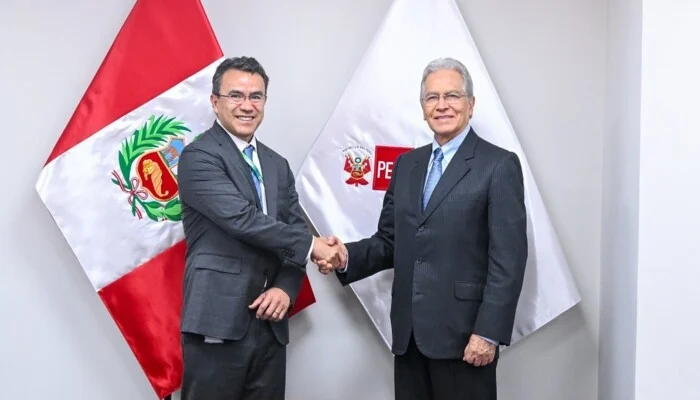
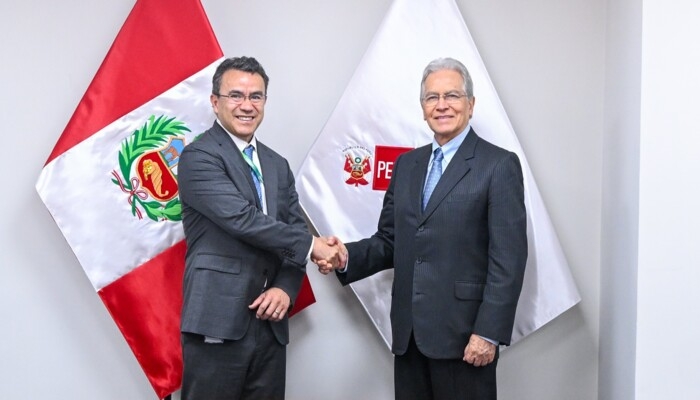
The partnership, formalized following a meeting between Minister of the Environment Vladimiro Huaroc and Rigoberto Ariel Yépez-García, Director of the Andean Countries Division at the World Bank, marks a pivotal shift in the ministry’s operational strategy. By leveraging the multilateral institution’s technical expertise, Minam seeks to shed bureaucratic inefficiencies, foster transparency, and align its regulatory functions with international best practices.
Core Pillars of the Partnership: A Roadmap for Change
The technical assistance provided by the World Bank will focus on a series of critical thematic areas. These are not merely administrative adjustments but foundational shifts intended to modernize the state’s relationship with the environment and its citizens.
1. Strengthening Environmental Governance and Decentralization
A significant challenge in Peru has been the verticality of environmental oversight. The World Bank will assist Minam in re-evaluating the current governance model, with a particular focus on empowering regional authorities. By decentralizing key functions, the ministry aims to ensure that environmental decisions are grounded in local realities while maintaining national standards of protection.
2. Normative Review and Regulatory Simplification
Complexity in environmental law often leads to legal uncertainty and protracted project timelines. The collaboration will involve a deep-dive review of existing regulatory frameworks. The goal is to simplify bureaucratic procedures, ensuring that the process of obtaining environmental certifications is transparent, predictable, and devoid of unnecessary administrative bottlenecks, without compromising the rigor of environmental impact assessments.
3. Digital Transformation and Budgetary Efficiency
Modernization is intrinsically linked to technology. The World Bank will guide Minam in implementing digital solutions to modernize its administrative backend. This includes upgrading data management systems for environmental monitoring and improving financial management, ensuring that public resources are allocated effectively to close existing service gaps in environmental protection.
Chronology of Institutional Reform
The path toward this modernization effort has been deliberate, reflecting a strategic response to the evolving environmental and economic demands of the Peruvian state.
- Early 2026 – Diagnostic Phase: Under the leadership of Minister Vladimiro Huaroc, the Ministry conducted an internal audit of its organizational structure, identifying critical bottlenecks in environmental licensing and inter-agency coordination.
- Mid-2026 – Establishing Partnerships: The ministry initiated dialogues with international stakeholders. The objective was to create a "support coalition" that includes the World Bank, the Inter-American Development Bank (IDB), and the German Agency for International Cooperation (GIZ).
- October 2026 – Formalizing the World Bank Alliance: The high-level meeting between Minister Huaroc and Rigoberto Ariel Yépez-García finalized the scope of technical cooperation.
- Implementation Phase (Ongoing): The installation of 11 technical working groups signifies the transition from planning to execution. These groups are currently tasked with mapping out specific procedural changes.
Supporting Data and Collaborative Synergy
The modernization of Minam is not occurring in a vacuum. It is supported by a multi-lateral framework that brings together diverse global perspectives on public policy and sustainable development.
The World Bank’s intervention complements the technical support already being provided by the Inter-American Development Bank (IDB). The IDB’s focus remains centered on service delivery to the citizen, specifically refining the methodologies for environmental certification and the strengthening of environmental enforcement and fiscalization mechanisms.
Furthermore, the German Agency for International Cooperation (GIZ) continues to play a vital role. GIZ provides the methodological backbone for these reforms, ensuring that the changes implemented are consistent with international environmental sustainability criteria and participatory governance models.
Official Responses: Redefining the "Human Face" of Management
Minister Vladimiro Huaroc has been vocal about the underlying philosophy of this modernization. In his recent address to the newly formed technical committees, he emphasized that the objective is to move beyond the technicalities of environmental legislation and focus on the societal impact of the Ministry’s work.
"We are modernizing the ministry to return a human face to environmental management," Minister Huaroc stated. "The efficiency of the State must be measured by its capacity to protect and improve the lives of Peruvian families. When we speak of simplifying and providing predictability to environmental certification, we are not merely talking about clearing backlogs or ‘unblocking’ files. We are talking about enabling sustainable development that provides certainty to the public and investors alike while upholding our environmental mandate."
The inclusion of Vice Minister of Strategic Development of Natural Resources, Fernando León, along with the heads of the ministry’s adscrited public organizations, underscores the holistic nature of this reform. The entire leadership team is now synchronized under a unified plan designed to harmonize sectoral goals with the overarching national agenda.
Implications for the Future: A More Agile State
The implications of this reform are profound for several stakeholders:
For the Citizenry
The primary beneficiary of this reform is the Peruvian citizen. By streamlining processes, the ministry intends to reduce the time and cost associated with public interactions, from environmental information requests to permit applications. A more efficient Minam means faster responses to environmental concerns and a more transparent interface between the public and the regulatory body.
For Economic Development
By fostering "predictability," the ministry is addressing a long-standing complaint from the private sector and civil society alike: that the rules of the game are often opaque. Clear, simplified, and digitized processes will allow for better planning of sustainable investments, as the criteria for environmental compliance will be more accessible and consistently applied.
For Environmental Sustainability
Critically, modernization does not imply deregulation. On the contrary, the World Bank’s involvement suggests that the goal is to create a "smarter" regulatory environment. By utilizing digital tools for monitoring and focusing resources on high-impact areas, the ministry can perform its oversight role more effectively, potentially identifying environmental risks before they escalate into crises.
Conclusion: A Long-Term Vision
The partnership between the World Bank and the Ministry of the Environment represents a significant commitment to administrative excellence. By integrating global expertise with local institutional knowledge, Peru is positioning itself to handle the complex challenges of 21st-century environmental management.
As the 11 technical working groups begin their review of existing norms and processes, the focus will remain on the deliverables outlined in the coming months. The Ministry is expected to submit specific requirements for the next phase of the collaboration, setting a clear trajectory for the implementation of these reforms.
In a world where climate change and natural resource management are increasingly central to national stability, this modernization effort serves as a testament to the fact that institutional efficiency is the bedrock upon which effective environmental policy is built. Through this alliance, the Ministry of the Environment is not only updating its systems but is actively shaping a future where the State is a more capable, responsive, and effective steward of Peru’s rich and diverse natural heritage.