In a significant move aimed at addressing the erosion of purchasing power amidst ongoing economic challenges, the Peruvian government has officially enacted an increase in the Minimum Vital Remuneration (RMV). Effective October 1, 2026, the baseline salary for private-sector workers has risen from S/1,130 to S/1,230. This policy change, spearheaded by the administration of President Keiko Fujimori, marks the first phase of a two-tiered adjustment strategy designed to recalibrate the national wage floor to S/1,300 by the first half of 2027.
While the primary intent is to provide financial relief to formal employees, the implications of this decree extend far beyond the immediate S/100 increase. The adjustment acts as a catalyst for a broader shift in labor costs, tax-related benchmarks, and the complex, often fragile, landscape of the informal labor market.
Chronology: The Road to the New Minimum Wage
The announcement, delivered by President Fujimori on the afternoon of September 28, 2026, served as the culmination of months of deliberation between the government, labor unions, and business representatives. The officialization of this policy was solidified through Supreme Decree No. 015-2026-TR, which set the legal framework for the implementation.
- September 28, 2026: President Fujimori announces the two-phase plan to increase the RMV, citing the need to support the labor force against rising costs of living.
- October 1, 2026: The first phase of the increase takes effect, raising the minimum wage by S/100, reaching a total of S/1,230.
- First Half of 2027 (Anticipated): The government is mandated to issue a subsequent Supreme Decree to implement the second phase, an additional S/70 increase, which will bring the final RMV to S/1,300.
This staggered approach was chosen to mitigate the potential shock to the private sector, allowing businesses to adjust their payroll structures and financial planning to accommodate the new wage baseline.
Supporting Data: Understanding the Multiplier Effect
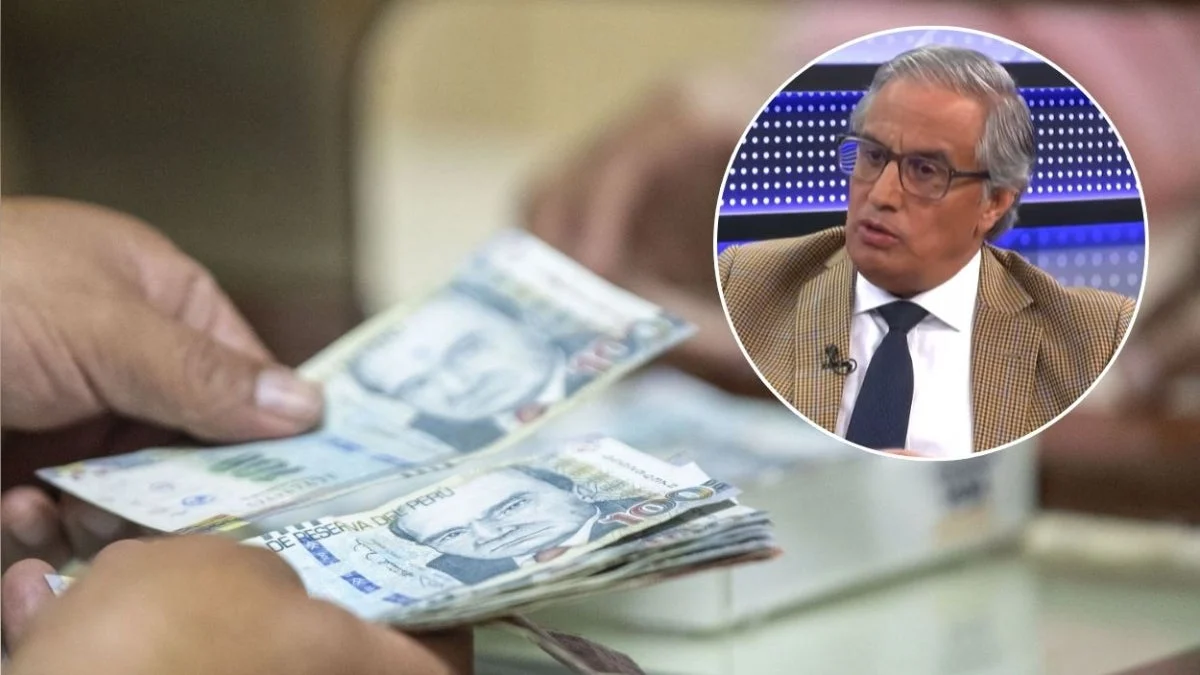
It is a common misconception that the increase in the RMV is limited to the base salary hike. As labor law expert Luis Vinatea clarified during an appearance on Economía para Todos (RPP), the RMV functions as a "macro-reference" for various labor benefits. Consequently, a change in the floor triggers a cascade of increases in other statutory payments.
The Asignación Familiar (Family Allowance)
Perhaps the most direct impact is observed in the Asignación Familiar. Under Peruvian labor law, employees on the payroll with dependent children are entitled to a supplement equivalent to 10% of the RMV. With the previous baseline of S/1,130, this allowance was S/113. Under the new S/1,230 baseline, the allowance rises to S/123. While an increase of S/10 may appear marginal to some, it represents a mandatory adjustment for thousands of families across the country.
The "Snowball" Effect on Benefits
The RMV serves as the basis for calculating several other critical components of an employee’s compensation package:
- Gratificaciones: Bi-annual bonuses are tied to the salary level. A higher base means higher mandatory payouts during the July and December cycles.
- CTS (Compensación por Tiempo de Servicios): This severance indemnity fund is a percentage of the total remuneration. An increase in the RMV directly inflates the employer’s contribution to the worker’s CTS account.
- Vacation Pay and Overtime: As the base hourly rate increases, the cost of overtime and the payout for vacation periods rise proportionally.
"When we talk about an increase in the RMV, we are not merely discussing a S/100 raise in the take-home pay," Vinatea explained. "We are discussing a systemic adjustment of all labor concepts that are legally anchored to that base."
Official Responses and Sectoral Impact
The government’s decision has met with mixed reactions. While labor groups have lauded the move as a necessary step toward social equity, business associations have expressed concern regarding the capacity of specific sectors to absorb these costs—particularly those still reeling from the devastating economic impact of the El Niño phenomenon.
Vulnerable Sectors
The industrial landscape in Peru is currently disparate. Certain sectors have been disproportionately affected by climate anomalies:
- Fisheries: The industrial fishing sector has seen significant paralysis, creating a difficult environment for wage increases.
- Textiles and Apparel: This sector struggled significantly throughout the year, failing to meet sales targets for the winter season, which limits their liquidity.
- Agriculture: The "Beta Bonus," a common incentive structure in the agricultural sector, is frequently indexed to the RMV. An increase in the floor creates an automatic, non-negotiable rise in labor costs for large-scale agricultural exporters.
- Services and Retail: Sectors such as security, cleaning services, and retail, which rely heavily on low-wage labor, are bracing for a sharp uptick in operating expenses.
The Micro-Enterprise Dilemma
To prevent mass layoffs or the migration of formal micro-enterprises into the informal sector, the government has introduced a temporary relief measure: a S/100 bonus for approximately 300,000 workers in formal micro-enterprises. However, critics point out that this is a one-time palliative. Once the support expires, the burden of the permanent increase will fall entirely on the shoulders of these small business owners, who operate with razor-thin margins.
Implications: Formalization and the Informal Market
One of the most complex aspects of the RMV increase is its relationship with the informal economy. Although the RMV technically applies only to formal private-sector workers, it serves as a psychological and economic benchmark for the entire labor market.
The "Shadow" Benchmark
Workers in the informal sector often look to the RMV as a reference point for their own earning expectations. When the legal floor rises, it creates "upward pressure" on informal wages. Informal employers may face demands from their workers to match the government-mandated increases to prevent turnover.
However, the informal sector lacks the legal protections of the formal sector. There is no mechanism to guarantee that an informal worker will receive this increase, nor are they entitled to the associated benefits like CTS or family allowances. This creates a widening gap between those protected by the law and those left to negotiate in an unregulated environment.
The Challenge of Coverage
The overarching challenge for the Peruvian government remains the expansion of social security and labor rights. As Vinatea noted, the RMV is an effective tool for formal workers, but it highlights the precarious nature of the vast majority of the Peruvian workforce who operate outside the reach of these decrees. By raising the cost of formal employment, the government inadvertently risks creating a disincentive for small businesses to formalize, potentially pushing more workers into the informal sphere where they remain unprotected.
Conclusion: A Delicate Balancing Act
The increase of the RMV to S/1,230 is a landmark policy that underscores the government’s commitment to protecting the purchasing power of the working class. By integrating a two-phase increase, the administration has attempted to balance social justice with economic reality.
However, the true success of this measure will be measured not just by the numbers on a payslip, but by how effectively the private sector can adapt without stifling job creation. For the millions of workers in the informal sector, the decree serves as a reminder of the stark divide in the Peruvian economy. As the nation prepares for the next phase of the increase in 2027, the focus must inevitably shift toward long-term strategies that encourage formalization, boost productivity, and ensure that the benefits of economic policy reach the entirety of the workforce, rather than just the segment already protected by the law.
The coming months will be critical. As businesses update their payrolls and labor contracts, the resilience of the Peruvian economy will be tested against the rising cost of labor, leaving the government to navigate the narrow path between supporting families and maintaining a competitive, sustainable business environment.