The current global economic landscape, characterized by surging commodity prices, has ushered in an unprecedented era of prosperity for mining-dependent nations. For local and regional governments, this translates into a windfall of fiscal resources that would have been unimaginable just a decade ago. However, as citizens prepare to head to the polls this October 4th, the central question looming over the political discourse is not how much money will flow into the regional coffers, but whether these historic revenues can finally be translated into a tangible improvement in the quality of life for the nation’s most vulnerable populations.
The Economic Context: A Financial Windfall
The mining sector is currently experiencing a "supercycle," a period of sustained high prices for industrial metals that has significantly bolstered the national treasury. For the fiscal year, regional and local governments have received an aggregate of more than S/ 13 billion in mining-related transfers. To put this figure into perspective, it represents an amount equivalent to the entire national budget allocated for citizen security, and it comfortably exceeds the combined funding for the nation’s primary social welfare programs.
These revenues are generated through three primary mechanisms:
- The Mining Canon: Comprising 50% of the Income Tax paid by mining corporations, this is the largest source of revenue. Projections for 2026 indicate that regional and local governments will receive over S/ 9.5 billion from this source alone, the highest value recorded in over 25 years.
- Royalties: Direct payments made by companies for the extraction of mineral resources.
- Occupancy Rights: Fees paid by companies to maintain their mining concessions.
Chronology of a Structural Challenge
The path to this moment has been paved with cycles of boom and bust. Historically, the volatility of metal prices meant that regional planning was often reactive rather than proactive. However, the current stability of prices has provided a consistent, albeit uneven, stream of revenue.
- Early 2000s: Initial expansion of the mining canon creates local interest in extraction projects.
- 2010–2020: A decade marked by fluctuating demand; regions struggle with the "curse of resources," where high income fails to correlate with lower poverty rates.
- 2024–2025: Prices for base metals reach historic highs, triggering massive transfer payments to regional and municipal governments.
- October 2026: Upcoming regional and municipal elections set the stage for a new cohort of administrators to manage these record-breaking budgets.
Supporting Data: The Disconnect Between Wealth and Welfare
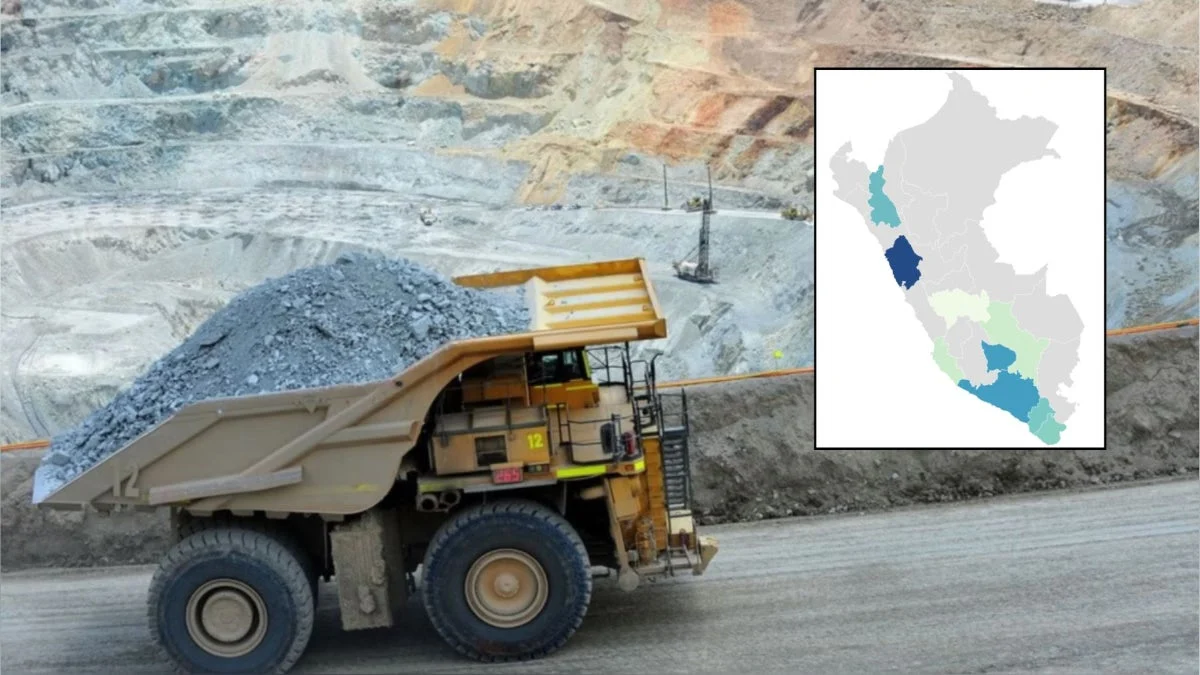
Despite the massive influx of capital, the correlation between mining investment and poverty reduction remains frustratingly weak. The regional distribution of these funds is highly concentrated. Four regions—Áncash, Arequipa, Apurímac, and Cajamarca—account for nearly 50% of all mining transfers.
Cajamarca serves as the most glaring example of the "Paradox of Plenty." Despite being a powerhouse in mineral production, it remains the poorest region in the country, with a poverty rate of 41%—significantly higher than the national average of 26%. This discrepancy highlights that the mere availability of funds is not a panacea for structural inequality.
Official Responses and Expert Analysis
The failure to convert wealth into development is not due to a lack of money, but rather a crisis of execution. Expert voices in the field suggest that the root causes are systemic.
The Problem of "Inertial Spending"
Epifanio Baca, an economist at the Grupo Propuesta Ciudadana, argues that the current methodology for budget execution is fundamentally flawed. "If we look at the last 15 years, the impact of the canon has been marginal," Baca explains. "Of every 100 investment projects entered into the multi-year investment program, more than 60 are unplanned. These projects enter the execution phase without having undergone any rigorous evaluation of whether they actually close existing social gaps."
![Más de S/13.000 millones de recursos del superciclo minero en manos de las próximas autoridades regionales y municipales [INFORME]](https://f.rpp-noticias.io/2026/10/02/342934_1914237.jpg?width=860&quality=80)
Political Incentives and Governance
Carolina Trivelli, former Minister of Development and Social Inclusion, points to the political motivations of local leaders as a major hurdle. "Regional and local governments are often incentivized to prioritize projects that carry political weight or satisfy the electorates in district capitals," Trivelli notes. "These are often ‘vanity projects’ that provide visibility rather than the essential services needed in the most impoverished, remote rural areas."
Trivelli further emphasizes the lack of citizen participation. "There is a governance vacuum," she adds. "When there is no transparent mechanism for community involvement, spending decisions tend to reflect the preferences of the elite holding power, rather than the urgent needs of the territory."
The Path Forward: Reforms and Strategic Priorities
As the government, led by Minister of Energy and Mines Guillermo Shinno, explores ways to redirect resources toward communities directly affected by extraction, several key recommendations have emerged from the policy community.
1. Reforming the Distribution Model
Experts agree that the current rules for the distribution of the mining canon are outdated. Without changing the underlying incentives—which favor quantity of spending over quality of impact—the increase in resources may simply lead to more of the same suboptimal results. "If we continue to do the same thing, we will get the same outcomes, regardless of how much money is injected into the system," warns Trivelli.
2. Prioritizing the Completion of Existing Infrastructure
Rather than initiating new, politically motivated projects, incoming authorities must focus on the backlog of unfinished work. Baca suggests a systematic approach: "The first task for new authorities, in coordination with the Ministry of Economy and Finance (MEF), is to identify projects that have been stalled. Too often, a new administration ignores the projects started by its predecessor, leading to a ‘snowball effect’ of half-built schools, clinics, and roads."
3. Strengthening Technical Capacity
Closing the gap requires more than just money; it requires technical expertise in project management and public procurement. Many municipalities lack the specialized personnel to design and execute complex infrastructure projects. A shift toward regional technical assistance units, supported by the national government, could ensure that projects are not only started but brought to completion.
Implications for the Future
The current mining boom represents a generational opportunity. If managed effectively, the revenues could transform the social infrastructure of the country’s most neglected regions, providing clean water, healthcare, and education to millions. Conversely, if the current trends of inefficient spending and political posturing continue, the nation risks squandering its mineral wealth while social tensions continue to simmer.
The upcoming October elections are a critical juncture. The citizens in these mining regions are not merely looking for more money; they are looking for competence, transparency, and a long-term vision. For the next generation of leaders, the test is clear: they must move beyond the allure of the "mining gold rush" and prove that they can govern for the people, not just for the budget. The success of the next administration will be measured not by the millions of soles in the bank, but by the tangible, sustainable change in the lives of the citizens they serve.