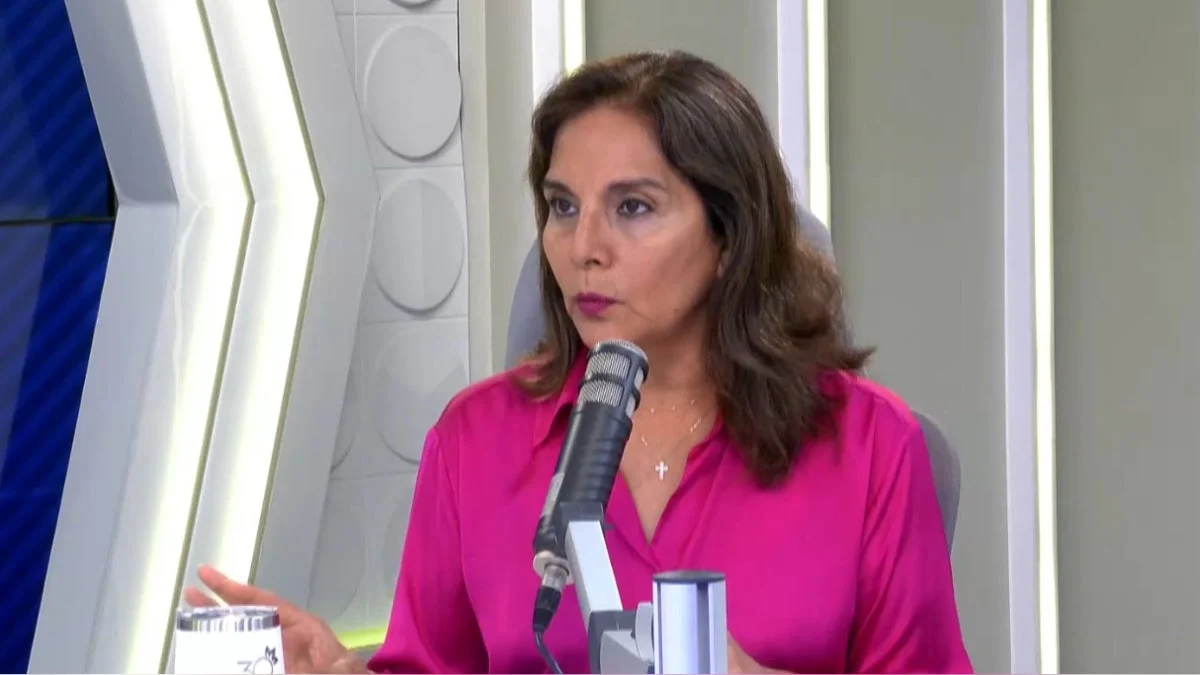
In a week marked by heightened friction within the Peruvian legislative branch, Senator and Fuerza Popular spokesperson Patricia Juárez has emerged as a key defender of the executive branch. As the administration of Interior Minister César Astudillo faces a looming motion of censure—spearheaded by an alliance of Juntos por el Perú, Obras, and the Partido del Buen Gobierno—Juárez has dismissed the move as a purely political maneuver devoid of technical merit.
The escalating standoff, which combines issues of public security, the integrity of the National Police (PNP), and the stalled delegation of legislative powers, has paralyzed key parliamentary debates. As the government attempts to implement its security strategy, the opposition’s push for a cabinet reshuffle has drawn sharp criticism from legislative allies who argue that constant ministerial rotation threatens the continuity of critical state policies.
Main Facts: The Battle for the Ministry of the Interior
The current controversy centers on the performance of Interior Minister César Astudillo. Following an interpellation session in which the Minister presented his strategy to combat organized crime, several opposition factions formally initiated a motion of censure. The move suggests a lack of confidence in the Minister’s ability to curb rising insecurity, citing his recent controversial regulations regarding civilian weapon ownership.
Senator Patricia Juárez, representing the Fuerza Popular caucus, has remained steadfast in her support for Astudillo. During an interview with RPP, she defended the Minister’s track record, pointing to measurable results in law enforcement. "He has explained the most significant captures made during this time, the volume of weaponry seized, and the number of requisitions executed," Juárez noted. She emphasized that the desarticulation of criminal organizations is a complex, long-term process that should not be undermined by populist political pressure.
The Senator’s defense extends to the leadership of the National Police of Peru (PNP). Regarding the delayed departure of former commander Óscar Arriola and the subsequent appointment of General Fredy López, Juárez framed the transition as a matter of institutional respect, citing regulations designed to provide a two-year stability window for high-ranking officers.
Chronology of the Legislative Standoff
The current political volatility can be mapped across a series of events that have defined the past month in the Peruvian Congress:
- Initial Interpellation: Interior Minister César Astudillo is summoned to the legislative chamber to explain his policies on citizen security and the regulation of civilian firearms.
- The Censure Push: Immediately following the interpellation, factions including Juntos por el Perú express dissatisfaction with the Minister’s responses, announcing their intent to file a motion of censure.
- Police Command Transition: The transition from Óscar Arriola to Fredy López in the PNP leadership creates friction, with some sectors demanding greater transparency in top-level police appointments.
- The Legislative Impasse: The Executive branch submits a formal request for a delegation of legislative powers. However, 30 days elapse without a formal dictamen (report) from the Commission of the Constitution.
- Regional Delays: The Commission of the Constitution schedules public hearings in regions like Arequipa, a move that supporters of the government—including Juárez—have labeled as a dilatory tactic to stall the legislative agenda.
Supporting Data: Efficiency vs. Political Rhetoric
Senator Juárez’s defense of the Minister rests on the argument that the opposition’s goals are disconnected from the actual metrics of state security. She points to three key areas where the current administration claims success:
- Criminal Disarticulation: The Interior Ministry reports a significant increase in the dismantling of mid-to-high-level criminal organizations compared to the previous fiscal period.
- Asset and Weaponry Seizures: Statistical reports presented during the interpellation indicate a record number of illegal firearms removed from circulation.
- Apprehension Rates: The number of individuals with outstanding warrants captured by the police has reached a statistical milestone, which Juárez argues is evidence of the Minister’s commitment to public safety.
Juárez argues that the opposition’s demand for the Minister’s resignation is "political" rather than "functional." She cited social media activity from leaders of Juntos por el Perú, who have publicly declared their intention to "go after the heads of the ministers," as evidence that the censure is not an audit of efficiency, but a tactical attempt to weaken the administration.
Official Responses and Internal Alliances
The political landscape is further complicated by the internal dynamics of the right-wing coalition and individual political rivalries. A notable sidebar to the national debate was the recent reconciliation between Patricia Juárez and the Mayor of Lima, Rafael López Aliaga.
The two had been at odds following comments made by Samuel Daza, a Fuerza Popular candidate for the Lima municipal government. Addressing the situation, Juárez explained, "I have a long-standing friendship with him. He expressed his discomfort regarding what had occurred, and it seemed appropriate to offer an apology."
When pressed on whether Fuerza Popular militants should support Daza or align with López Aliaga, Juárez invoked the principle of political neutrality, asserting that such decisions are left to the individual discretion of the party faithful. This stance reflects a broader effort by Fuerza Popular to maintain stability within its regional electoral base while simultaneously navigating the hostile environment of the national legislature.
Implications for the Future of Governance
The failure to move forward on the "delegation of legislative powers" (facultades legislativas) is arguably the most significant implication of the current impasse. The Executive branch views these powers as essential to addressing the immediate, deep-seated issues of insecurity and economic recovery.
The Constitutional Commission Stagnation
Juárez expressed frustration that the Commission of the Constitution has failed to produce a dictamen after a month of deliberation. She argued that the Congress has a constitutional responsibility to evaluate the proposals, prioritize those that are essential, and reject those that are not. "We are not saying ‘give us everything’," she clarified. "We are asking that the topic be debated."
The Risk of Policy Interruption
The core of the Senator’s warning is the danger of "ministerial instability." By constantly threatening censure, the legislative branch creates a environment where long-term sectoral policies are abandoned every time a new minister is appointed. According to Juárez, the current strategy against crime requires time and continuity; if the Minister is replaced, the entire security apparatus risks losing the momentum it has built in recent months.
The Role of the Senate
As the debate moves toward the Senate, there are concerns that the upper house might attempt to alter the core of the government’s proposals. Juárez, however, believes that Fuerza Popular lacks the necessary votes to force radical changes, and that the responsibility ultimately lies with the Commission of the Constitution to put the issues "on the table."
She specifically criticized the scheduling of hearings in Arequipa as a "strategy to delay" the inevitable vote. In her view, the legislative process has been weaponized to serve partisan interests, to the detriment of the public’s need for a functional, empowered Interior Ministry.
Conclusion
As the week concludes, the political landscape in Peru remains fragile. The defense mounted by Patricia Juárez highlights the deep divide between the legislative opposition, which seeks to exercise control through the removal of executive officials, and the government, which advocates for institutional stability and the delegation of powers to address urgent crises.
Whether the motion of censure against César Astudillo gains enough traction to succeed remains to be seen. However, the discourse surrounding it underscores a broader, more systemic issue: the struggle between administrative continuity and the political imperative of the opposition. For the citizens of Peru, the result of this struggle will likely determine the efficacy of the state’s response to the growing threat of organized crime in the months to come. As Juárez aptly summarized, the priority must be to stop the political grandstanding and begin the hard, technical work of governance.