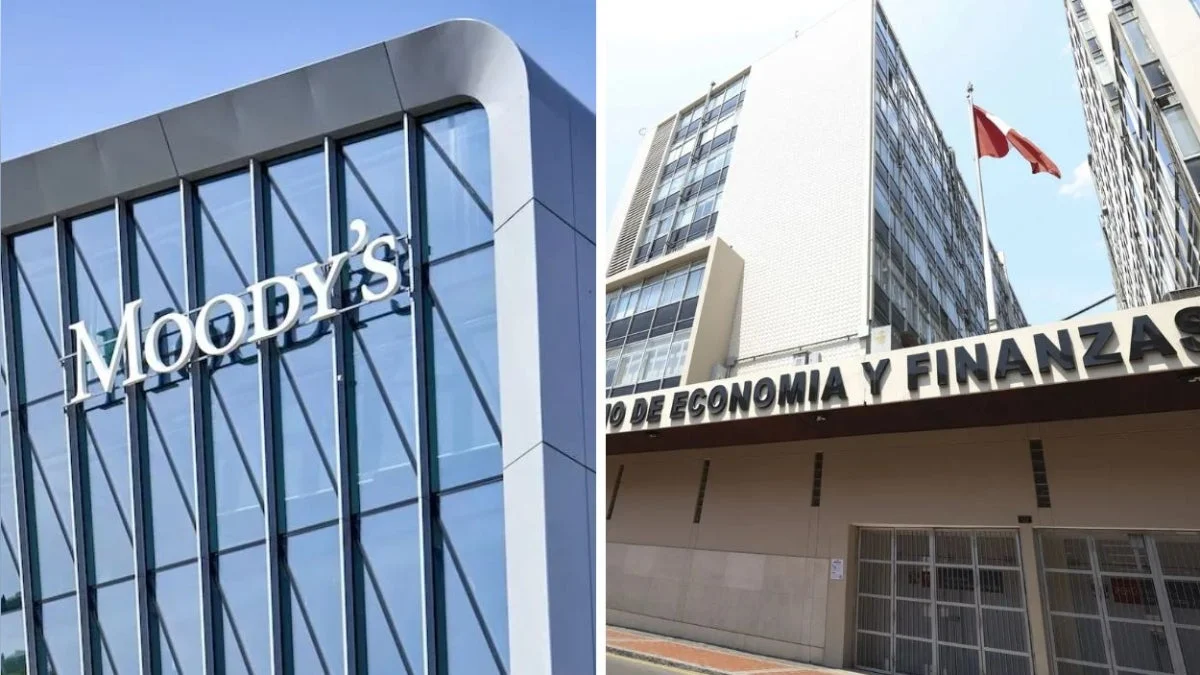
In a significant show of confidence in the resilience of the Peruvian economy, the credit rating agency Moody’s Ratings officially confirmed this Tuesday that it has maintained Peru’s credit rating at Baa1. This decision, which applies to both local and foreign currency debt, comes with a "stable" outlook, effectively ensuring that the Andean nation remains firmly within the investment-grade category.
While the rating reflects a vote of confidence in Peru’s macroeconomic fundamentals, the report also serves as a critical diagnostic of the country’s structural challenges. Moody’s highlights a complex interplay between fiscal prudence and institutional fragility, setting a clear, albeit demanding, roadmap for the nation to pursue if it wishes to elevate its standing in the global financial markets.
Main Facts: A Steady Hand in Uncertain Times
The decision by Moody’s to maintain the Baa1 rating is primarily anchored in Peru’s historical commitment to fiscal discipline and its low debt-to-GDP ratio, which remains one of the most favorable among its peers in the Baa category.
Despite a volatile political climate, the agency noted that the current "stable" outlook suggests that the risks to Peru’s creditworthiness are currently balanced. The agency’s assessment incorporates the expectation that a modicum of political stability, particularly following the post-election landscape, will allow for more predictable policy formulation. This predictability is seen as a necessary precursor to reinvigorating private investment and stimulating domestic economic activity.
However, the affirmation of the rating is not a free pass. Moody’s explicitly stated that while political stability may be improving, it has not yet translated into a fundamental improvement in the quality of national institutions. The agency observed that political parties in Peru remain structurally weak, and the executive branch continues to navigate a legislative landscape where it lacks a solid majority. Consequently, the progress of essential reforms remains contingent on the often-fragile cooperation between the executive and legislative powers.
Chronology and Economic Projections
Looking toward the medium and long term, Moody’s has offered a constructive growth forecast for the Peruvian economy. The agency projects that GDP will grow between 3% and 3.5% annually for 2026 and 2027. This optimistic outlook is predicated on the materialization of a robust pipeline of mining and infrastructure projects.
The Growth Trajectory:
- 2026–2027: Expected growth between 3% and 3.5%, driven by increased mining activity and public-private infrastructure investments.
- 2028–2031: A projected average annual growth rate of 3.5%, sustained by the maturation of current projects and improved capital investment cycles.
The agency emphasizes that these figures are contingent upon the efficient execution of large-scale projects. Any significant delays—whether due to bureaucratic bottlenecks in permitting, social conflicts, or the persistence of illegal mining—could dampen these projections.
Supporting Data: Fiscal Resilience vs. Structural Pressures
A cornerstone of Peru’s credit profile is its fiscal management. Moody’s projects that the government’s debt-to-GDP ratio will hover around 30% over the medium term. This is a remarkable figure given the global context of rising debt levels and the fiscal costs associated with climate phenomena such as El Niño.
Fiscal Strengths:
- Access to Capital: Peru continues to enjoy strong access to both domestic and international capital markets.
- Fiscal Buffers: The country maintains sufficient fiscal reserves to act as a shock absorber during periods of economic volatility.
- Debt Service: The nation’s capacity to service its debt remains high, providing comfort to international investors.
The Looming Risks:
Despite these strengths, Moody’s issued a stern warning regarding "structural pressures on public spending." Over the past several years, the Peruvian Congress has approved various measures that increase the compensation and benefits for the public sector. Because these mandates were often enacted without corresponding revenue-generating measures, they have begun to crowd out resources that could otherwise be allocated to high-impact public investment.
Moody’s cautions that the health of Peru’s fiscal accounts will depend entirely on the government’s ability to contain these permanent spending commitments and, more importantly, to improve tax collection efficiency.
The Impact of Climate: Preparing for El Niño
The report specifically addresses the looming threat of the El Niño phenomenon, which is expected to have an impact during the 2026–2027 period. Moody’s views the economic impact of such climate events as "temporary."
The agency suggests that while sectors like agriculture and fisheries—the backbone of many regional economies—will undoubtedly suffer from environmental disruptions, the overall impact on the national GDP potential should be contained. The severity of the hit will depend on three factors:
- Damage Mitigation: The extent of physical damage to critical infrastructure.
- Reconstruction Speed: The efficiency with which the government can restore connectivity and operations.
- Investment Preservation: The ability of the state to protect core productive investments from being diverted entirely to emergency relief.
Moody’s concludes that because of Peru’s existing fiscal buffers, the country is well-positioned to prevent these weather events from triggering a prolonged economic contraction or a permanent loss of potential growth.
Implications: The Path to an Upgrade
Perhaps the most significant takeaway from the Moody’s report is the clear threshold for future upgrades. The agency emphasized that "higher economic growth alone will not be sufficient to raise the rating."
For Peru to move beyond its current Baa1 status, it must demonstrate a sustained period of institutional strengthening. An upgrade is unlikely unless the government provides concrete evidence that its political stability is leading to deeper, more durable reforms.
What is required for an upgrade?
- Governance and Institutions: A demonstrable reduction in corruption, a strengthened and independent judicial system, and an increase in the quality of public spending.
- Efficiency: The capacity to execute public investment projects on time and within budget.
- Revenue Generation: A tax system that is more efficient and provides the state with the necessary revenue to fund social and infrastructure needs without endangering debt sustainability.
The Downside Risks:
Conversely, the outlook could shift from "stable" to "negative" if the country experiences a renewed deterioration in political stability. If political infighting begins to paralyze the economy, stall private investment, or lead to a reckless expansion of the fiscal deficit, the rating could come under pressure. The agency specifically warned that a sustained increase in structural spending, if left unchecked, would be a primary driver of a potential credit downgrade.
Conclusion: A Delicate Balance
The affirmation of Peru’s credit rating is a testament to the durability of its macroeconomic framework. The "Baa1" rating is a sign that international markets still view Peru as a safe and stable destination for capital. However, the report serves as a sophisticated call to action.
The message from Moody’s is clear: Peru has the economic potential to grow and the fiscal capacity to withstand shocks, but it is currently hampered by the same institutional weaknesses that have characterized its recent political history. Moving forward, the focus must shift from merely maintaining the status quo to implementing the structural reforms necessary to modernize the state, optimize tax collection, and create a predictable environment for long-term investment.
As Peru moves toward 2026, the intersection of political will and economic policy will define whether the nation stays within its current investment-grade comfort zone or begins the ascent toward a higher, more secure international standing. The foundation is solid, but the building of stronger institutions remains the unfinished business of the decade.