By Editorial Team | September 2026
The landscape of public education in the Ucayali region is undergoing a significant transformation. With the official commencement of construction for the Institución Educativa (I.E.) N.° 65166 "Juan Pedro Flores Dávila," located in the San Pablo de Tushmo center in the district of Yarinacocha, the regional government has signaled a firm commitment to bridging the infrastructure gap that has historically hampered academic progress in the Peruvian Amazon.
This project, which represents an investment exceeding S/ 14.9 million, is not merely a construction contract; it is a strategic initiative designed to provide students with a modern, high-tech environment that meets 21st-century pedagogical standards.
Main Facts: A Project Built for the Future
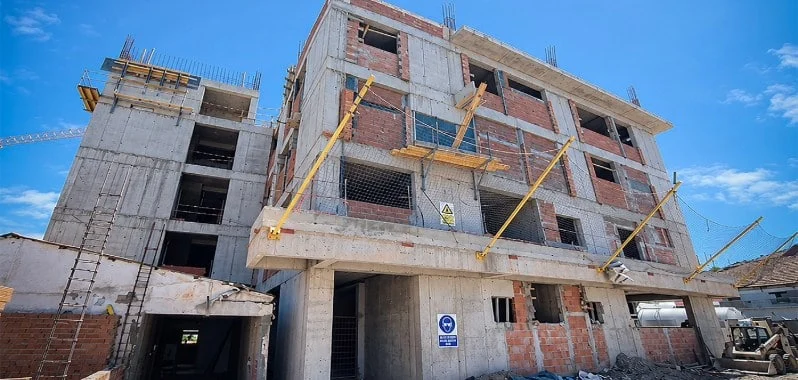
The project centers on the comprehensive improvement of educational facilities. The school, which currently faces significant physical limitations, is set to be completely overhauled to ensure a safe and conducive learning environment. The scope of the work includes:
- 11 Specialized Modules: The facility will feature eleven distinct modules, including dedicated pedagogical classrooms, specialized workshops for technical training, a modern library, a multi-purpose hall, meeting rooms, and administrative offices.
- Technological Integration: Beyond the concrete and steel, the project emphasizes digital inclusion. The school will be equipped with advanced educational technology, including smart boards and modern computing resources.
- Recreational Infrastructure: A key highlight of the design is the construction of a large, covered sports court. This space is essential in the tropical climate of Yarinacocha, allowing students to engage in physical education and extracurricular activities regardless of rain or intense sun.
- Budgetary Scope: With an investment totaling over S/ 14.9 million, the project stands as one of the significant infrastructure efforts currently being executed by the Regional Government of Ucayali.
Chronology: From Concept to Groundbreaking
The journey toward this new facility has been one of persistent advocacy by the local community and strategic planning by the regional government.
Phase 1: Diagnosis and Planning (2024-2025)
The project originated from a regional audit of educational infrastructure, which identified the Juan Pedro Flores Dávila school as a priority site due to its deteriorating physical conditions and the growing demographic needs of the San Pablo de Tushmo population.

Phase 2: Project Formulation and Approval (Late 2025)
Technical teams from the regional government conducted feasibility studies, ensuring that the new design complied with national building standards for educational facilities. This phase involved securing the budget and drafting the technical specifications that include modern safety, ventilation, and seismic-resistance standards.
Phase 3: Procurement and Bidding (Early 2026)
The competitive bidding process concluded in the first half of 2026, selecting contractors capable of meeting the project’s specific logistical requirements, given the geographical location of the school in Yarinacocha.
Phase 4: Official Start of Construction (September 2026)
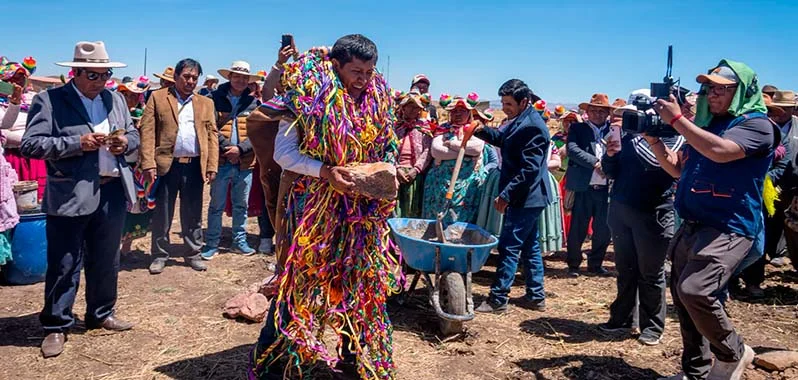
The project officially broke ground this month. The site is currently being mobilized, and preliminary earthworks have begun, marking the transition from planning to physical execution.
Supporting Data: The Broader Educational Strategy
The investment in the Juan Pedro Flores Dávila school is not an isolated event. It forms part of a wider policy shift within the Regional Government of Ucayali. Under the current administration’s "100 Schools Initiative," the government has aimed to systematically replace dilapidated, unsafe classrooms with resilient, modern structures.
According to regional reports, the demand for quality education in Ucayali has surged as families move from rural areas to centers like Yarinacocha. The current infrastructure often fails to accommodate these numbers. By investing over S/ 14.9 million in a single project, the government is focusing on:
- Retention Rates: Studies show that modern school environments directly correlate with lower dropout rates. By providing a clean, safe, and technologically equipped space, the school becomes a hub for community engagement rather than just a place of instruction.
- Technological Parity: By integrating smart boards and modern equipment, the government aims to close the "digital divide" between students in urbanized regions and those in the Amazon basin.
- Community Integration: The inclusion of a multi-purpose hall and a covered sports arena allows the school to function as a community center during off-hours, fostering deeper ties between the faculty, parents, and local residents.
Official Responses: Voices of Stakeholders
The launch ceremony provided a platform for both political leaders and academic stakeholders to address the community.

Governor Manuel Gambini’s Vision
During his keynote speech, Governor Manuel Gambini emphasized that the project is a testament to his administration’s commitment to education. "Everyone can see the current conditions of the school," Gambini noted. "However, in the coming months, we will witness the emergence of a high-quality infrastructure, fully equipped and implemented with the latest pedagogical tools. My campaign commitment was to build 100 schools, and I am proud to state that we have surpassed that goal. This is not just about buildings; it is about the future of our youth."
Academic Leadership: Jade Plazas
The school’s director, Jade Plazas, echoed the sentiments of the teaching staff and parents. "We are deeply grateful for this monumental project. The decision by the regional government to invest in education in Ucayali is a beacon of hope for our students," Plazas stated. She emphasized that the physical building is only half the battle; the second half lies in the pedagogical commitment of the teachers and the active involvement of parents. "As educators, we are fully committed to driving student achievement to ensure a better future for every child in San Pablo de Tushmo."
Implications: The Long-Term Impact on Yarinacocha
The implications of this construction extend far beyond the immediate construction phase.
1. Socioeconomic Development
Improved school facilities act as catalysts for local development. By upgrading the physical infrastructure, the government creates local employment during the construction phase and provides a long-term asset that increases property values and stability in the San Pablo de Tushmo area.
2. Pedagogical Shift
The inclusion of workshops and a library suggests a shift toward a more holistic, competency-based curriculum. By moving away from rote memorization in outdated classrooms toward interactive learning in smart-classrooms, the school is preparing students for the modern labor market and higher education.
3. Climate Resilience
In the Ucayali region, extreme weather events are a constant challenge. Modernizing school infrastructure with proper drainage, ventilation, and high-quality materials ensures that students are not subjected to the hazards of traditional, poorly ventilated wooden or old brick structures.

4. Regional Stability
For the Regional Government of Ucayali, successfully completing such a project serves as a political and social benchmark. It demonstrates an ability to execute large-scale public works effectively, which is essential for maintaining public trust and stability in a region often marked by infrastructure challenges.
Conclusion: A New Chapter for Ucayali
As the construction machines begin their work in Yarinacocha, the Juan Pedro Flores Dávila school represents a new chapter in the regional history of Ucayali. With a focus on modernization, technological integration, and high-quality infrastructure, the project serves as a model for how regional governments can effectively utilize public funds to solve deep-seated societal issues.
While the physical construction is slated to take several months, the impact of this investment will be felt for generations. The students of San Pablo de Tushmo are not just receiving a new building; they are being provided with the environment necessary to thrive in an increasingly complex and digital world. The project stands as a firm reminder that in the heart of the Amazon, education remains the most potent tool for development, progress, and equality.