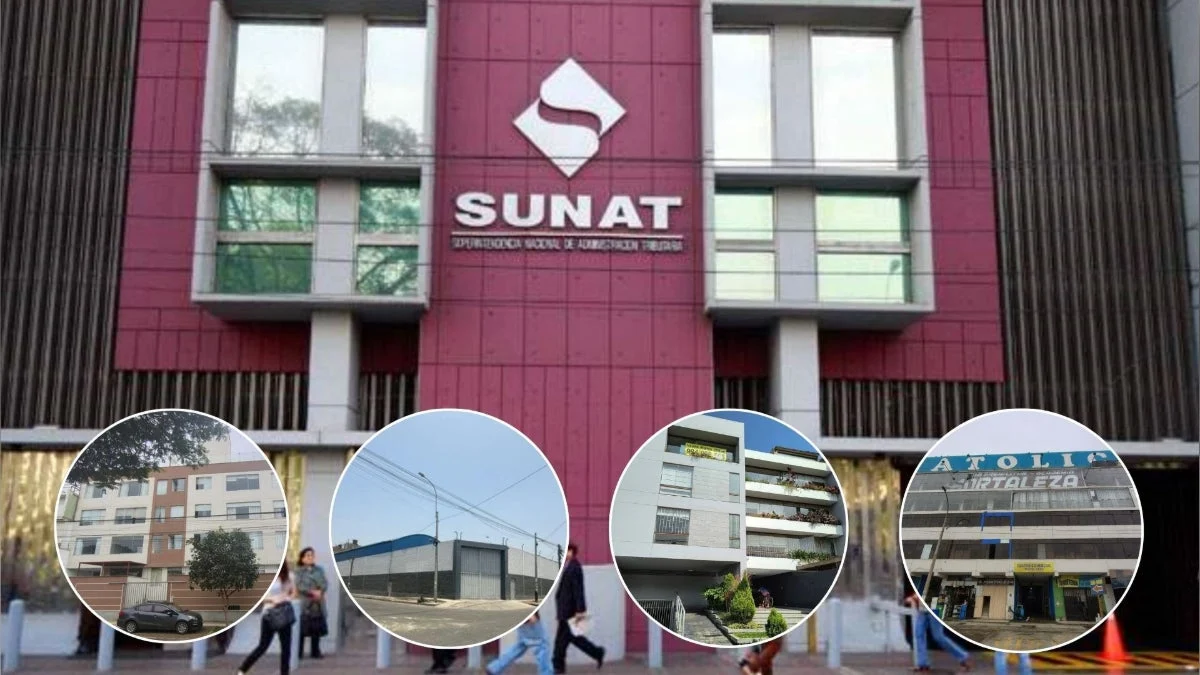
The Superintendencia Nacional de Aduanas y de Administración Tributaria (SUNAT), Peru’s tax authority, has officially announced its fifth major public auction of the year, scheduled for Wednesday, September 30. This aggressive recovery measure targets assets seized from taxpayers who have failed to regularize their outstanding tax obligations despite numerous warnings and administrative opportunities provided by the agency.
The auction represents a significant opportunity for investors and citizens looking to acquire real estate at competitive prices, while simultaneously serving as a stern reminder of the consequences of tax non-compliance in the Peruvian fiscal landscape.
Main Facts: The Scope of the Liquidation
The upcoming auction involves a diverse portfolio of 26 real estate assets, ranging from residential properties to industrial infrastructure. The total valuation of these properties, based on their starting bids, stands at approximately S/ 6,804,173.
The collection of assets is geographically diverse, reflecting the national scope of SUNAT’s enforcement efforts. The properties are distributed across the regions of Lima, Piura, and Ica. The inventory includes:
- Residential assets: Houses, apartments, and residential plots.
- Commercial and storage assets: Stores, warehouses, offices, and parking spaces.
- Industrial assets: A significant industrial facility located in San Juan de Lurigancho.
The starting prices are highly varied, catering to different investor profiles. The lowest entry point for the auction is a storage unit in Surquillo, starting at just S/ 5,287. On the upper end of the spectrum, the industrial facility in San Juan de Lurigancho carries a starting bid of S/ 2,519,406, representing the most substantial asset in the current catalog.
Chronology of Tax Enforcement
The path to this auction is not a sudden administrative action but the culmination of a rigorous, multi-stage legal and fiscal process. Understanding this timeline is essential for both taxpayers and prospective buyers.
Phase 1: Notification and Voluntary Compliance
The process begins long before an asset is tagged for seizure. SUNAT initiates a series of notifications, formal demands, and "invitations" to regularize debt. During this phase, taxpayers are typically offered various payment plans, interest reductions, and administrative leniencies to bring their tax status current without the need for enforcement.
Phase 2: The Coercive Collection Process
When a taxpayer ignores these opportunities, the process shifts to the "coercive collection" stage. SUNAT issues an order of payment or resolution of determination. If these remain unpaid, the agency is legally authorized to initiate attachment proceedings (embargoes).
Phase 3: Asset Seizure
Once the debt reaches a critical threshold and the taxpayer remains non-compliant, SUNAT proceeds to physically or legally seize assets. These assets are then appraised by experts to determine a base price for future auctioning.
Phase 4: Public Auction
The final step is the public auction. This is the mechanism by which the state recovers the funds owed to the public treasury. The upcoming September 30 event is the fifth such occurrence this year, signaling an intensified pace in SUNAT’s recovery efforts as the fiscal year enters its final quarter.
Supporting Data: An Analysis of the Portfolio
The diversity of the properties on offer highlights the varied nature of tax debts, which range from small business owners to large industrial entities.
Residential Highlights
For individual investors, the residential sector offers several points of interest:
- Villa El Salvador: A residential house with a base price of S/ 154,834.
- Chorrillos: An apartment starting at S/ 185,380.
- Santiago de Surco: A prime residential unit with a base price of S/ 300,378.
- Piura: A two-story residence, reflecting the regional reach of the auction, starting at S/ 153,454.
Industrial and Commercial Potential
The inclusion of high-value industrial assets suggests that SUNAT is targeting systemic tax non-compliance among larger commercial actors. The industrial site in San Juan de Lurigancho (S/ 2,519,406) is likely to attract significant interest from commercial developers and logistics companies. Additionally, the availability of offices starting at S/ 34,058 and multiple storefronts in the same district provides options for small and medium-sized enterprises (SMEs) looking to secure commercial real estate at a reduced cost.
Vacant Land and Development Opportunities
The auction also features several plots of land in rapidly developing districts and provinces:
- Carabayllo (Lima)
- Castilla (Piura)
- Guadalupe (Ica)
- Pachacamac (Lima)
Prices for these plots begin at S/ 31,780 and extend up to S/ 240,050, offering entry-level opportunities for land developers or individuals looking to build.
Official Responses and Procedural Requirements
SUNAT has emphasized that these auctions are conducted with the highest levels of transparency to ensure fairness for all participants. The process follows a "sealed envelope" (sobre cerrado) modality, a standard procedure designed to prevent bid manipulation.
Participation Guidelines
- Submission: Interested parties must submit their bids in a sealed envelope, which is deposited into an ánfora (ballot box).
- Selection: The highest bidder who meets all legal and financial requirements is declared the winner.
- Identification: Participation is remarkably accessible; only a valid National Identity Document (DNI) is required.
- No Cost: There is no fee for registration or participation in the auction.
The event will take place on Wednesday, September 30, at the SUNAT headquarters located at Avenida Arenales 335-357, Cercado de Lima, specifically adjacent to the Fuero Militar Policial.
For those seeking granular details on individual properties, including legal status, specific dimensions, and photographs, SUNAT directs the public to its official "Portal de Remates Tributarios." Furthermore, the agency has provided dedicated contact lines—970 589 308 and 964 408 217—for inquiries regarding the auction rules.
Implications: The Broader Economic Context
The frequency and scale of these auctions carry significant implications for the Peruvian economy and the relationship between the state and the taxpayer.
Fiscal Responsibility and Equity
The primary goal of these auctions is the recovery of revenue necessary to fund public services. SUNAT frequently asserts that tax evasion places an unfair burden on compliant taxpayers. By liquidating the assets of those who refuse to pay, the agency aims to restore equity to the system.
Market Impact
While these auctions are a tool for the state, they also create a ripple effect in the real estate market. Properties sold at public auction often trade below market value, which can provide a "soft" indicator of price trends in specific sectors. For the buyer, it represents a high-risk, high-reward investment; however, experts warn that potential bidders must perform thorough "due diligence" regarding the legal status of the titles and any existing liens on the properties.
A Message to Taxpayers
The persistent schedule of these auctions serves as a clear warning to other delinquent taxpayers. SUNAT is signaling that the era of ignoring tax notices is effectively over. The agency has utilized advanced data analytics to track assets and enforce collections more effectively than in previous decades.
Conclusion
As the September 30 auction approaches, the event stands as a intersection of law, finance, and urban development. For the successful bidders, it represents a chance to acquire assets at a discount; for SUNAT, it is a necessary mechanism to maintain the integrity of the national tax system; and for the broader public, it serves as a stark reminder of the non-negotiable nature of fiscal obligations.
Whether one is a potential investor or simply an observer of the economic landscape, the upcoming auction in Lima, Piura, and Ica is a key event to monitor, reflecting the ongoing commitment of the Peruvian government to enforce tax compliance through decisive, institutional action.