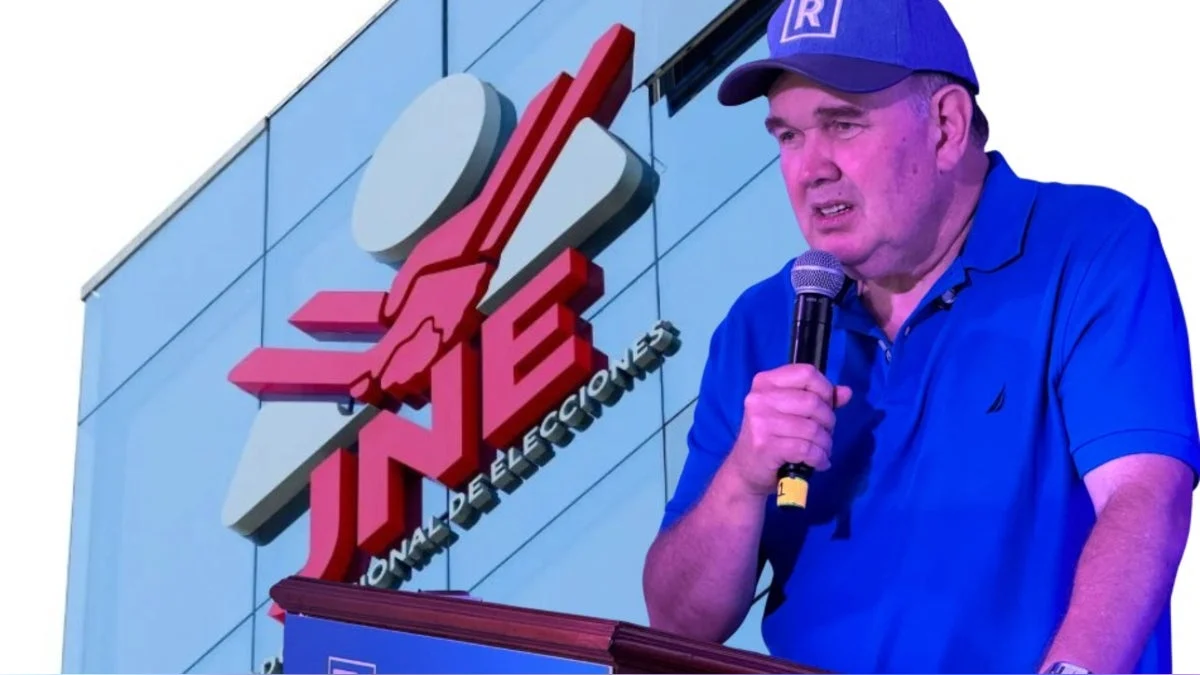
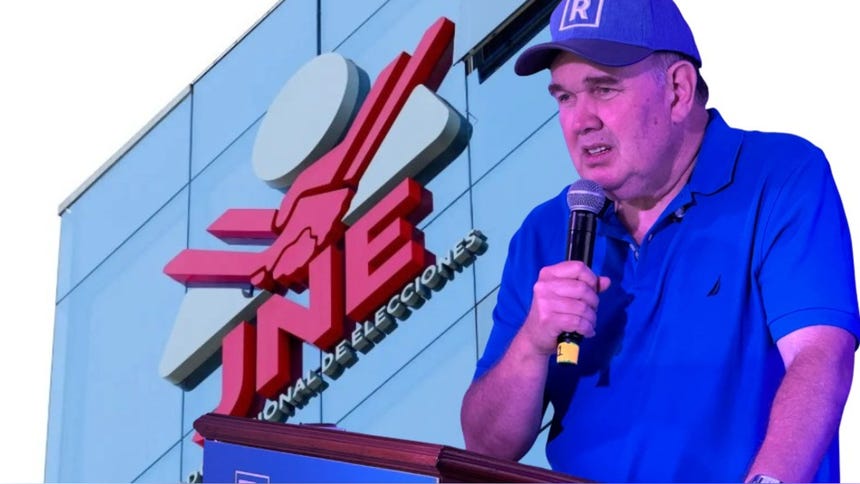
In a significant development for the current electoral landscape in Lima, the Special Electoral Jury (JEE) of Lima Centro has officially ordered the permanent closure of the sanctioning proceedings against the political organization Renovación Popular and its candidate for provincial councilor, Rafael López Aliaga. The controversy, which centered on the use of the slogan "Porky Returns, Mayor of Lima" in campaign materials, was resolved not on the merits of the message’s veracity, but on the technicality of how the alleged infraction was legally framed by electoral authorities.
The decision, formalized in Resolution No. 06946-2026-JEE-LICN/JNE on September 21, brings an end to a high-profile inquiry that had questioned the boundaries of campaign messaging and the duty of candidates to provide accurate information to the electorate.
The Core of the Controversy: A Slogan Under Scrutiny
The investigation was triggered following reports from electoral supervisors in the district of Breña. Officials identified two specific pieces of propaganda associated with the Renovación Popular campaign that raised red flags regarding the accuracy of the political messaging.
The first point of contention was a mural painted on the façade of a local campaign office, which prominently displayed the phrase: “PORKY! RETURNS! MAYOR OF LIMA.” The second element was a billboard featuring images of Luis Rubio and Rafael López Aliaga, accompanied by the text: “Luis Rubio,” “Mayor of Lima,” and “Porky Returns!”
The presence of the title "Mayor of Lima" attributed to these figures, while they were actively campaigning for different roles or in a different electoral context, led the electoral authorities to initiate a process based on the "Principle of Veracity." This principle, enshrined in Article 42 of the Law of Political Organizations, dictates that electoral propaganda must not induce voters to make decisions based on false or misleading information.
Chronology of the Legal Proceedings
The timeline of this case reflects the rapid pace of electoral justice in Peru:
- Initial Detection: Electoral supervisors patrolling the Breña district flagged campaign materials that allegedly misrepresented the candidates’ current standing or future roles.
- Opening of the Case: The JEE of Lima Centro formally initiated a sanctioning procedure against Renovación Popular and Rafael López Aliaga, citing a potential violation of electoral transparency laws.
- Defense Submissions: Representatives for the political party and the candidate presented their arguments, urging the board to dismiss the case on the grounds that the campaign materials were consistent with their political narrative and did not violate the specific regulations invoked.
- Review and Deliberation: The JEE panel conducted a comprehensive review of the evidence, evaluating whether the specific campaign materials fit the legal definition of the infraction they were charged with.
- Final Ruling: On September 21, 2026, the JEE issued Resolution No. 06946-2026-JEE-LICN/JNE, ruling that the charges were technically inapplicable and ordering the case closed.
Why the JEE Dismissed the Charges
The central pivot of the JEE’s decision lies in a distinction between a general ethical principle and a specific statutory infraction. The authorities had initially attempted to apply a regulation—numeral 7.1.9 of Article 7 of the Regulation on Electoral Propaganda—which is specifically designed to sanction the "destruction, annulment, interference, deformation, or alteration of permitted propaganda."
Upon review, the collegiate body determined that the evidence did not meet the criteria for this specific infraction. The panel concluded that the slogans, images, and symbols were the original content of the campaign materials created by the party. Since there was no evidence that the materials had been sabotaged, defaced, or altered by third parties, the specific infraction cited was legally irrelevant to the facts of the case.
The Limits of the "Principle of Veracity"
Crucially, the resolution clarified a vital point in electoral law: the invocation of the "Principle of Veracity" cannot be used as a "catch-all" to justify sanctions if the specific conduct does not align with a clearly defined legal violation.
The board stated in its ruling: "Even when the content of the propaganda could be a subject of questioning from the perspective of Article 42 of the Law of Political Organizations, this does not allow for the conclusion that the specific infraction analyzed in this procedure has occurred."
In essence, the JEE acknowledged that while the content of the slogans might be debatable or subject to public scrutiny, the legal mechanism used to prosecute the case was the wrong tool. The law requires a perfect "fit" between the conduct and the prohibited act; because this was missing, the court had no choice but to drop the matter.
Implications for Future Campaigns
The decision by the JEE of Lima Centro carries significant weight for future political campaigns in Peru. By strictly interpreting the scope of electoral infractions, the board has reinforced a standard that requires prosecutors and electoral supervisors to be precise in their legal characterization of alleged violations.
1. The Challenge of "Truth in Advertising"
While this case was archived, the question of whether a candidate can present themselves with a title they do not yet hold (or that they no longer hold) remains a gray area. By explicitly stating that they did not rule on whether the propaganda was "false or misleading," the JEE has left the door open for future, more accurately framed legal challenges. Political parties now know that while they may have escaped this specific sanction, the Principle of Veracity remains a live issue that could be prosecuted under a more appropriate legal framework in the future.
2. Procedural Rigor
The decision highlights the necessity of "typicity" in administrative law. For a political party to be sanctioned, the behavior must be explicitly described in the regulations. The JEE’s refusal to "stretch" the interpretation of the law to punish behavior they deemed potentially questionable demonstrates a commitment to procedural due process, even in the heated environment of an election cycle.
3. Impact on Rafael López Aliaga’s Campaign
For Rafael López Aliaga, this ruling is a clear legal victory that allows his campaign to continue without the shadow of an active sanctioning process. It provides the candidate with the opportunity to focus on his platform, and it validates the party’s strategy of defending their communication materials as legitimate expressions of political intent rather than deceptive propaganda.
Conclusion: An Unresolved Debate
The closure of the case involving Renovación Popular serves as a case study in the complexities of regulating political speech. While the JEE’s decision was based on a technical assessment of the law, the underlying debate—the extent to which candidates should be allowed to use aspirational language that may be perceived as misleading—persists.
As the election draws closer, the role of the JEE will continue to be critical. This case proves that while the regulatory framework is robust, it is also highly specific. Future attempts to police campaign messaging will likely require a more precise approach if they are to withstand the scrutiny of the electoral justice system. For now, the "Porky" campaign continues, and the legal hurdles that threatened to stall its momentum have been cleared by the strict interpretation of the law.
The resolution leaves the electorate to decide for themselves the validity of the campaign slogans, shifting the responsibility of evaluation from the courtroom to the ballot box. By refusing to act as the arbiter of "truth" in this specific instance, the JEE has upheld the principle that political messaging, within the bounds of existing statutes, remains a contest of narratives rather than a matter of state-mandated fact.