Executive Summary: Boosting Paraguay’s Agricultural Backbone
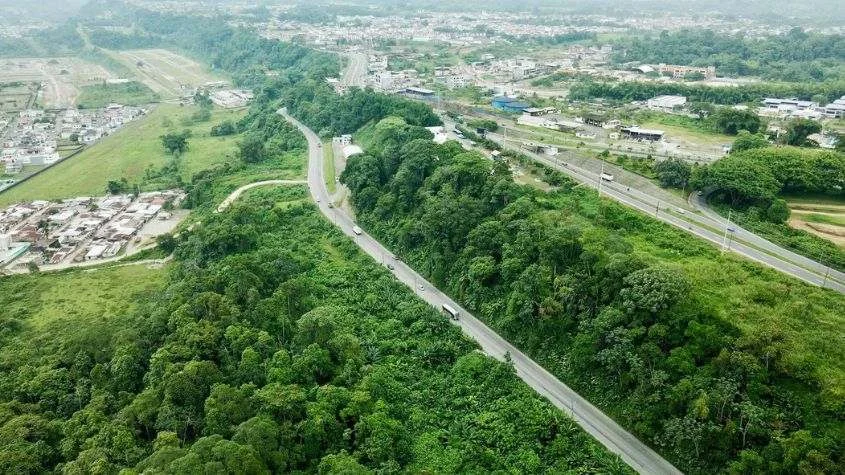
In the heart of Paraguay’s industrious Itapúa department, a critical infrastructure project is nearing its final stages. The "Ruta de los Inmigrantes"—a strategic 11.7-kilometer stretch connecting the PY06 highway to the vital Puerto Paredón—has officially reached a physical progress milestone of 68.79%. This development represents more than just asphalt and concrete; it is a vital artery designed to revitalize the regional economy, streamline logistics for the agricultural sector, and improve the quality of life for local producers.
As the project approaches its final quarter, stakeholders are looking toward a future where the seamless transport of over 350,000 tons of grain annually becomes a reality. This article explores the technical, economic, and social implications of a project that serves as a blueprint for rural development in South America.
1. Main Facts: Defining the Scope of the Project
The Ruta de los Inmigrantes is a specialized infrastructure initiative aimed at closing the "last mile" gap between inland production hubs and international export terminals.
- Location: Itapúa Department, Paraguay.
- Total Length: 11.7 kilometers.
- Strategic Connections: Linking the PY06 highway—a major national thoroughfare—to the port facilities at Puerto Paredón.
- Current Progress: 68.79% completion.
- Primary Objective: Facilitating the transit of agro-industrial products, specifically grain, dairy, and livestock.
- Contractor: Benito Roggio e Hijos S.A., a firm with extensive experience in regional infrastructure.
The project is not merely an expansion of existing paths; it is a comprehensive overhaul of the roadbed designed to handle the heavy axle loads associated with modern agricultural transport. By upgrading the surface from granular bases to robust asphalt carpeting, the government aims to reduce transit times and mitigate the high maintenance costs currently associated with unpaved or poorly maintained rural roads.
2. Chronology: From Planning to Pavement
The timeline of the Ruta de los Inmigrantes reflects the broader Paraguayan strategy to decentralize infrastructure investment.
Phase I: Planning and Feasibility (2023–Early 2024)
Before ground was broken, engineering teams conducted extensive topographical surveys to assess the impact of the road on the local ecosystem and the surrounding farming communities. The planning phase was essential to ensure that the road’s design would account for the heavy rainfall patterns common in the Itapúa region, necessitating a robust drainage and culvert system.
Phase II: Initial Mobilization and Earthworks (Mid-2024)
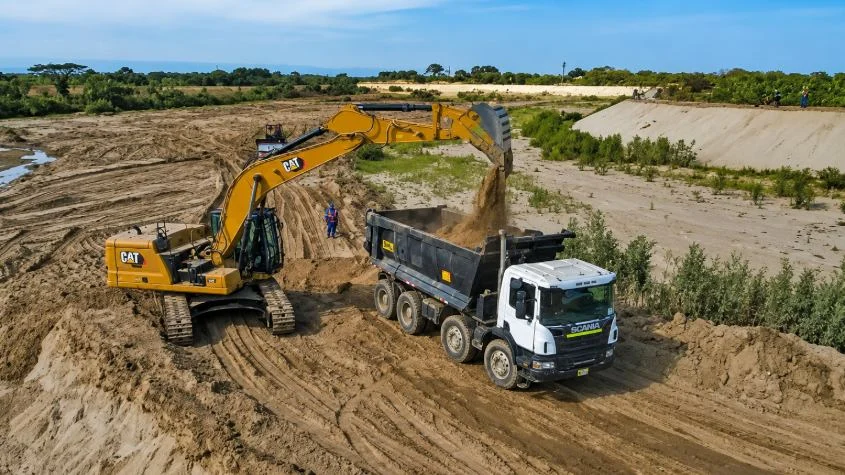
Construction officially commenced with the clearing of the path and the initial "bacheo" (patching) of deep structural sections. This phase was focused on stabilizing the subgrade, ensuring that the foundation could support the heavy machinery and, subsequently, the multi-ton trucks that would traverse it.

Phase III: Structural Development (Late 2024 – Present)
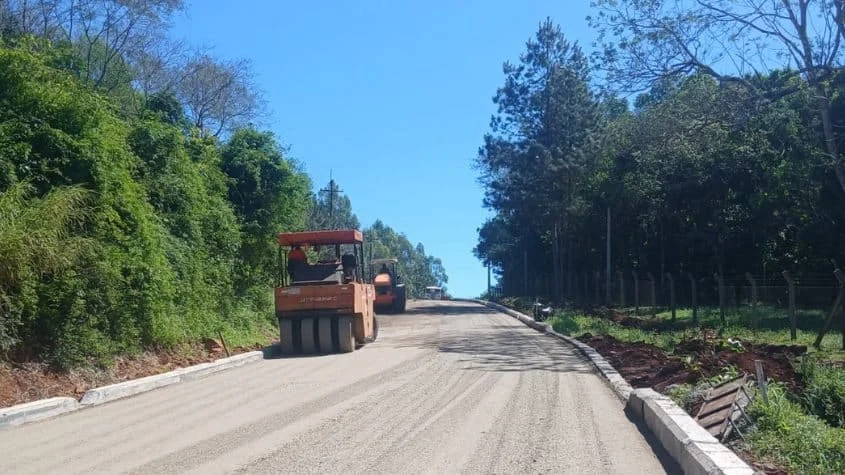
Over the past several months, the project entered the intensive paving phase. The installation of a granular base—a mixture of crushed stone and aggregate—provided the necessary rigidity for the asphalt layers. The project is now in the stage of applying the "riego de imprimación" (prime coat) and "riego de liga" (tack coat), which ensure that the final surface is bonded correctly to the base, preventing premature delamination or potholes.
3. Supporting Data: The Logistics of Grain Export
The importance of this road can be quantified by the sheer volume of goods moving through the Itapúa region. Paraguay is a global powerhouse in soybean and grain production, and efficiency in the supply chain is the primary determinant of profit margins for small and medium-sized farmers.
The 350,000-Ton Metric
The project is engineered to accommodate an annual flow of 350,000 tons of grain. To put this figure in perspective:
- Transit Efficiency: Improved road surfaces reduce fuel consumption for heavy trucks by approximately 15–20%.
- Reduced Spoilage: Faster transit times mean less time for agricultural goods to sit in vehicles during transport, preserving the quality of perishable items and reducing humidity-related grain degradation.
- Economic Multiplier: Lower transport costs translate to higher gate prices for farmers, allowing them to reinvest in better fertilizers, modern machinery, and sustainable farming practices.
4. Technical Execution: The Engineering Behind the Road
The construction process managed by Benito Roggio e Hijos S.A. involves a multi-layered engineering approach. To ensure the durability of the 11.7 km stretch, the contractors are employing the following techniques:
- Deep Patching (Bacheo Profundo): Removing failed sections of the old roadbed to reach stable ground, ensuring that future surface buckling is minimized.
- Base Conformity: Using high-grade granular material to provide a level, load-bearing surface.
- Advanced Surface Finishing: The application of modern asphaltic concrete mixtures designed to withstand extreme temperature fluctuations and high traffic volume.
- Hydraulic Infrastructure: A critical component of the project is the installation of robust pluvial drainage systems. Given the frequency of heavy storms in the region, effective water management is the most important factor in preventing erosion and surface degradation.
- Safety Infrastructure: The construction includes "guardarruedas" (wheel guards/curbs) and safety barriers, which are essential for navigating the terrain securely.
5. Official Responses and Industry Outlook
While local government bodies have lauded the progress, the project represents a broader effort by the Paraguayan Ministry of Public Works and Communications (MOPC) to modernize the country’s rural corridors.
Industry analysts suggest that the completion of this road will likely serve as a catalyst for future industrial investments in the area. With reliable logistics, companies are more likely to establish storage facilities, silos, and processing plants along the route, further stimulating job creation in the department of Itapúa.
"The Ruta de los Inmigrantes is a vital component of our strategy to link local production with the world," a representative from the regional planning commission noted during a recent progress briefing. "By connecting the PY06 to Puerto Paredón, we are effectively shortening the distance between the Paraguayan farmer and the global market."

6. Implications for the Future
The implications of the Ruta de los Inmigrantes extend beyond the immediate logistical benefits.
Socio-Economic Impact
Better roads facilitate better access to social services. For the communities residing along the 11.7 km stretch, the road signifies improved access to schools, medical centers, and urban markets. It reduces the social isolation that often plagues rural agricultural zones.
Environmental Considerations
Modern road construction increasingly focuses on minimizing environmental impact. The integration of proper drainage systems not only protects the road but also prevents soil erosion and water runoff into nearby farmlands. By optimizing transport routes, the project also contributes to a reduction in the total carbon footprint of the agricultural industry in the region, as trucks spend less time idling in traffic or maneuvering over rough terrain.
A Model for Rural Infrastructure
The success of this project could serve as a case study for future tenders in other Paraguayan departments. By focusing on critical "last mile" infrastructure rather than just grand national highways, the government demonstrates a commitment to the grassroots level of the economy.
Conclusion: A Pathway to Prosperity
As the Ruta de los Inmigrantes moves toward its final completion, the sentiment among the local population is one of anticipation. The 68.79% mark is a milestone that promises to transition the region from a struggling logistical landscape to one of efficiency and growth.
For the farmers of Itapúa, the road is more than just asphalt—it is a promise that their hard work, represented by those 350,000 tons of grain, will reach their destination safely, quickly, and profitably. With the project currently on schedule, the final months of construction will focus on finishing the surfacing and safety installations, marking a significant victory for Paraguayan infrastructure and the agricultural sector at large.
As we look toward the final ribbon-cutting, the focus remains on the long-term maintenance of this asset. If properly managed, the Ruta de los Inmigrantes will stand as a testament to the power of strategic investment in the foundational elements of national development.