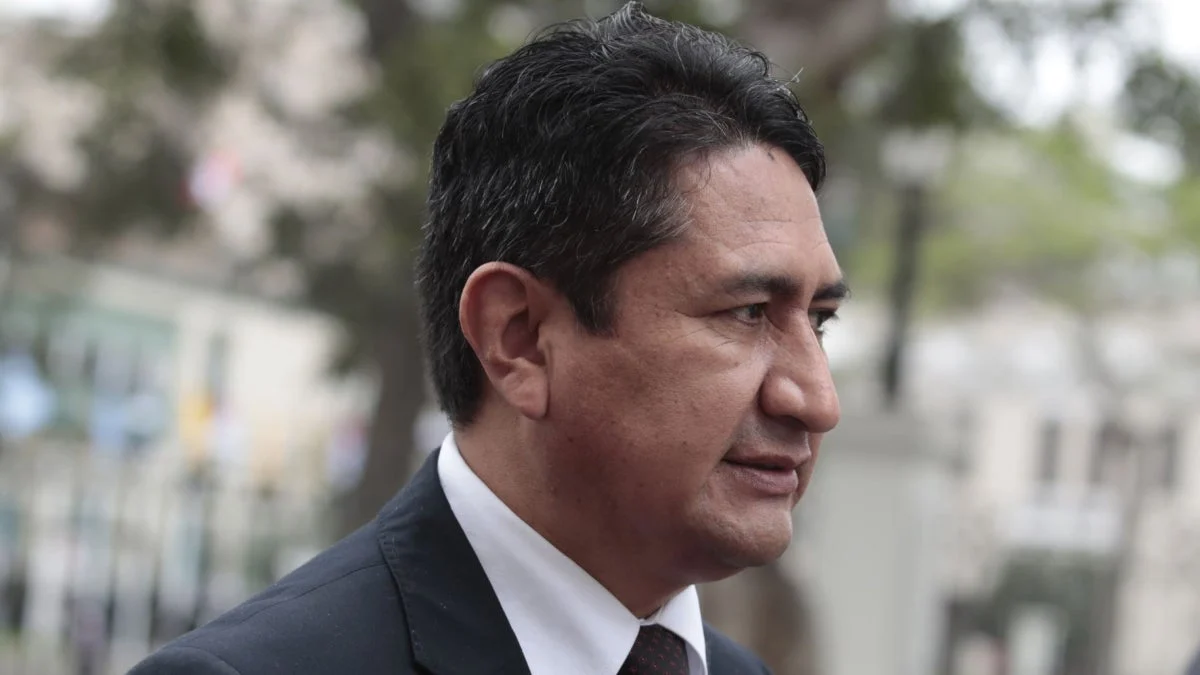
After 1,042 days of living in the shadows, Vladimir Cerrón, the influential founder of the Marxist party Perú Libre, has finally stepped back into the public light. His re-emergence on August 13, at a ceremony marking the 18th anniversary of his party, marks the end of one of the most embarrassing chapters for the Peruvian justice system and national security apparatus in recent history.
For nearly three years, Cerrón evaded capture while simultaneously operating as a political force, despite multiple judicial orders for his incarceration. His return is not merely a personal victory for the former governor of Junín; it is the culmination of a complex legal odyssey involving the Supreme Court, the Constitutional Tribunal, and a revolving door of government officials who failed to apprehend him.
The Chronology of a High-Stakes Hide-and-Seek
The saga of Vladimir Cerrón’s legal battles is a tapestry of corruption allegations, shifting judicial rulings, and claims of political persecution.
The Beginning of the Flight (October 2023)
The catalyst for his disappearance occurred on October 6, 2023, when a court sentenced him to three and a half years in prison for corruption stemming from the "Aeródromo Wanka" case—a project initiated during his tenure as Governor of Junín. Instead of surrendering to authorities, Cerrón vanished, triggering a massive manhunt.
The Widening Net
As the months progressed, the legal pressure intensified. Cerrón was slapped with additional orders of preventive detention related to the "Antalsis" case, involving allegations of criminal organization, and a separate investigation into money laundering connected to the finances of Perú Libre. These warrants were issued primarily because, while in hiding, Cerrón ceased complying with the conduct rules imposed by the judiciary, such as periodic check-ins and travel restrictions.
The Legal Pivot (January 2025)
The tide began to turn in early 2025. A series of appellate decisions provided the opening Cerrón’s legal team had been waiting for. First, a court of appeals annulled the preventive detention order in the Antalsis case. Shortly thereafter, the Supreme Court delivered a seismic blow to the prosecution, revoking his conviction and ultimately absolving him of all charges in the Aeródromo Wanka case.
The Final Legal Shield: The Constitutional Tribunal
With the most significant convictions overturned, his legal team, led by attorney Humberto Abanto, focused on the remaining money laundering investigation. Abanto argued that Cerrón’s time in hiding was not an evasion of justice, but a form of "resistance against oppression" and a symbolic act of disobedience against what he termed "arbitrary judicial decisions." In March, the Constitutional Tribunal (TC) took up the case. On July 21, the TC issued a ruling that effectively nullified the standing arrest warrant, citing procedural errors in the original judicial resolution.
The Cost of Inaction: A Security Failure
The inability of the Peruvian state to locate Cerrón for nearly three years has become a symbol of institutional weakness. During his 1,042 days in clandestinity, the country saw the passage of three different presidents, nine Ministers of the Interior, and three Commanders General of the National Police.
The Government’s Failed Strategy
Under the administration of Dina Boluarte—who was, ironically, once a high-ranking member of Cerrón’s own party—the state offered a reward of half a million soles (approximately $130,000 USD) for information leading to his capture. Despite numerous raids and intense intelligence operations, the police were consistently one step behind.
In a display of brazen defiance, Cerrón even maintained a digital presence, commenting on political affairs and occasionally mocking the authorities’ inability to locate him. During his speech at the Perú Libre anniversary event, he expressed his "concern" over the lack of effectiveness within the National Police, suggesting that the force was either incompetent or engaged in a political charade.
Legal Restrictions and Future Challenges
While the arrest warrants have been lifted, Vladimir Cerrón is far from a free man in the conventional sense. The Constitutional Tribunal’s ruling replaced his detention with a strict regime of "liberty with restrictions" for a period of one year, 11 months, and seven days.
The Terms of Release
Under these new conditions, Cerrón must adhere to several mandates:
- Travel Ban: He is strictly prohibited from leaving the country.
- Judicial Check-ins: He must present himself monthly before the Public Prosecutor’s Office and the court overseeing his money laundering case.
- Court Compliance: He must attend all future judicial or fiscal summons.
- Financial Security: He was required to pay a caución (bail) of 30,000 soles.
The Path Ahead
Cerrón remains a central figure in ongoing legal battles. Most notably, he faces a trial in Junín regarding the "Circuito Chupuro-Huasicancha" case, where prosecutors are seeking a nine-year prison sentence for alleged corruption. His legal team maintains that these cases are politically motivated efforts to stifle his influence, while the Public Prosecutor’s Office insists that they have sufficient evidence to secure a conviction.
Political Implications and Reactions
The reappearance of Cerrón has sent shockwaves through the Peruvian political establishment. As the founder of Perú Libre, his return could revitalize a party that has struggled to maintain its footing. Even while in hiding, the party presented him as its presidential candidate for the April 12 elections; however, the lack of a physical campaign and the surrounding scandal resulted in a poor showing, with the party securing only 0.6% of the valid vote.
The View from the Opposition
The political class has reacted with a mixture of indignation and finger-pointing. Keiko Fujimori, a prominent political rival, when questioned about his return, stated that she would have preferred for Cerrón to face justice properly rather than through a series of controversial legal maneuvers. She pointedly remarked that the responsibility for his long evasion lies with the administrations that failed to capture him, emphasizing that the current situation is a failure of the state’s duty to uphold the rule of law.
The Impact on Public Trust
The Cerrón case has deepened the divide between the public and the judicial system. Many citizens perceive his return as a demonstration of "justice for the elite," where those with the resources to hire high-powered legal teams can manipulate the system to avoid consequences. The fact that he remained in the country for over 1,000 days without being caught suggests either an extraordinary level of protection or a profound breakdown in police intelligence.
Conclusion: A Precarious Freedom
Vladimir Cerrón’s return to the public sphere is a polarizing event that underscores the fragility of Peru’s democratic institutions. As he navigates his remaining legal challenges, the nation will be watching closely to see if the judicial system can regain its credibility or if the "Aeródromo Wanka" saga was merely a prelude to a longer, more complex struggle.
For now, the man who spent nearly three years as the country’s most wanted fugitive has returned to the political arena. Whether he can transform his legal "resistance" into renewed political capital or whether he will eventually return to the confines of a prison cell remains the central question of his turbulent career. One thing is certain: his presence, even under restrictive conditions, will continue to define the political landscape of Peru for the foreseeable future.